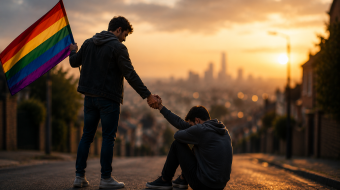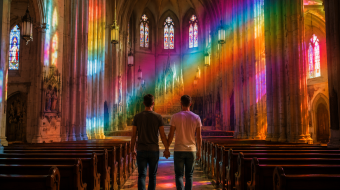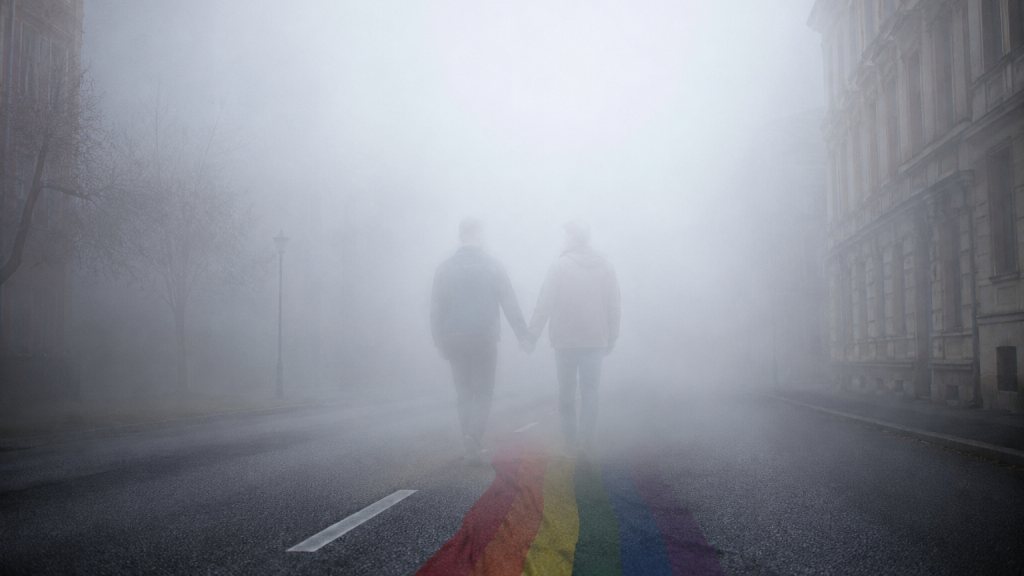
It is often the small decisions that reveal a change in the social climate. The quick glance over the shoulder before two men take each other's hand in the street. The hurried end to an embrace at a station. The rainbow flag that is no longer hung in the office window. The Instagram profile from which photos with a partner disappear. The cautious suggestion before a first meeting: “Let's go somewhere else instead.” The question of whether you really want to be open in a taxi, at a football stadium, in the school playground or on the underground at night. Invisibility rarely begins spectacularly. It begins quietly. And in Germany, it has long since begun again.
A history of progress
For a long time, the history of gay and queer people in Western democracies was seen as an unbroken story of progress. Visibility meant emancipation. From hiding in the back rooms and bars of the post-war years, through the protests after Stonewall, to marriage equality, society seemed to be following a clear trajectory: more rights, more acceptance, more public visibility. Germany, in particular, increasingly saw itself as a liberal country in which LGBTQ+ life had apparently become a matter of course. But that certainty is beginning to crumble — and not just since the brutal Islamist attack on the community at this year's Berlin Pride. Support services have long been reporting rising numbers of anti-queer attacks, while security authorities warn of growing radicalisation among young perpetrators. Online hate campaigns reach thousands of people within hours. Cases of hate crime against LGBTQ+ people reach new records year after year.
Pride events are receiving increased police protection. It seems to be taken for granted that security plans must constantly be tightened and that hundreds of police officers, road bollards and other barriers are needed to secure a demonstration. Queer young people report fear in everyday school life, with growing numbers experiencing hostility and violence, while the federal government is cutting public funding for Lambda, the largest youth network for queer young people. Meanwhile, an aggressive culture war is spreading on social media, knowing no restraint or even the slightest trace of mutual human respect. The consequences show up not only in statistics. They show up in behaviour.
Where am I visible? Where am I not?
More and more people in the community are beginning to weigh things up again: where am I visible? Where would I rather not be? Who do I tell about myself? Which places do I avoid? Which photos do I post? What clothes do I wear? How open can I be without taking a risk? Former SPD secretary-general Kevin Kühnert told the Süddeutsche Zeitung in August: ““I don't hold my partner's hand in public, and I stubbornly convince myself that it simply isn't my thing. Before I kiss him in public, I always scan our surroundings — everywhere, every time. I would never go to a fair or a similar place where a lot of alcohol is also consumed if we were recognisable as a couple. There are also numerous holiday destinations I would rule out visiting as a visibly gay couple. Yes, many abroad. But explicitly some in Germany too.
Everything that is unthinking normality for the majority carries a risk for us that concerns our identity and that we cannot control ourselves. Because we aren't causing any problems. But we get problems when others decide there is something about us that bothers them.” Looking at the community, the 37-year-old goes on to observe: “The desire among parts of the queer community finally to be allowed to reach that longed-for, boring normality gave rise to a shared self-deception that society's opening-up was developing in a straight line.” The Berlin attacker, he says, now reminds us how “fragile our own position in society” is. It is a development that reminds many in the community of earlier decades — yet also has something new about it. For this new invisibility is not emerging in a society where homosexuality is illegal. It is emerging in the midst of liberal democracies. That is precisely what makes its impact so powerful.
The return of caution
Historian Benno Gammerl often describes queer history as a history of emotions — of fear, shame and caution, but also of liberation. Visibility was never just a political act. Visibility was always an emotional decision too. Living visibly makes you vulnerable to attack. That was true under the German Empire. It was true under National Socialism. It was true during the AIDS crisis of the 1980s. And it is true again. Yet today's situation differs fundamentally from earlier decades. In Germany, gay people no longer face criminal prosecution. Same-sex marriages are legal. Major companies adorn themselves with rainbow logos during the summer Pride season. Politicians are openly gay or queer. Streaming services, pop culture and advertising are full of LGBTQ+ representation. In major US films and Hollywood productions, we are now significantly overrepresented relative to our share of the overall population, yet we afford ourselves the luxury of saying that this is not enough, as the US organisation GLAAD did in July this year.
And yet many gay, lesbian, bisexual, trans and queer people report growing caution in everyday life. Younger people in particular increasingly describe mixed experiences. On the one hand, a generation is growing up that uses terms such as non-binary, queer or pansexual as a matter of course. On the other, these same young people experience intense hostility online, in schools or on platforms such as TikTok, Instagram and X. This coexistence defines the present: more visibility — and more aggression against visibility. Added to this is social pressure to take a position constantly. While earlier generations of gay people often had to fight for visibility, many today experience the opposite: a public sphere in which every instance of visibility is immediately commented on, judged or politicised. This can be exhausting. Many queer people now report deliberately avoiding discussions. Not because they lack confidence, but because they are tired. Any debate about identity or social acceptance can escalate within minutes — online and offline alike. This also changes the sense of privacy. In the past, invisibility was often organised spatially: particular bars, particular meeting places, particular neighbourhoods. Today, public exposure exists everywhere. Any comment can be shared. Any photo can go viral. Any attendance at Pride can become the subject of political campaigns. The digital public sphere no longer has clear boundaries.
The digital world becomes real
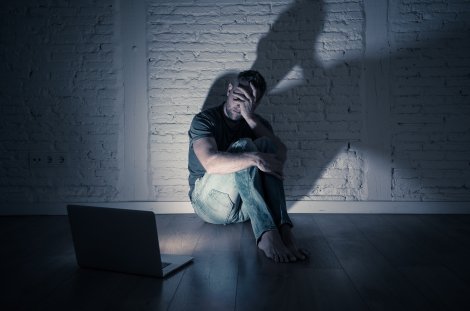
The new invisibility is not emerging by chance. It is being accelerated. Digital spaces, above all, play a central role. Platforms now act as amplifiers of emotional conflicts. Content that generates outrage spreads particularly quickly. Topics concerning sexuality and identity, in particular, are rewarded by algorithms because they attract attention. Anti-LGBTQ+ campaigns therefore often no longer originate locally, but online. A single video, a short statement, an appearance at Pride. Within hours, these can generate waves of hate that reach far beyond the original situation. Those affected report insults, doxxing, threats or huge online pile-ons. LSVD+ Berlin-Brandenburg recently spoke of a development in which online violence is increasingly turning into real-world violence. Comment sections, messaging groups and social networks, it said, were contributing to radicalisation. These were precisely the places where a climate was emerging that paved the way for attacks in public spaces.
With its first online youth meeting space, “lambda.space”, the youth network Lambda wanted to offer a response, particularly for queer young people in rural areas, around 30 per cent of whom still have no connection to the community. If the cuts remain in place, its continuation is highly uncertain. There is another factor: anyone who constantly hears online that queer people are “dangerous”, “sick”, “perverted” or a threat to children may eventually adopt these perceptions in everyday life. What used to be pub-table prejudices are now shared, commented on and emotionally amplified millions of times — thanks to algorithms and digital echo chambers, without resistance or even a critical comment. At the pub table, there was at least still a chance that one of the drinking companions would say: “Come on now, don't go overboard.” Online, someone like that is cancelled before they even realise it. And the consequences do not stay online. Many gay men, lesbians and queer people now report making more deliberate efforts to avoid public spaces.
Caution in public spaces
Some forgo public transport in certain situations. Others avoid discussions at work or within the family. Others still withdraw entirely from social networks such as sports clubs. Invisibility becomes a strategy for self-protection. Online violence also changes the perception of time. In the past, a conflict often ended within a limited physical or social setting. Today, hate campaigns can continue for days. Screenshots remain. Posts resurface months later. Search engines do not forget. If someone revives an old issue at the right moment, it can ignite a second, third or fourth online pile-on. Victims must live with the possibility of being attacked again at any time. For those affected, this creates a feeling of being permanently watched. Younger queer people in particular are growing up in a world where identity means both visibility and risk. This ambivalence now shapes an entire generation. People aged 40 and over in the community sometimes offer well-meant advice simply to withdraw from the digital world. For people who still remember a world without the internet, that may seem easy, but how difficult is it for young queer people whose lives have also been digital from the moment they were born?
The illusion of linear progress
The notion that social progress is automatic and irreversible is one of the great liberal illusions of recent decades. History actually shows something else: progress almost always generates counter-movements. Berlin was already regarded as a centre of queer visibility during the Weimar Republic. Bars, magazines, associations and early activist movements emerged on an unprecedented scale. Magnus Hirschfeld founded the Institute for Sexual Science. Gay people became more visible than ever before. Yet it was precisely this visibility that later made them targets. Under National Socialism, gay spaces were destroyed, archives burnt and thousands of gay men persecuted. Within a few years, visibility turned into danger.
Historical comparisons require caution. No serious researcher claims that today's Western democracies face an identical trajectory. Yet historical dynamics can sometimes have structural similarities. Societies often react particularly aggressively when minorities become more visible. Legal equality for gay people by no means marks the end of social conflict. Even in democratic states of the so-called West that introduced same-sex marriage years ago, it is still repeatedly attacked. We usually smile when we read, yet again, that a conservative, right-wing or far-right politician is once more calling for an end to what is colloquially called gay marriage. We smile because we think he is stuck in the past. We smile because we are sure his views cannot command majority support. We smile because many of us are too young to understand how quickly the tide can turn.
The conflict is rarely just about specific political questions. It is about who gets to define cultural meaning. About who is considered “normal”. About social change. About loss of control. About real and false masculinity. Added to this is a society struggling to cope with the speed of public debates. Many developments now unfold in real time. New terms, identities and social discussions spread around the world within weeks through social media. For some people, this creates a feeling that they can no longer control or understand social change. Populist movements exploit precisely this feeling. They offer simple explanations for complex social developments and cast minorities as symbols of an alleged loss of cultural control. It is about identity, belonging and the question of what modern societies should look like in future.
Responses from the younger generation
What is striking is how strongly the new invisibility affects young people. Young people today grow up with considerably more queer representation than earlier generations. At the same time, however, they experience constant pressure from social judgement that did not previously exist in this form. The school playground no longer ends at the school gate. Conflicts move straight onto smartphones. Someone's coming out can now reach an entire school within minutes. Rumours spread digitally. Screenshots remain permanently. Bullying does not end when lessons finish. At the same time, highly dynamic spaces for identity are emerging online. For many queer young people, platforms are important places for self-discovery and community. Yet those same spaces can become extremely hostile. For years, studies have shown greatly elevated levels of psychological distress, including significantly higher rates of suicidal thoughts, among LGBTQ+ young people. Anxiety disorders, depression and social isolation are statistically more common than among heterosexual young people. The causes are often not sexual orientation or gender identity themselves, but experiences of discrimination and social pressure. That is precisely why the social climate has such a direct impact.
When politicians, influencers or media outlets constantly suggest that LGBTQ+ identities are problematic or threatening, this changes young people's daily lives. Not in the abstract. In concrete ways. Social debate then becomes personal insecurity. There is another factor too: young people are strongly influenced by social approval. When gay jokes, anti-queer memes or hate comments are seen millions of times online, it can quickly create the impression that discrimination is socially acceptable, or at least tolerated. Many young queer people respond by adapting. They delete posts. Avoid discussions. Withdraw from groups. Or consciously decide against coming out, even though they originally wanted to live more openly. Schools in particular are thus once again becoming sensitive sites of social conflict. Teachers repeatedly report that debates about sexual diversity are becoming increasingly emotional. At the same time, many schools are growing less certain about how openly such subjects can still be addressed without triggering public conflict. This too contributes to the new invisibility.
Between protest and security concerns
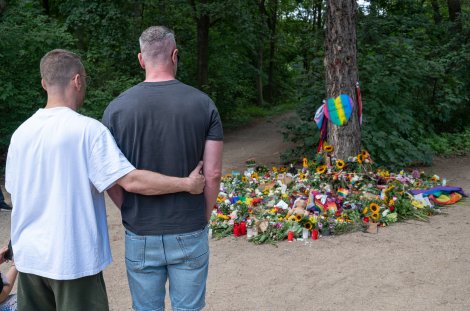
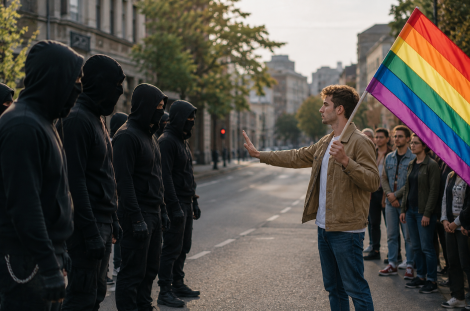
Few settings make this new ambivalence clearer than this year's Pride season, which ends this month. Christopher Street Day parades began as protests and, over the decades, became symbols of growing acceptance. Today, many Pride events once again face intense security pressures. Police authorities are recording increasing mobilisation by far-right and Islamist groups against Pride events. The worst incident so far was the fatal car rampage by 21-year-old Islamist Abdul B. at Berlin Pride. The consequences for this year, and probably future years too: more barriers, a greater police presence and tighter security plans. Paradoxically, this produces a strange coexistence. On the one hand, Pride events are bigger and more visible than ever before. On the other, a sense of vulnerability is growing within the community. Visibility remains political — but it is becoming riskier again. At the same time, the meaning of Pride itself is changing. For some, Pride remains a place of liberation and joy. For others, it is once again becoming more of a demonstration against fear and violence.
As a result, many younger queer people are consciously experiencing for the first time that visibility cannot be taken for granted. That rights must be defended. That social openness is not guaranteed forever. The economic climate is changing too. For years, “rainbow capitalism” was seen as a symbol of social liberalisation. Companies adorned their logos with rainbow colours, launched Pride campaigns and prominently presented diversity as a brand value — and we argued about what was heartfelt and what was merely pinkwashing. Now, more and more companies are withdrawing entirely from LGBTQ+ support. On a massive scale in the US, but also in Germany. Some German Pride organisers reported this happening this year and wondered how they could still combine visibility and safety with empty coffers. This development sends signals. The implicit message is: too much visibility can cause problems. That heightens uncertainty. Taking a stand is increasingly judged by how firmly it holds under pressure.
Political language
Political language shapes social reality. When minorities are constantly made the subject of emotionally charged debates, social tensions emerge. This is true regardless of which political camp the attacks come from. In many countries, LGBTQ+ issues are now being deliberately deployed in cultural politics. LGBTQ+ rights serve as a canvas onto which broader social conflicts over family, nation, tradition or modernity are projected. The effect is enormous. People who had previously given little thought to gay or queer people suddenly encounter the subject every day — often accompanied by alarmism or frightening imagery.
This creates the impression of a society in a state of emergency, even though the people concerned are numerical minorities. Real people bear the consequences. Many LGBTQ+ people report increasingly having to explain or justify themselves. A personal identity suddenly becomes a political battleground. At the same time, the overall tone of public debate is changing. Language is becoming more aggressive, more direct and more emotional. Social media in particular rewards provocation. Nuance often attracts less attention than outrage. This creates a climate of permanent confrontation.
Strategic invisibility
For centuries, the history of gay people was a history of strategic invisibility. Meeting places were hidden. Relationships kept secret. Codes developed. Gestures controlled. Language adapted. Invisibility was often essential to survival. Older gay men and lesbians in particular therefore immediately recognise certain behaviours. The cautious testing of the waters. The question of whom to trust. Deliberate self-censorship. Many believed they had left these mechanisms behind for good. But security within society is more fragile than liberal democracies long assumed. The new invisibility does not necessarily mean complete withdrawal. Much more often, it manifests itself subtly in selective visibility. People decide with increasing precision where they are open, with whom they feel safe, which neighbourhoods they avoid, which platforms they use and what information they disclose. Invisibility becomes situational. And that is precisely what makes it so difficult to see at a societal level.
There is rarely a single moment when freedom disappears. Often, behaviour changes first. People become more cautious without this immediately attracting public attention — sometimes they themselves do not consciously notice it for a long time. Perhaps that is precisely what makes today's situation distinctive: LGBTQ+ people have never been so visible in society — yet have rarely felt so closely watched. The persistent experience of potential threat changes behaviour over the long term. Psychologists often speak of “minority stress” — an additional burden arising from discrimination, social insecurity and constant vigilance. This stress often operates invisibly. It manifests itself not only in specific attacks, but in permanent self-monitoring. That is precisely why the new invisibility is not “just” a cultural phenomenon; it is also a health and social problem. Anyone who constantly feels they must monitor themselves will eventually withdraw. Public presence gives way to caution. Visibility gives way to exhaustion. Many LGBTQ+ people now describe a feeling of being constantly on alert. Not necessarily out of a specific fear of violence, but out of uncertainty about when situations might turn. This uncertainty profoundly changes everyday experiences.
Fighting for greater visibility
Despite everything, it would be wrong to tell only a story of decline. Today's situation differs fundamentally from earlier decades because gay and queer people now have strong networks, international public visibility and allies in society. Younger generations in particular are much more likely than older age groups to take different sexual orientations and gender identities for granted. In many major cities, LGBTQ+ lives have long been part of the normal social landscape. The new invisibility is therefore not the end of everything; rather, it means that visibility is once again being contested. And that is where the real question for society lies. Not: are LGBTQ+ people visible? But: under what conditions can people be visible without having to be afraid? The condition of democratic societies is often revealed first not in how they treat majorities, but in how they treat minorities.
When people begin hiding parts of their identity again, that always says something about the wider social climate too. The new invisibility therefore does not concern only the LGBTQ+ community. It concerns us all, and with it the question of how open societies want to be in future. Whether diversity is accepted as a democratic reality — or increasingly regarded as a cultural threat. Whether digital spaces can be protected. Whether political debates are conducted responsibly. Whether minorities can retain their trust in the public sphere. Invisibility never arises from individual fear alone. It emerges where social spaces become unsafe. And perhaps that is the real warning of our time: that people in liberal democracies must once again learn, or believe they must learn, to ration their visibility carefully. Quietly. Day by day. Almost unnoticed. Until — almost unnoticed — they have disappeared entirely once more into the fog of invisibility.