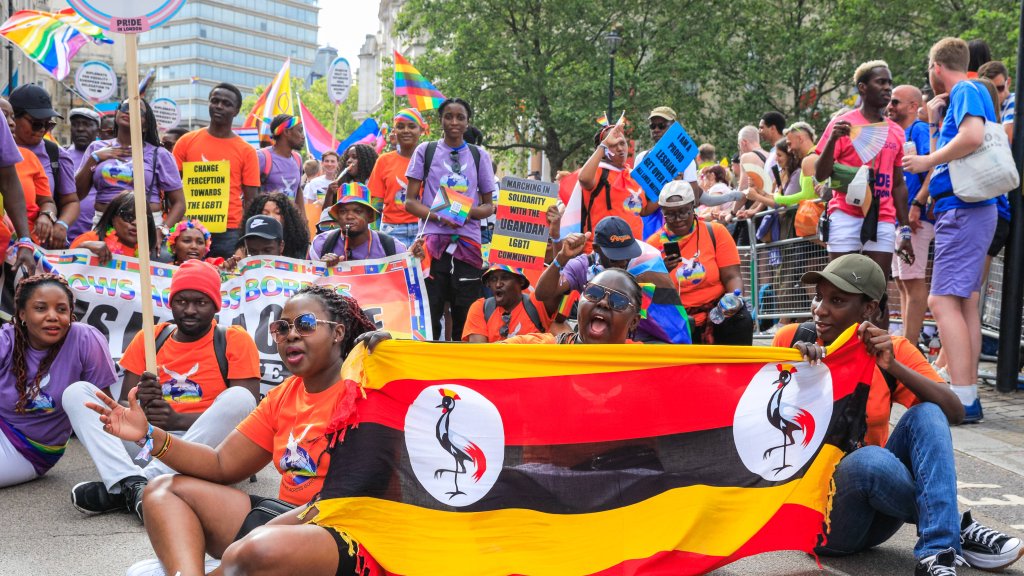
According to the US organisation Freedom House, Uganda remains among the countries classified as “not free”. In the latest “Freedom in the World 2026” report, the East African country receives 33 out of 100 points. Of these, ten points are for political rights and 23 for civil liberties. The previous year's total was 34 points.
Key points at a glance
- Freedom House classifies Uganda as “not free” in its “Freedom in the World 2026” report, with 33 out of 100 points.
- According to the report, LGBTQ+ people have little political representation and face widespread discrimination.
- The situation has worsened following the 2023 Anti-Homosexuality Act, which provides for severe penalties, including the death penalty, for same-sex acts.
- Human rights organisations report arrests, blackmail, violence and digital persecution of gay people.
- According to Freedom House, the media, NGOs and the political opposition also face significant restrictions.
Uganda is “not free”
Freedom House assesses not only elections but also the actual exercise of political rights and civil liberties. Its assessment is based on rights including life, personal liberty, privacy, protection from torture and slavery, as well as economic and social rights. One focus of the report is the situation of LGBTQ+ people. It says they have no political representation in Uganda and face widespread discrimination. The situation has worsened since the passage of the Anti-Homosexuality Act (AHA) (German) in May 2023.
The law provides for particularly harsh penalties for certain same-sex acts, including the death penalty. Anyone who “promotes” homosexuality can face up to 20 years in prison. Citizens are required to report anyone in their social circle whom they believe might be gay. Uganda's Constitutional Court largely upheld the law in April 2024. Human Rights Watch also reports that LGBTQ+ people have faced increased risks since the law came into force. These include arbitrary arrests, blackmail and ill-treatment.
Persecution online too
According to Freedom House, the restrictions extend into the digital sphere. It says LGBTQ+ people and organisations face online harassment, so-called doxxing attacks and, in some cases, hacked accounts. According to an Access Now report cited by Freedom House, at least 17 people were arrested or prosecuted following online contact between May 2023 and March 2025. The report says they came to the authorities' attention through methods including deception and targeted attempts to lure them. Amnesty International also documented cases of hacked social media accounts and threats against LGBTQ+ people.
Criticism of the government and media policy
According to Freedom House, the restrictions do not only affect gay people. Uganda has been ruled since 1986 by President Yoweri Museveni and the National Resistance Movement (NRM), which he leads. Freedom House writes that the ruling party maintains its hold on power through means including patronage, intimidation and politically motivated proceedings against opposition politicians. It says civil society and the media also face legal and extralegal pressure, as well as state violence. In the organisation's assessment, the credibility of the regularly held elections has deteriorated. Human Rights Watch likewise concludes in its 2026 country report that the human rights situation in Uganda remains repressive. It cites restrictions on freedom of expression and assembly, as well as action against political opponents, journalists and protesters.








