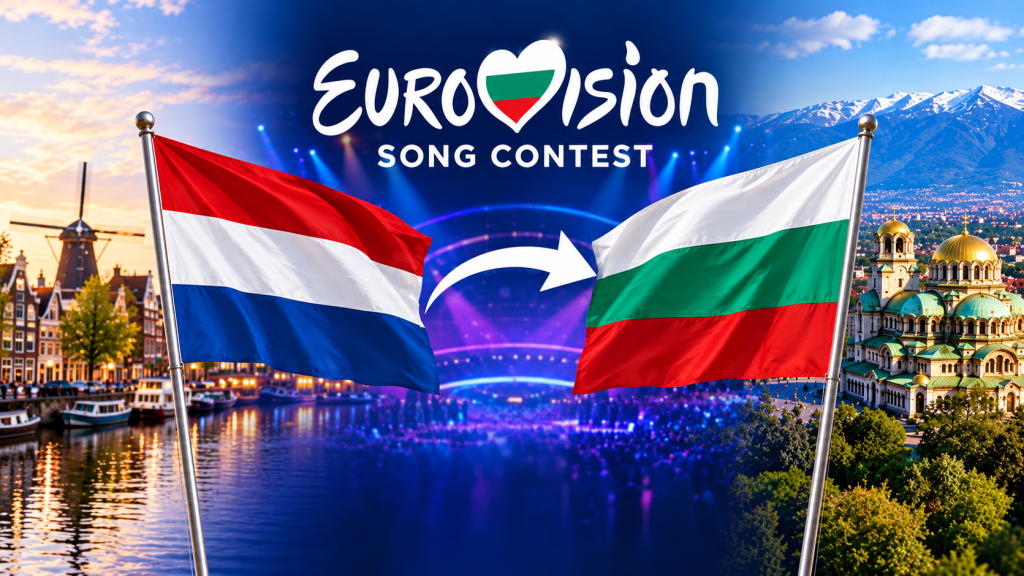
The Netherlands is making a fresh attempt at the Eurovision Song Contest in 2027. After broadcaster Avrotros cancelled its participation in protest at Israel’s involvement, public broadcaster NPO is now set to step in. The contest will take place in Bulgaria next year.
The key points at a glance
- The Netherlands wants to return to the Eurovision Song Contest in 2027.
- Public broadcaster NPO is taking over participation from broadcaster Avrotros.
- Avrotros withdrew from the contest because of Israel’s participation.
- An independent team of experts is to oversee the process.
- Belgium has also confirmed its participation in Eurovision 2027 in Bulgaria.
- Ireland, by contrast, is maintaining its boycott.
- The European Broadcasting Union adopted new requirements for host countries in August.
A platform for division?
According to NPO, an “independent team of experts” will “closely monitor” the process from here. This confirms that the Netherlands will be represented at the next Eurovision despite the dispute over Israel’s participation. Avrotros explained its withdrawal in August by citing the direction the contest had taken. It was “undeniable that international conflicts are increasingly affecting the contest and undermining its neutral character”. Eurovision had consequently “become a platform for division”.
Alongside the Netherlands, Belgium has now also announced its participation in the contest in Bulgaria. Flemish public broadcaster VRT said that Belgium would take part in 2027. Previously, Israel’s participation and the ongoing violence in the Gaza Strip had also left it uncertain whether the country would compete. The situation is different in Ireland. The country announced last week that it would once again boycott the Eurovision Song Contest. Protest at Israel’s participation was given as the reason. Under the contest’s rules, Eurovision must be neutral and apolitical. The question of how the contest should position itself in the face of international conflicts had therefore recently prompted considerable debate among the participating broadcasters.
New requirements for the contest
Amid the dispute over Israel’s participation, the European Broadcasting Union (EBU) made a decision in mid-August concerning future editions. Under the decision, countries at war may not host the Eurovision Song Contest. Israel was not explicitly named in the decision. With the Netherlands returning and Belgium’s participation confirmed, differing positions are emerging among European broadcasters on how to deal with Israel at Eurovision. While some countries remain committed to the contest despite the controversy, Ireland is continuing its boycott.








