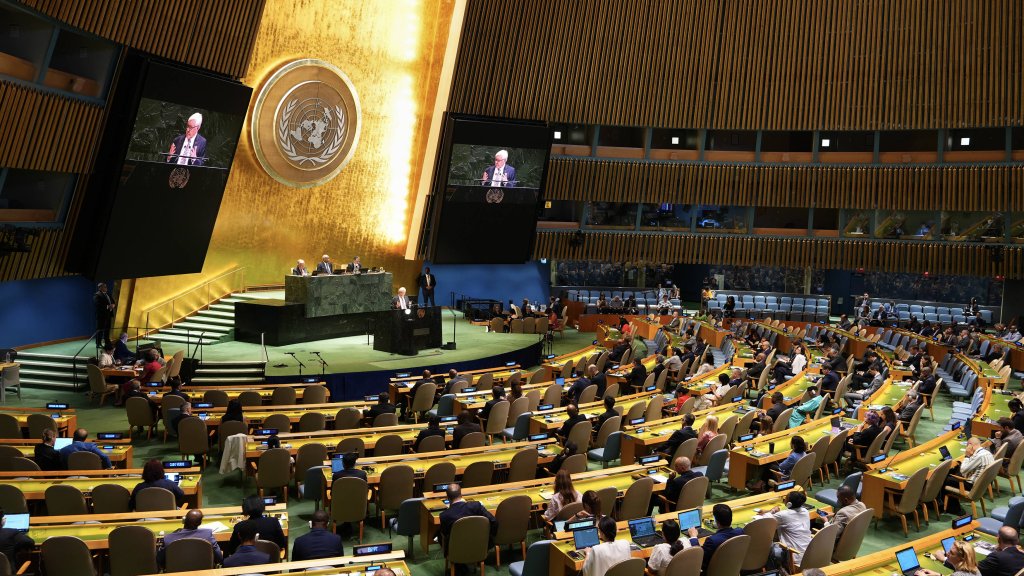
The United Nations is warning of increasing persecution of LGBTQ+ people worldwide. Meanwhile, France, working with Albania, plans to submit a resolution to the UN Human Rights Council in October calling on all states to decriminalise same-sex relationships. French human rights ambassador Isabelle Rome announced the move at a meeting of the LGBTI Core Group in New York.
Key points at a glance
- France, working with Albania, plans to submit a resolution to the UN Human Rights Council in October calling for the worldwide decriminalisation of same-sex relationships.
- UN High Commissioner for Human Rights Volker Türk warns that the persecution of LGBTQ+ people is increasing “at an alarming rate”.
- Türk describes an “attack on all fronts” and criticises the use of anti-LGBTQ+ rhetoric in election campaigns.
- Many LGBTQ+ organisations have lost substantial portions of their funding since the start of 2025.
- The US was not represented at the meeting.
Decriminalisation of homosexual people
“France, together with Albania, has decided to submit a resolution to the Human Rights Council this coming October calling for the universal decriminalisation of same-sex relationships. We are counting on the support of Council members to establish this right as an international norm,” Rome said. According to her, 66 countries still criminalise consensual homosexual relationships. Around two-thirds of the world’s population live in states where the relevant rights are violated, she said. The UN Human Rights Council had already considered resolutions on sexual orientation and gender identity in 2011, 2014 and 2016. The mandate of the Independent Expert on this subject was established in 2016.
“Attack on all fronts”
UN High Commissioner for Human Rights Volker Türk painted an alarming picture at the event. “By claiming their own freedom, LGBTQ+ communities have helped to liberate our societies,” he said. Turning to the current situation, Türk continued: “We know that progress on human rights has never been linear. But the current setback is profound, it is coordinated, and the persecution of LGBTQ+ people worldwide is increasing at an alarming rate. Their rights, their safety and their well-being are under attack physically, psychologically, socially, politically and legally. It is an attack on all fronts.” Türk pointed, among other examples, to Senegal (German) and Turkey, where hundreds of people have been arrested. There are reports of ill-treatment, due process violations and a lack of access to lawyers. Some governments also described LGBTQ+ organisations as “terrorists, extremists or threats to national security”.
Election campaign rhetoric
Türk also criticised candidates and parties for exploiting anti-LGBTQ+ sentiment in election campaigns: “These attacks are intended to confuse and distract. They hide bigotry behind the language of decency and morality. They invoke the protection of children from invented threats, while the real and growing dangers to their lives and their future, including those linked to technology, inequality and climate catastrophe, remain unaddressed. Those who want to erase differences and independent thinking from our societies often begin by erasing LGBTQ+ people from books and classrooms, from film and culture, from our streets. It is always the beginning.” The Office of the High Commissioner for Human Rights plans to present a comprehensive report on the developments observed by the end of the year. The findings so far were “frankly very shocking”, he said. Türk also announced a global alliance for human rights with a dedicated agenda for LGBTQ+ people. “We should no longer be on the defensive. We must go on the offensive,” he said,
Dispute over “family values”
Icelandic Foreign Minister Þorgerður Katrín Gunnarsdóttir also warned against the political instrumentalisation of family values. She noted that the meeting was taking place just days after the establishment of a new UN Core Group describing itself as “pro-life and pro-family”. The language of protecting life and the family must “never become an instrument of discrimination or a pretext for dismantling human rights already secured”, Gunnarsdóttir said. Dutch Minister for Foreign Trade and Development Cooperation Sjoerd Sjoerdsma said: “It is unacceptable for the anti-rights movement to claim family values for itself. Family values belong to all of us, not to them.” The Dutch delegation also reported a “drastic” decline in acceptance of LGBTQ+ people among young people in their own country. “This is not a natural phenomenon; it is being driven by people pursuing an agenda.”
Organisations lose funding
Funding for many organisations is also deteriorating. Outright head Maria Sjödin presented a survey of 229 LGBTQ+ organisations in 94 countries. Around nine in ten had lost funding since January 2025, with almost half of those losing at least half their budget. Some 63 per cent could no longer respond adequately to emergencies such as violence and arrests. Several governments, however, announced additional support. The Netherlands plans to provide €50 million for LGBTQ+ organisations worldwide. The UK confirmed £21 million for the years 2026 to 2029 and announced a new special envoy for LGBTQ+ rights.
The US did not send a representative to the event. Washington withdrew from the LGBTI Core Group in 2025, a few weeks after the Trump–Vance administration took office. Two years earlier, First Lady Jill Biden had spoken at the same event. Italy, which was listed as a member of the Core Group in official lists from previous years, did not speak either. The planned resolution on the worldwide decriminalisation of same-sex relationships is due before the UN Human Rights Council in October.








