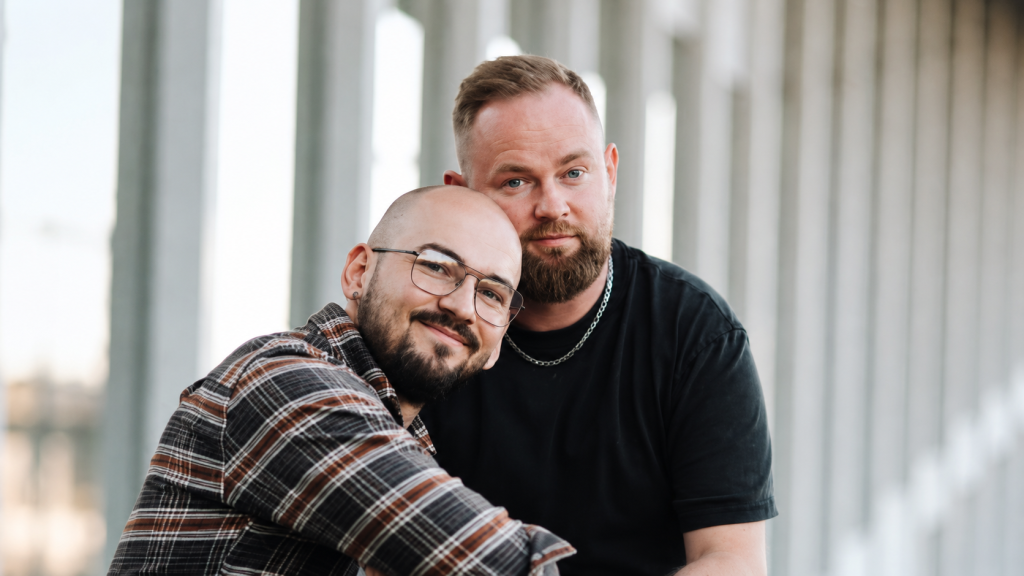
Ilia Ageev and Dmitrii Kiselev have lived in Switzerland for more than five years. They have learnt German, married, made friends and volunteered. Now the gay married couple are expected to return to Russia within days.
The key points at a glance
- Ilia Ageev and Dmitrii Kiselev have lived in Switzerland for more than five years and must leave the country by 2 October.
- The State Secretariat for Migration (SEM) rejected their asylum applications back in 2021.
- At the end of August 2026, the Federal Administrative Court issued a final ruling dismissing their appeals.
- The gay couple fled Russia in 2021 after Ilia was threatened and beaten up.
- Since arriving, the two have built a life together in Zurich, learnt German, married and volunteered.
- Russia has classified the so-called “international LGBTQ+ movement” as extremist.
- According to Human Rights Watch, there had been 101 convictions in Russia for alleged “LGBTQ+ extremism” by June 2025.
- The couple have submitted a hardship application. Whether their removal will be suspended pending a decision remains unclear.
- A petition calls on the Zurich Migration Office to examine their hardship case carefully and not carry out the planned deportation.
A return to Russia?
Following the legally binding conclusion of their asylum proceedings, the two men must leave Switzerland by 2 October. They are now pinning their hopes on a hardship application submitted in parallel. A petition is also seeking a temporary suspension of their removal. The prospect of returning to Russia causes both men deep concern. Dima, as Dmitrii is also known, said, close to tears, in a video interview with Watson: “I don’t even want to imagine what would happen if we were imprisoned in Russia and separated from each other.” Five years ago, the two believed that fleeing to Switzerland had allowed them to escape such danger for good.
Threats and assault
Ilia had publicly advocated for queer and gay people in Russia. He says this repeatedly exposed him to hate messages and threats. In March 2021, he also spoke openly about his HIV infection in a post. He says the situation then escalated further. According to Ilia, he received death threats, and his address was circulated online. He says he was also threatened in the street. A few days later, he was beaten up in central St Petersburg. Ilia suffered a broken nose in the attack and reported it to the police. He says no investigation was opened, however. The following month, Ilia and Dmitrii left Russia. They travelled to Zurich and applied for asylum in Switzerland.
Authorities rejected asylum applications
The State Secretariat for Migration rejected both men’s asylum applications in early July 2021. In the authority’s view, their experiences in Russia were insufficient for them to be recognised as refugees. Ilia and Dmitrii did not accept the decisions and appealed to the Federal Administrative Court. While the proceedings continued, they increasingly built their lives around Switzerland. The two learnt German, made social connections and married. They also became active through work and volunteering.
Dmitrii is a trained educator and volunteers as a classroom assistant at a kindergarten in Zurich. Ilia works as a photographer and is involved in communications and public relations. Both also volunteer within the LGBTQ+ community. Their involvement includes activities associated with Regenbogenhaus Zürich, Rainbow Networks and Zürich Pride.
Federal Administrative Court rejects appeals
On 31 August 2026, the couple received the final decision in their asylum proceedings: the Federal Administrative Court dismissed their appeals. This means Ilia and Dmitrii must leave Switzerland by 2 October. Although the court acknowledges that gay people in Russia face substantial legal restrictions, it found that a specific, individual risk of persecution for the two men had not been sufficiently demonstrated.
The State Secretariat for Migration likewise sees no sufficient individual risk that would establish an entitlement to asylum. This assessment has drawn considerable criticism. Migration lawyer Valerio Priuli told the magazine Blick that the potential future danger to the couple could have been examined in greater depth. Amnesty International also expressed concerns, pointing to the human rights situation in Russia.
The situation for LGBTQ+ people
Since the couple fled, the legal situation for gay people in Russia has changed further. The so-called “international LGBTQ+ movement” has been classified as extremist by the Russian authorities (German). Ilia and Dmitrii therefore fear facing repression on their return because of their sexual orientation and public activism. According to Human Rights Watch, there had been a total of 101 convictions in Russia for alleged “LGBTQ+ extremism” by June 2025. Most recently, three employees of a gay club were sentenced to prison terms of up to seven years on this basis (German). For Ilia and Dmitrii, such cases heighten their fears about what might await them on their return.
Hardship application offers a final chance
With the regular asylum proceedings over, the two are now pinning their hopes primarily on a hardship application. This is intended to allow their personal circumstances to be considered more fully. Factors that may be taken into account include the length of their stay in Switzerland, their social ties, their integration, and their voluntary and community involvement. It remains unclear whether their deportation will be suspended while a decision on this application is pending. The couple are also receiving support through a Campax petition launched by Ilia. It calls on the Zurich Migration Office to examine the hardship application carefully and not carry out their removal until a decision has been made.








