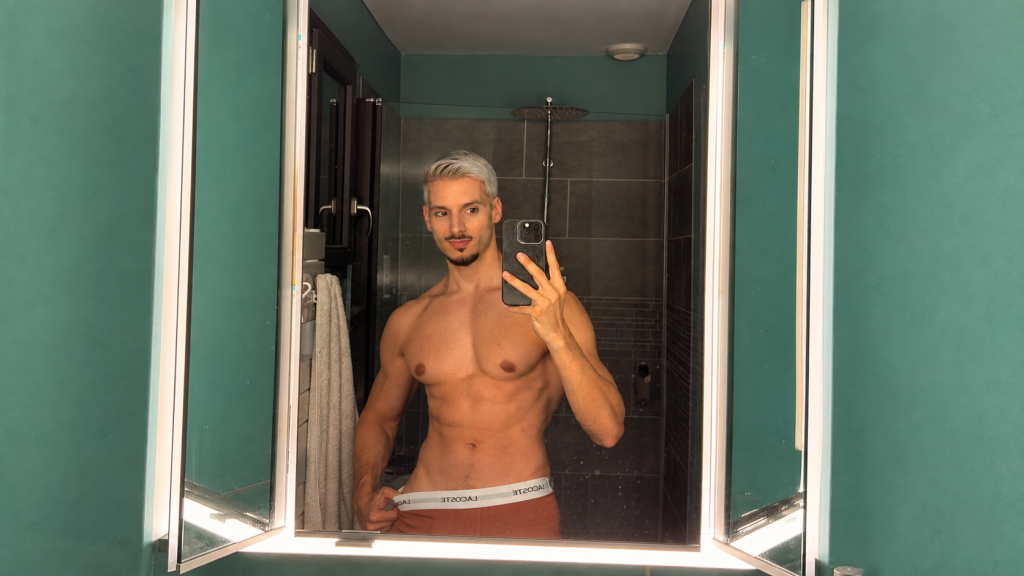
Plans to tighten the rules on online sex work are currently meeting resistance from gay porn performers and content producers in France. Several stress that they chose their profession freely and enjoy their work. Rather than new restrictions, they are calling for greater involvement in the political debate. “I want others to stop speaking on our behalf and for parliament to listen to us,” says gay porn creator Fabio Stallion.
Key points at a glance
- In France, a bill to combat sexist and sexual violence is causing concern among online sex workers.
- Article 25 could bring certain activities of platforms through which pornographic content is sold within the definition of pimping. This carries a sentence of up to seven years in prison.
- Following the example of a measure adopted in Sweden in 2025, certain customers could also face a €1,500 fine.
- Several gay porn creators reject the idea that they inherently need protection from their work or the platforms. “We love what we do,” say Fabio Stallion and Tony Silver.
- Those interviewed describe their profession as work they have freely chosen, encompassing video editing, marketing, administration and consent processes as well as filming itself.
- The creators point to the platforms’ existing safeguards. On OnlyFans, for example, everyone appearing in videos must submit their consent.
- Fabio Stallion and Tony Silver see the social stigmatisation of sex workers as the main problem.
- The bill has not yet been passed and may be amended during parliamentary deliberations. The plenary debate is due to begin on Thursday.
Warning from gay porn creators
The criticism centres on Article 25 of a bill “to combat sexist and sexual violence against women and children”. The article in question was adopted by a committee of the French National Assembly on Tuesday, 22 September. The measure could bring certain activities of platforms through which pornographic content is sold within the legal definition of pimping. The offence is punishable by up to seven years in prison. For people who earn money from their content on these platforms, this could have significant implications for their existing business model. Following the example of a measure adopted in Sweden in May 2025, a €1,500 fine is also proposed for certain customers. However, the law has not yet been passed. The text is due to undergo further parliamentary scrutiny and may still change in the process.
“We love what we do”
Several gay online sex workers particularly dispute the idea that they inherently need protection from their own work or the platforms. “We love what we do,” say Fabio Stallion and his partner Tony Silver. Kinkoer also describes his work as a conscious choice: “I chose to make a living from my passion.” Maxime Andolini expresses a similar view: “I decided to give up a reasonably well-paid, skilled job to make porn.” All four say they already had exhibitionist tendencies before entering the industry professionally. Initially, they say, it was less about the prospect of payment than the experience itself.
A career that began on X
Andolini says his current work began almost by chance in 2020. “One day in 2020, I told my boyfriend that I thought it would be fun to post a photo of my cock on Twitter. He told me to go ahead and let loose, and I got a taste for it. I love knowing that I can give other people pleasure.” After Andolini began regularly adding new pictures to his account, his follower count grew sharply. Images taken in train toilets were particularly popular with his followers. He soon began earning extra money from his content while continuing to work at an architectural practice.
From fetish performance to profession
Kinkoer took a different route into professional sex work. He was already active on the fetish scene when he met a well-known performer. The performer offered him the chance to join him on stage for a fisting performance. “I loved the experience, and especially the sense of community in the fetish family. Contrary to what these kink-shaming parliamentarians apparently seem to believe, we have a hell of a lot of fun doing it and want more!” says Kinkoer. He produces content for online platforms, performs in front of audiences and films scenes for studios. He also works as a tattoo artist. He particularly values the flexibility that self-employment offers. “I work a lot, but you can’t claim that I’m in a precarious situation,” he says.
Creators by choice, not necessity
Tony Silver also rejects the idea that he chose the porn industry because he had no alternatives. “I’m tall, I have a doctorate in virology. If I’d wanted to pursue a more conventional career, I certainly would have had the opportunities,” he says. He found his previous work in retail more stressful. “I was a cashier at Carrefour; that was much worse. It’s physically very demanding, customers make derogatory remarks, you have to scrub disgusting things ...”
With private videos, by contrast, he has “never had to do things I didn’t enjoy”. Fabio Stallion nevertheless acknowledges that not every professional task is equally interesting. He cites custom-ordered videos as an example. “People ask me to make videos of my feet, which I wouldn’t do of my own accord. It takes me more time because I try to make them interesting, even though it doesn’t particularly appeal to me.” However, such specially commissioned private content also pays better.
Work behind the camera
Actually filming porn accounts for only a small part of the job, Andolini stresses. “The shoot itself makes up one per cent of the working time,” he estimates. Other tasks include handling social security contributions through the French agency Urssaf, video editing, consent forms, social media marketing and maintaining a presence within the community. Producing pornographic content independently therefore also means running a business and managing one’s own brand and finances.
The creators also wonder what consequences the proposed rules could have for their collaborations with one another. The current version of the bill does not clarify this. “If I film my boyfriend during a scene, does that make me a pimp?” asks Tony Silver. Fabio Stallion adds ironically: “And why shouldn’t Urssaf then count as a pimp too?”
The virtual world as a “jungle”
Supporters of the proposed measure, by contrast, point to the need to protect people offering sexual services or related content online. “The virtual world is currently a jungle. We have nothing to ensure that these young women and men can be protected,” says Isabelle Rauch of the Horizons party, co-rapporteur on the bill. The creators interviewed, however, point to the platforms’ existing safeguards. These vary from provider to provider.
Fabio Stallion cites OnlyFans as an example. There, everyone appearing in a video must document their consent through the platform. “This is checked very strictly. Even if the person doesn’t show their face, even if all you can see is a hand, that person has to fill in a form. And their identity is verified using artificial intelligence with 3D facial recognition, as when you sign a contract before a notary.”
OnlyFans sets limits
According to the creators, platforms also sometimes intervene heavily when it comes to permitted content. OnlyFans, for instance, is restrictive about certain fetishes. “If there’s even a drop of piss in your video, the upload gets deleted,” says Maxime Andolini. Footage filmed in public places may also be rejected by the platform. The precise rules do, however, vary between providers. Kinkoer points to an alternative: “JustForFans is better for kink than OnlyFans and requires participants to be tagged in the videos.”
Creators highlight stigmatisation
Fabio Stallion and Tony Silver would like politicians to focus on something else. It is not their work itself but social stigmatisation that makes their lives harder. “What holds us back in life is the stigma we face, which society should be working to address,” they say. As an example, the couple cite difficulties opening a business account. “When he was about to give us our bank card, the branch manager backed out and said we should have told him what kind of work we do,” Tony Silver reports.
He feels that the views of those affected have not been given enough consideration in the parliamentary discussion so far. He therefore intends to follow the bill’s further scrutiny. The bill is due to be debated in plenary from 1 October. Only as the parliamentary process continues will it become clear in what form the controversial provisions on online sex work will ultimately survive.








