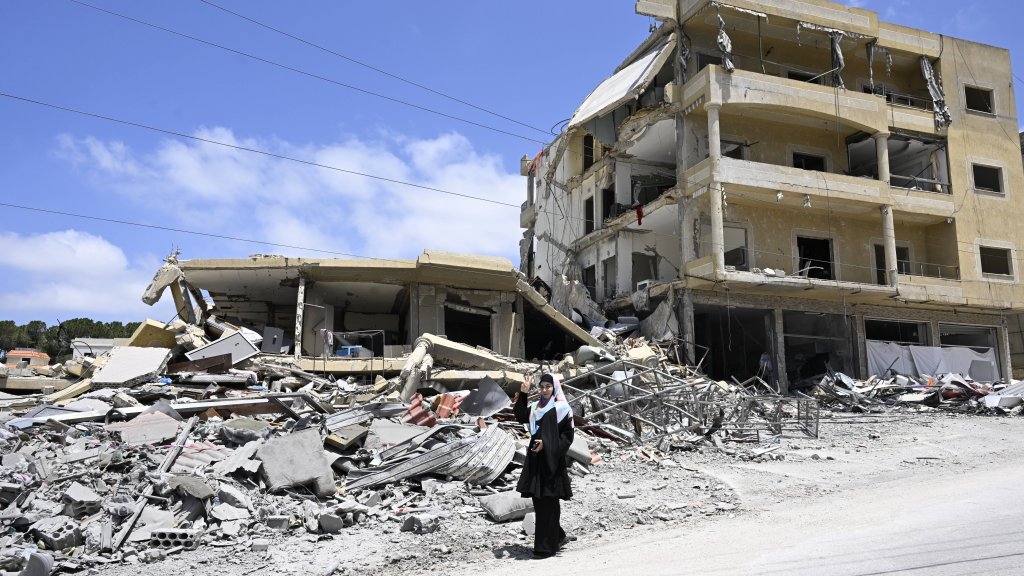
The war between Israel and Hezbollah has so far forced more than a million people to leave their homes. Southern Lebanon and the Bekaa Valley have been particularly affected, with dozens of villages evacuated. Many displaced people are staying with relatives, in tents or in communal shelters set up by the state. For LGBTQ+ people, the situation is far more difficult, several local organisations are now warning.
The key points at a glance
- More than a million people have had to leave their homes because of the war between Israel and Hezbollah, particularly in southern Lebanon and the Bekaa Valley.
- For LGBTQ+ people, communal shelters set up by the state are often not an option. People on their own are frequently turned away, while gay men and lesbians also fear homophobic hostility there.
- The organisations Mosaic and Helem therefore run their own safe spaces and support centres.
- Mosaic has expanded its capacity because of the renewed bombing.
- Alongside accommodation, there are shortages of food, blankets and psychological support.
- Aid workers criticise the state's crisis plan for failing to take sufficient account of marginalised groups such as LGBTQ+ people, women on their own and people with disabilities.
Shelter from the bombs
Gay and queer people rarely find places to turn to that do not risk becoming a threat themselves. A handful are run by the queer organisation Mosaic. In peacetime, it offers protection to LGBTQ+ people who have been thrown out of their homes or experienced violence. Since the bombing resumed in March, the situation has worsened. Mosaic opened additional LGBTQ+ shelters in flats so it could accommodate more people. Mainstream support centres are not an option for most gay people.
One of them is Karim, who is gay. He had to leave his home in Dahiya, Beirut's southern suburb, which was heavily bombed. “I would rather die than go to a communal shelter,” he tells the French news website tetu. He cites “the humiliation of having to go to a communal shelter where you live crammed together and have to wait for bad food” as his reason. But Karim fears something else too: “I would be forced to live surrounded by homophobic men …” When the bombing began, he therefore stayed with an acquaintance in the Geitaoui neighbourhood in north-eastern Beirut. He does not feel safe there either. Three years ago, he was beaten up in the middle of the street in that neighbourhood by members of Soldaten Gottes, a far-right religious group. He subsequently had to spend a month in hospital. Since then, he has paid close attention to how he dresses and avoided places he considers dangerous.
Communal shelters for families only
The LGBTQ+ organisation Helem also sees significant problems with access to state shelters. Executive director Sandy Mteirek says queer people do not feel safe there and are often not welcome either. “The national action plan implemented in response to the war was not inclusive at all – not just towards LGBTQ+ people, but also towards women on their own, people with disabilities and, more generally, anyone who does not conform to the norms.” During the previous escalation between Israel and Hezbollah in 2024, Helem had already opened three facilities to help members of the community who had become homeless. Two years later, the organisation had hoped for improvements. “This year, too, the admission criteria for communal shelters have left a great many people with nowhere to stay,” says Mteirek.
The shelters reportedly continue to take in mainly traditional families. The exclusion is usually not explicitly intended. With demand so high, the aim is to use the available space as efficiently as possible. People on their own are therefore often turned away so that a room is not occupied by one person when it could accommodate an entire family. For LGBTQ+ people, this is precisely the problem. Many live alone because their families have rejected them. Helem is therefore trying to fill at least some of the gaps. “During the war, we have become a daytime shelter,” says Mteirek, standing in front of the armoured door to the organisation's premises. “When the Israeli army orders the evacuation of entire neighbourhoods, members of the community come here and seek shelter until the bombing is over.”
More than a shortage of housing
The hardship is not limited to a lack of housing. Lebanon faces shortages of food, blankets and psychological support. For LGBTQ+ people, these problems compound an already difficult situation. “The government's neglect of minorities did not start with the war,” says Karen, a social worker at Mosaic. “Even under normal circumstances, if a queer person goes to the police to report violence, the police make fun of them – or worse!”
Her colleague Samar has herself had to leave her home in Dahiya. Every day, she sees how sharply the need for help has risen. “With the war, the number of phone calls has increased dramatically. So we somehow had to make even more room and, at times, take in more people than originally intended. Because those who call us are among the most marginalised people and have no safety net left at all.” The waiting list for accommodation shows how great the need is.
Solidarity and exclusion
The organisation aims to provide comprehensive help: “We support them through this transitional period until they have found a flat again and got back on their feet,” says Karen. At least in the immediate area around the shelters, there is a network offering residents support. Samar points out of the window at the surrounding buildings. “There are two flats over there where queer people live; on the other side were the offices of an LGBTQ+ media outlet; and the grocery shop downstairs is also very queer-friendly. We feel comfortable in this neighbourhood!” This solidarity also helps make up for a lack of money. Bechara Samneh, head of Mosaic, points to support from donors.
“For example, 80 per cent of the furniture in our first flat came from donations. When a crisis hits, the community comes together to support one another!” Mutual support cannot, however, fully make up for the feeling of exclusion. Karim himself experiences how deeply rejection can reach into families. “Last week, I visited my parents in their village in the Bekaa. My mother listed all the things we needed God to help us with: the war, the bombing near the house and … homosexuals,” he says, laughing. Then he adds: “If only she knew!” The war pits Israel against the Iranian-backed Lebanese Hezbollah. The latest escalations were triggered by attacks from both sides in connection with the Gaza war; Israel's particular aim is to weaken Hezbollah's military structures in Lebanon.








