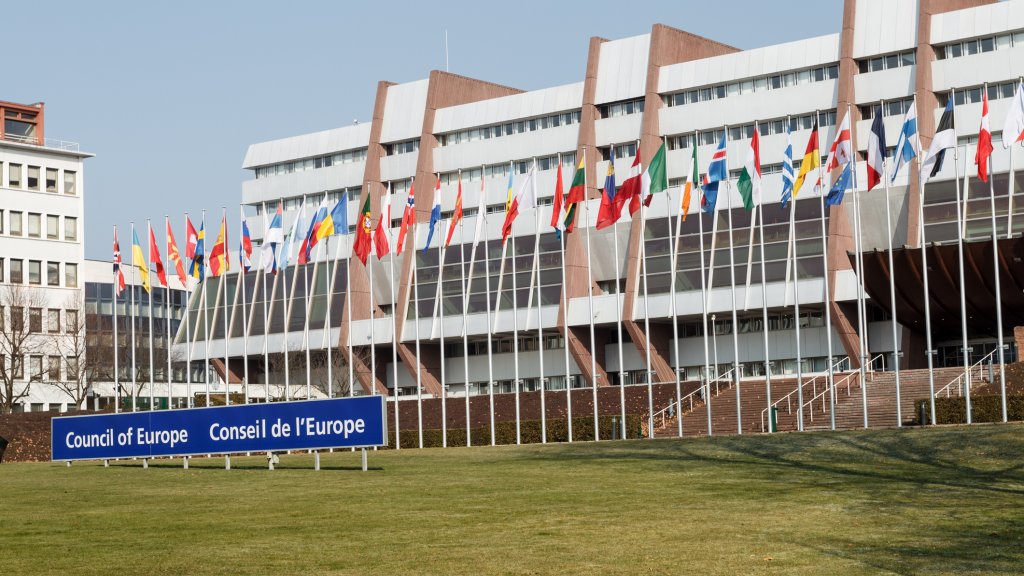
The Council of Europe has adopted its first strategy for equality for LGBTQ+ people. The newly adopted five-year plan aims to implement existing human rights commitments, promote equality and prevent discrimination and violence.
Key points at a glance
- The Council of Europe has adopted its first strategy for equality for LGBTQ+ people.
- The five-year plan runs from 2027 to 2032 and aims to prevent discrimination and violence and implement existing human rights standards.
- Its four priorities are equal rights and social acceptance, combating disinformation, protection against violence and hate, and effective legal frameworks.
- The 46 member states are to play a central role in implementation.
- The Council of Europe warns of new dangers posed by disinformation, digital technologies and artificial intelligence.
- The strategy is due to be officially presented in January 2027.
Focus on a five-year period
The strategy covers the period from 2027 to 2032. It was adopted 45 years after the European Court of Human Rights' first judgment on the rights of LGBTQ+ people. In the case of Dudgeon v. the United Kingdom, the Court delivered a landmark ruling in 1981. Since then, the case law of the European Court of Human Rights, recommendations by the Committee of Ministers, standards set by the European Commission against Racism and Intolerance (ECRI), and the work of other Council of Europe monitoring bodies have created a comprehensive framework for protecting LGBTQ+ people.
The strategy's four priorities
The new plan sets out four key areas for action. The first is recognition of the equal rights and dignity of LGBTQ+ people. A culture of respect and inclusion is intended to counter stigmatisation. Another priority is combating disinformation and the manipulation of information about queer and gay people. This is intended to protect democracy, human rights and the rule of law.
The Council of Europe also aims to prevent and combat violence and hate against LGBTQ+ people. The fourth priority is to establish, safeguard and strengthen effective legal, institutional and regulatory frameworks. Member states will play a central role in implementation. The Council of Europe aims to support them in developing standards, monitoring and cooperation. The strategy is due to be officially presented on 26 January 2027.
Secretary General emphasises a “new phase”
Council of Europe Secretary General Alain Berset described the strategy as the next step in the organisation's commitment. “The adoption of this strategy does not mark the beginning of our commitment to equality for LGBTQ+ people. It marks a new phase: providing a framework for action based on the Council of Europe's human rights standards and the commitments made by member states.” Despite significant progress, substantial differences between member states remain.
Discrimination, violence, hate speech and crime against LGBTQ+ people persist. Polarising narratives and disinformation are also increasingly targeting gay men, lesbians, bisexual and queer people. The Council of Europe sees additional dangers posed by digital technologies and artificial intelligence. These could reproduce prejudices, enable invasive surveillance, facilitate technology-enabled violence and accelerate the spread of harmful content.
Measures across many areas of life
The strategy provides for measures in numerous areas. These include private and family life, education, employment, healthcare, public services and civil society. Digital technologies and artificial intelligence are also explicitly included. “The Council of Europe was founded on the conviction that human rights belong to everyone. This strategy helps turn that conviction into reality. There are no exceptions to inclusion,” said Berset. Legal protection for LGBTQ+ people continues to vary considerably across the Council of Europe's 46 member states.
35 states have explicit criminal-law provisions protecting against incitement to hatred on grounds of sexual orientation. In 18 countries, protection extends to gender identity, in six to gender expression and in a further six to sex characteristics. Only Belgium, Denmark and Malta have laws covering all these areas. In February, the Parliamentary Assembly of the Council of Europe had already set out a European standard against so-called conversion practices. It called for effective laws, monitoring of such practices and protection for those affected. The Council of Europe is an international organisation founded in 1949, with 46 member states, which promotes human rights, democracy and the rule of law. It can develop standards and international treaties; however, its recommendations are not automatically binding on member states.








