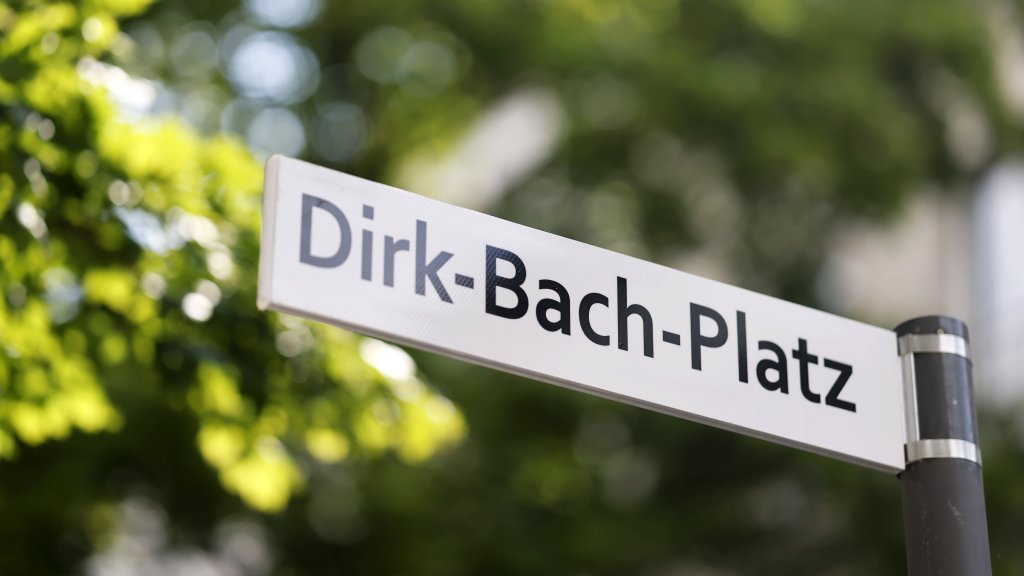
More than a decade after Dirk Bach’s death (German), the memory of the Cologne-born actor, comedian and entertainer is being given a prominent place in his home city. Tomorrow, Thursday, 1 October 2026, the square between the theatre and opera house, already officially named after Bach (German), is due to be ceremonially inaugurated. The date was deliberately chosen: Bach died on 1 October 2012 at the age of 51.
The key points at a glance
- On 1 October 2026, the 14th anniversary of Dirk Bach’s death, Dirk-Bach-Platz in Cologne will be ceremonially inaugurated.
- The square lies between the theatre and opera house. Bach made his debut at Schauspiel Köln in 1978 and became a permanent member of the ensemble in 1992.
- Georg Uecker will host the inauguration, while Ralph Morgenstern will remember his friend and colleague. Dada Stievermann will read from “Dear Dicki”, and Jonathan Briefs will recount the history of the square’s naming.
- The name has been official since 2025. The inauguration follows a years-long dispute between Cologne City Council and the Innenstadt district council, which was ultimately settled in court.
Cologne inaugurates Dirk-Bach-Platz
The event begins tomorrow at 7.30 pm, and admission is free. Actor and presenter Georg Uecker will host the evening. Ralph Morgenstern will speak about his long-standing friend and colleague. Dada Stievermann will read from “Dear Dicki”, while Jonathan Briefs will trace the long history of the naming process. Music will be provided by the Bordkapelle of StattGarde Colonia Ahoj, and surprise guests have also been announced. The inauguration is organised by Centrum Schwule Geschichte and Aidshilfe Köln in cooperation with Schauspiel Köln. For Bach, this also brings his artistic story full circle. He first appeared on stage at Schauspiel Köln in 1978, when he was 17. In 1992, he became a permanent member of the ensemble. Now the space immediately beside the theatre bears his name.
Three years of wrangling over a name
It was by no means a foregone conclusion that the signs there would actually read “Dirk-Bach-Platz” today. The naming followed years of local political and legal wrangling. The proposal to name a square in Cologne after Bach first emerged in 2021. The choice fell on the previously unnamed space in front of the theatre on Brüderstraße, often colloquially known as “Kleiner Offenbachplatz”. The location had a direct connection to Bach’s life: he was a member of the theatre’s ensemble and also performed at the neighbouring opera house.
The Innenstadt district council took up the proposal and approved the naming in June 2022. But this developed into a dispute over authority with Cologne City Council. The city council argued that, because of its location beside the municipal theatres, the space had significance extending well beyond the district and that the district council therefore could not decide on its name alone. The city instead wanted to incorporate the previously unnamed area into the existing Offenbachplatz. Another square was to be found for Dirk Bach. The Innenstadt district council, led by district mayor Andreas Hupke (Greens), took legal action against this.
Court ruling seals the naming decision
Cologne Administrative Court initially ruled in favour of the district council. The city did not accept the decision and appealed to the next judicial instance. But the district council prevailed there too. The Higher Administrative Court for North Rhine-Westphalia in Münster found insufficient evidence (German) that naming the space had such significance beyond the district that the city council could assume authority over the matter. This cleared the way for Dirk-Bach-Platz.
In 2025, the city finally implemented the 2022 decision. The official notice names the previously unnamed square in front of the theatre in Altstadt-Nord as Dirk-Bach-Platz. The corresponding street signs were installed later. The celebration on 1 October 2026 is therefore not the actual legal naming. It is the ceremonial inauguration of the already existing Dirk-Bach-Platz – at a time when the space is becoming accessible again after years behind construction fencing.
From the theatre to a TV favourite
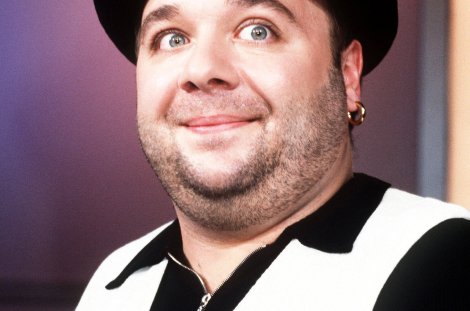
Dirk Bach was born in Cologne on 23 April 1961. By the age of 17, he was already appearing on stage at Schauspiel Köln. He did not undertake formal actor training. Instead, he worked with independent theatre groups and toured Europe. An early success came in 1984 in Walter Bockmayer’s production of “Geierwally”. In 1988, he joined the Bonn improvisational theatre Springmaus, and in 1992 Bach became a permanent member of the ensemble at Cologne’s Schauspielhaus. That same year, he reached a large television audience with the “Dirk Bach Show” on RTL. He later appeared in productions including the ZDF sitcom “Lukas” and “Der kleine Mönch”. He appeared alongside Hella von Sinnen in “Hella und Dirk”.
From 2004, Bach became known to an audience of millions as the host of “Ich bin ein Star – Holt mich hier raus!”, which he presented alongside Sonja Zietlow. At the same time, he maintained his connection to the theatre and also took on serious roles. On 1 October 2012, Bach died in Berlin while preparing for the play “Der kleine König Dezember”. He was 51. The Berlin public prosecutor’s office said at the time that he had probably died of heart failure; there was no evidence of foul play. Bach was buried in Cologne’s Melaten cemetery.
Bach and the gay community
For many gay people, Bach’s significance extends far beyond his television career. He lived openly as a gay man at a time when such visibility on German television was still far less commonplace than it is today. Bach made no secret of his homosexuality and publicly campaigned for equal rights for gay men and lesbians, as well as in the fight against HIV and AIDS. For example, he took part in the “Eins zu Eins” campaign, which called for legal equality for same-sex couples and for marriage to be opened up to them. Bach did not live to see the introduction of marriage for same-sex couples in Germany in 2017. He was also particularly active in the fight against HIV. His benefit concert series “Cover me” raised around €350,000 for charitable causes over ten years. A housing project for people with HIV was renamed Dirk-Bach-Haus after his death.








