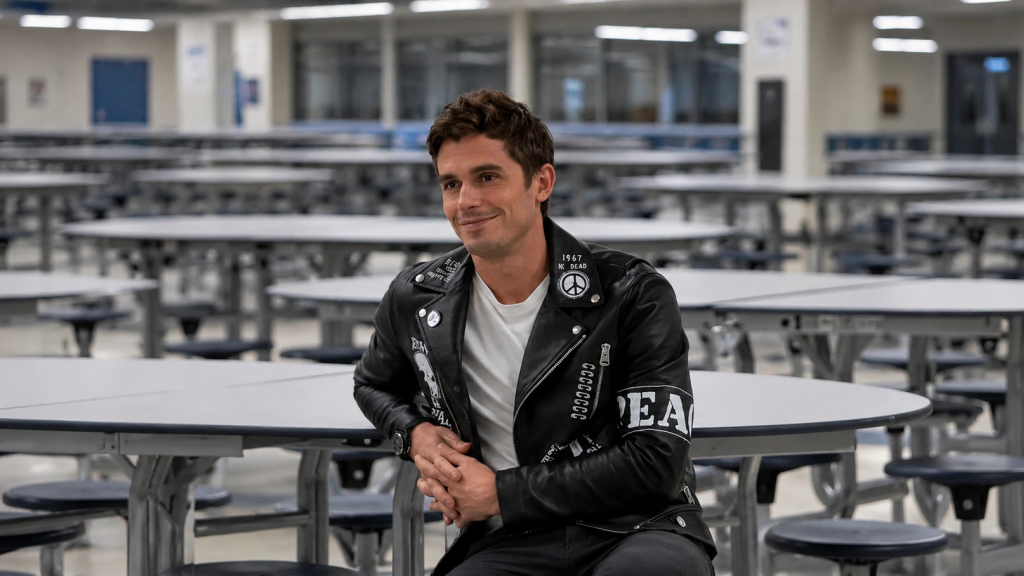
A leather jacket designed for Queer Eye star Antoni Porowski (German) is at the centre of a US legal case. Fashion designer James Concannon accuses toy manufacturer LEGO of using his design without permission for a set based on the successful reality series, thereby infringing his copyright. A federal judge has now partly rejected an initial attempt by LEGO to have key claims dismissed before trial.
The key points at a glance
- Designer James Concannon is suing LEGO over a leather jacket reproduced for the “Queer Eye – The Fab 5 Loft” set.
- Concannon designed the original specifically for Queer Eye star Antoni Porowski in 2018. Porowski wore the jacket on the show in 2019.
- A US federal judge has now partly refused to dismiss Concannon’s copyright claims before trial. The legal dispute will therefore continue.
- LEGO relied, among other things, on an implied licence and the US fair use doctrine. The court did not accept either argument at this stage.
- In the court’s view, giving the jacket to Porowski did not mean that Concannon had granted others permission to copy and distribute his design.
Leather jacket in court
Judge Omar A. Williams of the US District Court for the District of Connecticut has now denied parts of a motion for summary judgment filed by the Danish toy manufacturer, as The Fashion Law reported. Various copyright claims brought by Concannon therefore remain in place. LEGO had argued, among other things, that there was an implied licence to use the design. The company also relied on the fair use doctrine enshrined in US copyright law. The court did not accept either defence at this stage of the proceedings.
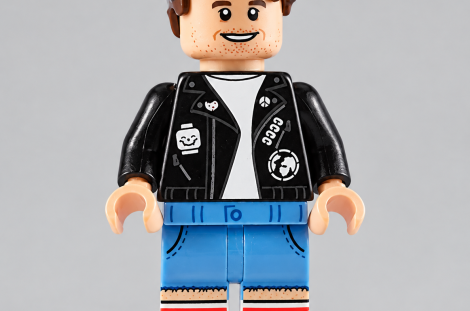
The dispute goes back several years. In 2018, Concannon designed a leather jacket specifically for Antoni Porowski, one of the “Fab Five” from Queer Eye. The designer gave the garment his “signature, propaganda-influenced aesthetic”. Porowski wore the jacket in a 2019 episode of Queer Eye. Two years later, a reproduction of the garment appeared in the LEGO set “Queer Eye – The Fab 5 Loft”, released in September 2021.
A comparison image posted by Concannon on Instagram in 2021 shows distinctive design elements on both jackets. These include a peace sign on the left lapel and a skull motif on the upper right chest. According to CNN, Concannon alleged in his original lawsuit that LEGO had not asked his permission for “the unique placement, coordination and arrangement of the individual artistic elements” when reproducing Porowski’s jacket for the set.
“Unpaid art”
Concannon publicly vented his anger in the same year the LEGO set was released. In November 2021, he addressed the toy manufacturer directly on Instagram. “I’ve been holding back my inner resentment for a while, but today I’m angry, so let’s go. Hey @lego, it was quite an honour to see you recreate my art,” the designer wrote. According to Concannon, he had previously spoken to company representatives several times and had been promised copies of the set.
“After several calls with various company representatives, I was promised a few boxes, including my recreated and unpaid art, so that my son and I could play with it. Your staff told me how much they love creatives. It was really sad to be told on release day: ‘We can’t send you a box, but you can buy one’,” Concannon wrote. His subsequent criticism was blunt: “I used to really like Legos. Now = intellectual property theft. Feel free to tag @lego and let them know what you think! Also, if there’s an intellectual property lawyer who thinks they can make a case out of this, get in touch with me. Shame on you, @lego.” Concannon ultimately filed a lawsuit against LEGO in 2021.
A gift is not a licence
One issue in the current proceedings was which rights Concannon had transferred by giving the jacket to Porowski. LEGO argued that there was an implied licence. However, the court concluded that Concannon’s gift to Porowski did not automatically include permission to copy and distribute the garment’s artistic design beyond that. The court also considered an earlier legal dispute over the depiction of NBA players’ tattoos in video games.
In “Solid Oak Sketches v. 2K Games”, basketball players’ tattoos had been reproduced for their digital avatars. The court distinguished that case from Concannon’s leather jacket. The crucial difference was that a leather jacket could not be regarded as part of a person’s appearance in the same way. Tattoos are permanently attached to the body, whereas clothing can be changed.
LEGO changed the lettering
LEGO’s reliance on “fair use” also failed to convince the court at this stage. Among other things, the court pointed to the commercial nature of the LEGO set and found that the reproduction of the artistic elements had not been sufficiently transformative. LEGO had not, however, copied the design entirely unchanged. Concannon’s jacket originally bore the words “THYME IS ON MY SIDE”. For the LEGO version, this was changed to “REBUILD THE WORLD”.
According to the court’s findings, however, the typeface and the appearance of dripping paint were retained. The legal dispute is therefore not over. In particular, the decision does not mean that Concannon has already secured a final victory on his copyright allegations. Rather, the court has refused to dispose of substantial parts of his claims through summary judgment.
Significance for the industry
The Fashion Law sees the case as a potential reminder for companies to consider more than celebrities’ own rights when depicting them commercially. Third-party rights – such as those of fashion designers whose work forms part of the appearance being depicted – could also require separate consent. The series that sparked the legal dispute, meanwhile, is already history. Queer Eye aired its final episode in January (German). Public disputes surrounding the show continued beyond its conclusion, however. Since the start of the year, several cast members have spoken about behind-the-scenes disputes and conflicts described as “toxic” (German) that had divided the “Fab Five” even before the series ended.








