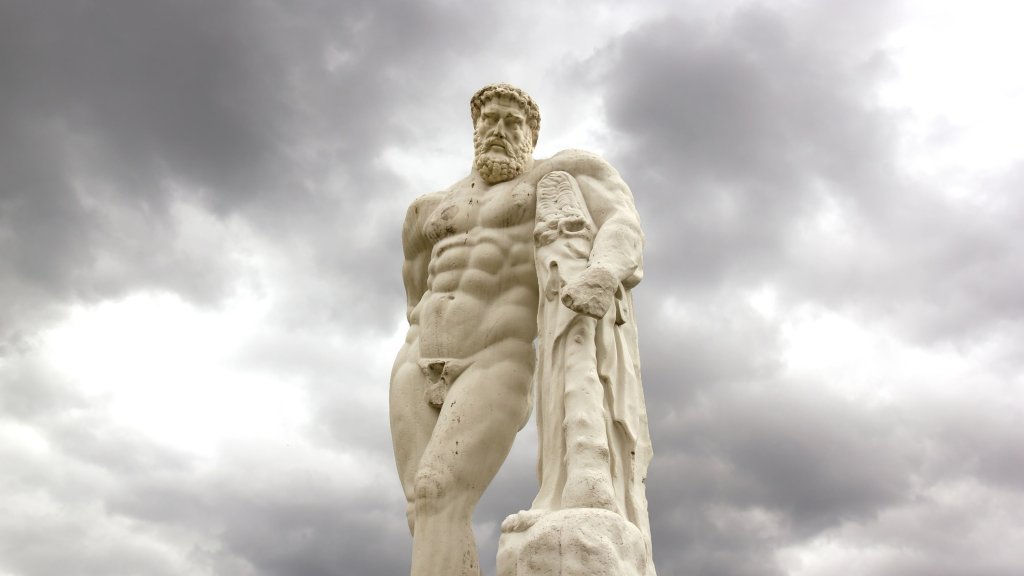
Hercules is one of the best-known figures in Greek mythology. His extraordinary strength and adventures have been recounted time and again over millennia. Yet one part of his story as handed down through the ages often plays a much smaller role in modern portrayals: Hercules, also known as Heracles, is said to have had several male lovers as well as female ones.
Key points at a glance
- According to ancient accounts, the Greek hero Hercules, or Heracles, had not only female lovers but also several male ones.
- The Greek-Roman author Plutarch reportedly wrote that Hercules' male and female love affairs were so numerous that they could scarcely be listed.
- Particularly well known is the story of Hylas, whom Hercules is said to have taken in as a companion and lover after the death of Hylas' father.
- Abderus and Nireus are also named as male lovers of Hercules.
- Same-sex desire appears in numerous Greek myths. Well-known examples include Zeus and Ganymede, and Achilles and Patroclus.
- Homosexual aspects of ancient stories were often downplayed or omitted in later centuries.
Hercules and his lovers
The Greek-Roman author Plutarch even reports that Hercules' male and female love affairs were so numerous that it would scarcely be possible to list them all. Among the surviving stories about relationships between men, his bond with Hylas holds a particularly important place. According to tradition, Hercules took Hylas in as a companion and lover after killing his father in battle. Rather than treating the young man as a prisoner, Hercules became his mentor. A romantic relationship is said to have developed between them. The story, however, ends tragically. Hylas is carried away by nymphs and disappears.
The ancient Greek poet Theocritus tells the story in his “Idylls”. In it, “golden-haired Hylas” sets off to fetch water for a meal he is to share with Heracles and Telamon. A nymph falls in love with the young man and pulls him into the water. Hylas cries out but cannot save himself. Hercules then sets out in a desperate search for his missing companion. Theocritus describes how he roams “wildly to and fro” through rugged terrain, covering great distances out of longing for the young man. Hylas, however, does not return.

A loss that shapes the story
The bond between Hercules and Hylas is not merely a minor episode. In the mythological account, the loss of his companion also influences the hero's subsequent behaviour. Hercules is said to be so preoccupied with searching for Hylas that he misses the departure of the ship that brought him to the island. The absence of this part of the tradition from modern adaptations such as Disney's version of the Hercules story is an example of how homosexual elements of ancient myths can be omitted in later retellings.
Same-sex desire
Relationships and sexual desire between people of the same sex also feature in other stories from Greek mythology. Well-known examples include Zeus and Ganymede, and Achilles and Patroclus. In some of these accounts, such relationships are also important to the plot, explaining the decisions and actions of the figures involved. Another example is the story of Orpheus and Eurydice. After Orpheus loses his wife, who enters the underworld on their wedding day, he subsequently turns away from women and towards men, according to the Roman poet Ovid's account.
Abderus and Nireus
Even after the loss of Hylas, traditional accounts attribute further relationships with men to Hercules. Abderus is said to have been among his male lovers. According to these accounts, he too died before Hercules. The hero is then said to have named a Thracian city after him. Another lover named is Nireus, who is described in Greek tradition as one of the most beautiful men in Greece after Achilles, or as the second most beautiful. A charioteer is also said to have been a partner of Hercules, with a connection to the Sacred Band of Thebes. This elite military unit consisted of 300 men who are said to have been organised in pairs. The idea was that the personal bond between the men would strengthen their motivation in battle.
Homosexual aspects barely visible
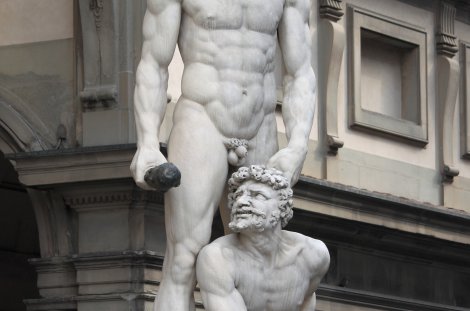
According to historians, the fact that Hercules' relationships with men are far less well known today than his battles and heroic deeds stems from the way later societies treated ancient accounts. They suggest that homosexual or homoerotic aspects were sometimes downplayed or ignored altogether in later portrayals of heroes, poets, politicians and writers. They have not disappeared completely, however. Numerous ancient texts, as well as homoerotic poetry, art and accounts of military history, have survived to this day. The stories of Hylas, Abderus and other men thus reveal a side of the famous hero that barely features in many modern versions of his adventures – perhaps these aspects of his life would make school lessons on Greek mythology a little more exciting.








