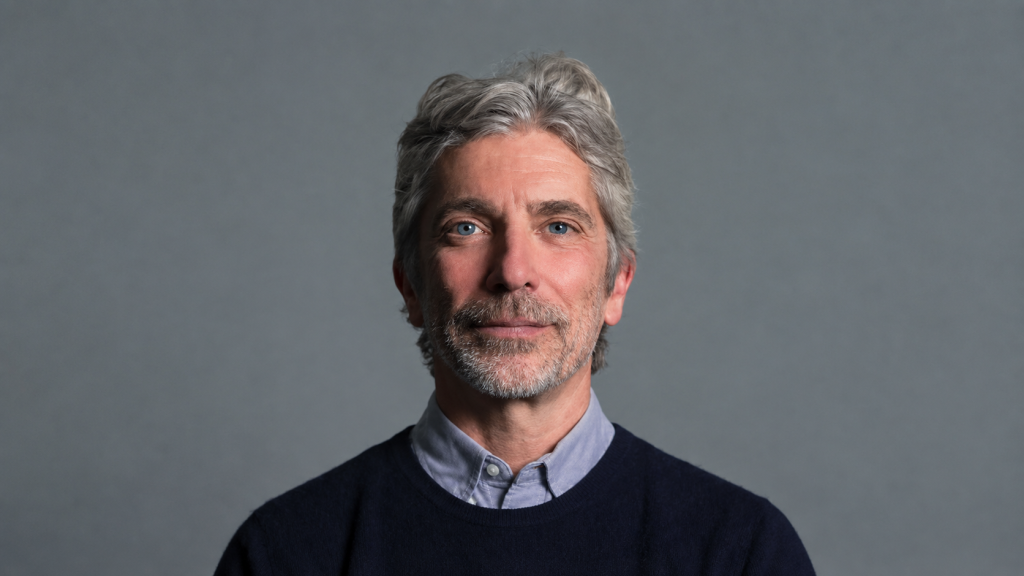
Independent UN expert Graeme Reid warns of increasing political and social pressure on LGBTQ+ people in numerous countries. In particular, he sees the rise of authoritarian populism and the weakening of democratic structures as factors that encourage discrimination and the introduction of corresponding laws
Key points at a glance
- UN expert Graeme Reid warns of a growing number of laws and political campaigns targeting LGBTQ+ people.
- Reid sees a significant link with the rise of authoritarian populism and the erosion of democratic structures.
- According to him, LGBTQ+ people in prisons are particularly at risk.
- Propaganda laws now go beyond bans on certain sexual acts.
- Some states fundamentally reject Reid’s mandate at the UN Human Rights Council.
Discrimination in prisons
Reid is the UN Independent Expert on protection against violence and discrimination based on sexual orientation and gender identity. The South African academic previously headed the LGBTQ+ rights programme at Human Rights Watch. In an interview with Geneva Solutions, he has now spoken particularly about the situation of LGBTQ+ people in detention. The interview follows a report by the Geneva-based Association for the Prevention of Torture (APT), to which Reid contributed. Drawing on experiences from different regions, the 80-page document examines the forms of discrimination and ill-treatment that LGBTQ+ people face in detention. Reid sees the problem as beginning even before any potential imprisonment. He said LGBTQ+ people were disproportionately represented in the criminal justice system for various reasons, with social exclusion and disadvantage playing an important role. “There are two aspects. The first is the question of why LGBTQ+ people are disproportionately represented in the criminal justice system,” Reid said. He cited barriers in education as an example. Bullying and other negative experiences at school could lead to poorer performance or cause those affected to drop out of school altogether.
Stigmatisation and discrimination could subsequently make it harder to access certain forms of employment. This could marginalise gay and queer people socially and economically, eventually pushing them into informal employment or work whose legal status is unclear. In Reid’s assessment, there is therefore a direct link between discrimination and stigmatisation on the one hand and the risk of arrest and imprisonment on the other. Social discrimination does not disappear with imprisonment. According to Reid, it can even intensify behind prison walls. Violence could come both from other prisoners and from prison staff. Discriminatory or degrading practices by authorities and prison staff could, in turn, stem from prejudice, but also from a lack of knowledge.
Populist developments
The UN expert is also concerned about legislative developments in various countries. Same-sex sexual relations are criminalised in several African states. At the same time, Western countries have provisions that repeatedly target LGBTQ+ people directly. In Reid’s assessment, such laws can reinforce the idea that discrimination and stigmatisation are justified. While traditional bans on consensual same-sex relations targeted particular sexual acts, newer so-called propaganda laws cover a much wider range of areas.
“The latest wave of laws, so-called propaganda laws, however, expands this enormously and encompasses any public expression of identity,” Reid said. This has direct consequences for organisations working for the rights of LGBTQ+ people. Their work could be hampered, for example, by legal requirements or restrictions on their funding. Behind developments in different states, Reid identifies a common political factor: “The rise of authoritarian populism.” In his assessment, authoritarian populists deliberately target vulnerable minorities to mobilise political support.
LGBTQ+ people in geopolitical conflicts
The UN expert cites the growth of illiberal democracies as another development. Protecting minorities is a pillar of democratic systems, he said. The erosion of democratic structures therefore also increases the vulnerability of LGBTQ+ people. According to Reid, they are blamed for economic difficulties in various countries or portrayed as the antithesis of a supposedly better past. He cited Russia as an example. The Russian Federation had adopted the so-called law against gay propaganda at a political moment when the opposition had grown stronger, particularly in urban centres. In Reid’s assessment, this served to consolidate a conservative base of support at home. At the same time, Russia had positioned itself internationally as a defender of so-called traditional values.
Reid is particularly concerned that the rights of sexual and gender minorities are increasingly becoming part of international political disputes. “What worries me is that the rights of LGBTQ+ people have almost become a symbolic marker of these geopolitical conflicts around the world,” Reid said. Gay and queer people were being “portrayed as a threat to the family, to children and to the nation itself”. This put them in a particularly vulnerable position.
Resistance within the UN human rights system
According to Reid, these political conflicts are also reflected in his work at international level. Within the UN Human Rights Council, there is resistance to addressing sexual orientation and gender identity. Several states do not recognise the Independent Expert’s mandate. When he presented his first report to the UN General Assembly, there had been a demonstrative walkout after he was introduced as the Independent Expert on sexual orientation and gender identity.
In his interpretation, this rejection is therefore not merely directed at individual aspects of his work. “This makes it clear that this is not an objection to details or to the specific issue I am dealing with,” Reid said. Rather, the position was “that issues of sexual orientation and gender identity do not belong in the human rights system at all and should instead be relegated to the realm of tradition, culture and morality”. Reid described this as “a fundamental objection to the universality and indivisibility of human rights”. Despite this resistance, Reid says he tries to maintain dialogue with representatives of states that are critical of his mandate. Informal contacts were sometimes necessary because other channels of communication were unavailable. He considered it important to build bridges and find common ground.








