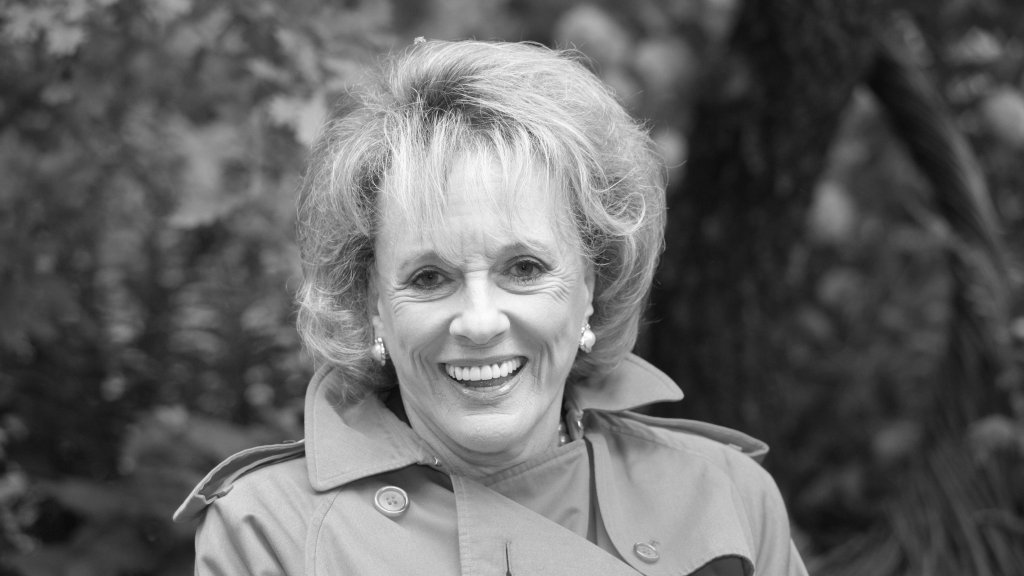
British television presenter and activist Dame Esther Rantzen has died at the age of 86. She died on 30 September at her home in the New Forest, surrounded by her family, a spokesperson confirmed to Sky News. Alongside her decades-long television career, Rantzen championed children and older people – and was also an early advocate for LGBTQ+ people.
Key points at a glance
- British presenter and activist Dame Esther Rantzen has died at the age of 86.
- She gave queer people visibility on television as early as the 1980s.
- In 1996, she devoted an episode of her programme “Esther” to coming out.
- Childline, which she founded in 1986, also supports children and young people with questions about sexuality and gender identity.
- Rantzen warned against making these subjects taboo and thereby driving young people into isolation.
Coming out on television
Rantzen was best known as the presenter of the BBC programme “That’s Life!”, which she hosted from 1973 to 1994. In 1991, she was awarded an OBE for services to broadcasting, followed in 2006 by a CBE for her work for children. In 2015, she was made a Dame for services to children and older people. In November 1996, Rantzen devoted an episode of her programme “Esther” to coming out. At the time, the legal and social circumstances for gay people in Britain were still markedly different: the age of consent had not yet been equalised for gay and heterosexual people, and lesbians, gay men and bisexual people were not yet allowed to serve openly in the British armed forces.
On the programme, Rantzen spoke to guests including Richard Fairbrass of Right Said Fred about his coming out. Radio presenter Peter Price also shared his painful experiences. Rantzen had also interviewed trans people on her programmes as early as the 1980s. Her guests included Janett Scott, the former president of the Beaumont Society, an organisation supporting trans people. Rantzen and her programme were credited with providing visibility at a time when queer issues rarely featured in public discussion. Rona Rees, who later appeared on BBC Radio Cymru, described the programme as a “eureka” moment. She said she had subsequently contacted the Beaumont Society and begun her transition. In 2018, Rantzen also honoured trans volunteer Ben Whelan for his contribution to society.
A source of support for young people
Among Rantzen’s most significant projects was Childline, founded in 1986 as Britain’s first nationwide telephone helpline for children in distress or danger. It also supports young people with questions about their sexual orientation or gender identity. Childline provides counselling to around 6,000 under-18s each year. Rantzen said: “I have met young people who were deeply unhappy because they could not talk to anyone about questions concerning their sexuality or gender.” Many, she said, were afraid of losing friends or being rejected by their families. “I am glad they felt they could talk to Childline and share their feelings without being judged or stigmatised.”
She also warned of the consequences of making these subjects taboo: “If we make these issues taboo, it can leave children feeling guilty and rejected. In some cases, this has even led to depression and even suicide.” Her appeal was therefore: “We all need to listen with empathy, support young people and protect them from this profound unhappiness and loneliness.” More recent figures also demonstrate the importance of this counselling: in June 2026, the child protection charity NSPCC, which runs Childline, reported that it had provided around 2,500 counselling sessions for children and young people with concerns relating to sexuality or gender identity. Coming out was the subject of 43 per cent of these sessions.








