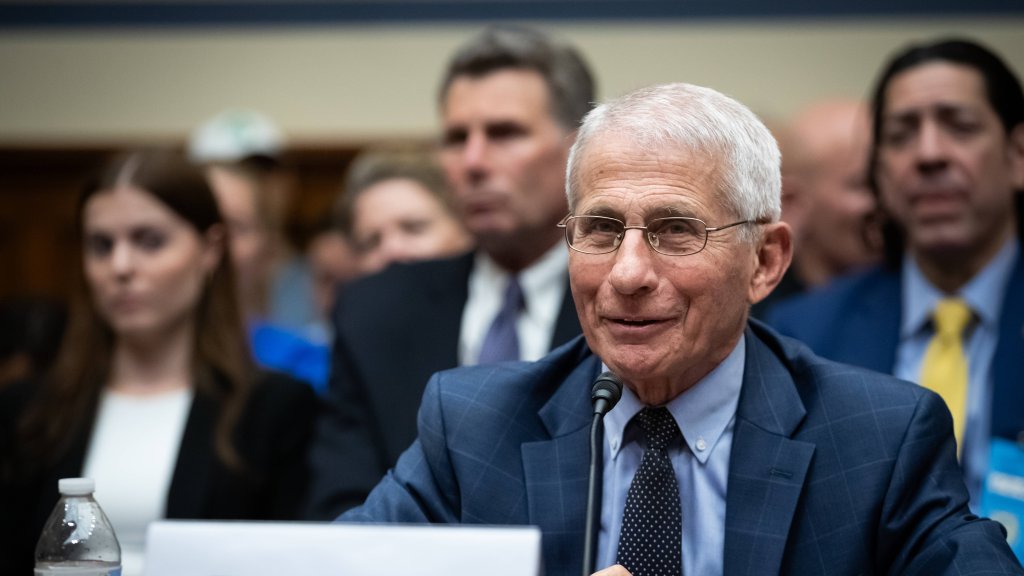
US immunologist Anthony Fauci (85) has been honoured for his decades of commitment to the fight against HIV and AIDS and his collaboration with the LGBTQ+ community. The LGBTQ+ history organisation Equality Forum presented him with its International Role Model Award.
Key points at a glance
- Anthony Fauci has received the International Role Model Award from Equality Forum for his work during the HIV/AIDS crisis.
- In his acceptance speech, Fauci paid tribute to his decades-long connection with the LGBTQ+ community and its commitment to fighting HIV/AIDS.
- HIV/AIDS activist Peter Staley presented Fauci with the award and recalled the resistance the physician faced in his work.
- Fauci helped design PEPFAR, the international HIV/AIDS programme launched in 2003, which has invested more than $100 billion and saved millions of lives.
- As early as the 1980s, Fauci sought direct contact with the gay community, including visits to gay saunas and clubs.
- Fauci identifies the involvement of affected communities and the importance of basic scientific research as key lessons from the AIDS crisis.
- Fauci also received the Presidential Medal of Freedom from US President George W. Bush for his efforts to combat the HIV/AIDS epidemic.
Grateful and full of joy
Fauci used his acceptance speech to reflect on the close bond that had developed over his decades of work with the LGBTQ+ community. “Throughout all these decades, I have not simply admired the community – I have truly enjoyed being part of the dialogue with it,” Fauci said. “I have enjoyed the arguments, debates, disagreements, humour, friendship and, above all, the extraordinary commitment to alleviating suffering and preventing premature deaths among people with HIV.” He therefore also saw his award as recognition of this shared history. “I am grateful to Equality Forum for this award. I am grateful to the LGBTQ+ community for allowing me to become part of its struggle over all these years, and it is a great honour to be part of your history.”
Working together in a crisis
The award was presented by HIV/AIDS activist Peter Staley. He also recalled Fauci’s persistence in the face of the fierce criticism his work sometimes attracted. Long before Fauci took a leading role in the US response to the Covid-19 pandemic as director of the National Institute of Allergy and Infectious Diseases, the AIDS crisis shaped his scientific work. In the 1980s and 1990s, he was among the leading researchers fighting what was then a new and deadly disease. Fauci faced considerable criticism, particularly at the start of the epidemic. At the same time, he sought direct dialogue with members of the LGBTQ+ community. He listened to the concerns and demands of those affected and worked with them on ways to develop effective treatments.
Visits to gay saunas
Fauci described the lengths he went to in seeking contact with the community at the time in a 2021 interview with Terry Gross for the NPR podcast “Fresh Air”. According to his account, he also visited gay saunas and clubs in the 1980s. He said he had wanted to see the reality of people’s lives for himself in order to become a better immunologist. The conversation also addressed the role of the US administration at the time. Gross asked Fauci whether Republican President Ronald Reagan had made his work more difficult. “Reagan was supported by the religious right, which had a very anti-gay agenda,” Gross said. “And that was, in a sense, a very central part of their political agenda. Do you think that affected the funding you needed for AIDS research?” Fauci replied: “You know, I think to some extent it did.”
The right side of history
In the interview, the physician also drew a comparison between the protests during the AIDS crisis and the opposition to his work during the Covid-19 pandemic. He said the AIDS activists of that time had been “on the right side of history”. He had also not felt threatened by them in the same way as he had by people protesting against Covid-19 vaccinations. Fauci said he had drawn two key lessons from his experiences of the AIDS epidemic: “One is how important it is to involve the community, to work with the community and to address its particular needs. If you look at the incidence of infection and the incidence of severe illness, including hospitalisations and deaths, Black people suffer disproportionately more than white people.”
The importance of basic research
Fauci identified the importance of basic scientific research as the second key lesson. Advances in the development of targeted medicines in particular had fundamentally changed the outlook for people with HIV. “We also learned how important basic scientific research is in finding solutions,” Fauci explained. “In the early days, an HIV infection was effectively a death sentence for the overwhelming majority … It was basic scientific research into the targeted development of medicines that enabled us to develop combinations of drugs … which ultimately transformed the lives of people with HIV.”
PEPFAR saved millions
Fauci later also helped design PEPFAR. Established in 2003, the US government programme to combat HIV and AIDS worldwide has invested more than $100 billion and saved millions of lives. However, cuts by the current US administration have put the programme’s future at risk. Fauci had previously been honoured at the highest level of government for his contribution to combating the HIV/AIDS epidemic. US President George W. Bush awarded him the Presidential Medal of Freedom. Equality Forum’s International Role Model Award now adds a further honour, recognising in particular Fauci’s role in the shared history of the fight against HIV/AIDS and his long-standing collaboration with the LGBTQ+ community.








