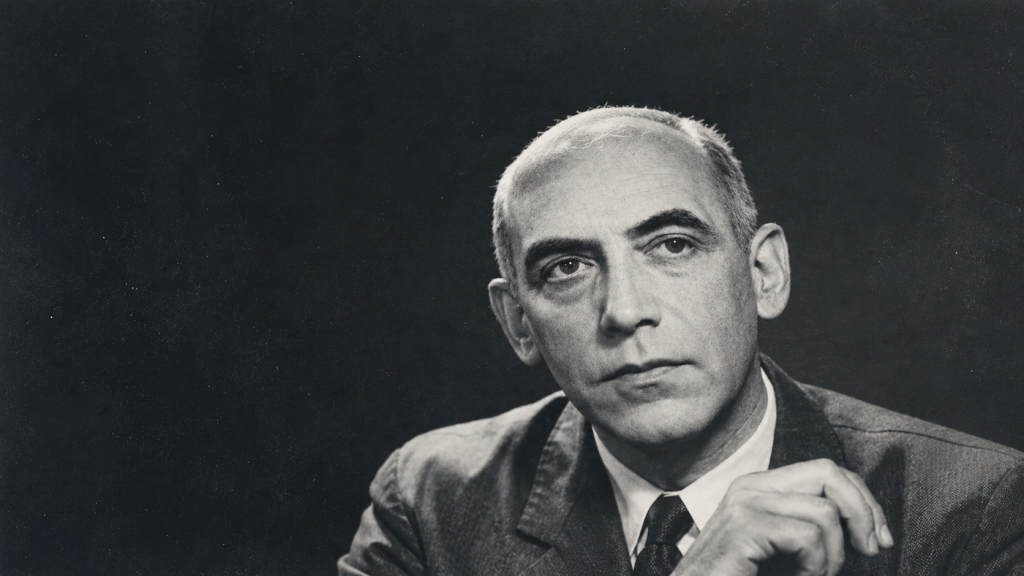
He was one of the early thinkers behind the American gay rights movement and was already calling for equal rights for gay people in the early 1950s. Later, Donald Webster Cory, whose real name was Edward Sagarin, adopted positions that made him a controversial figure within his own community. The new documentary “Odd Man In” traces this development for the first time, asking how a celebrated pioneer became such a divisive figure.
Key points at a glance
- The documentary “Odd Man In” explores the life and contradictory legacy of US gay rights pioneer Donald Webster Cory, also known as Edward Sagarin.
- Cory’s 1951 book “The Homosexual in America” was among the early non-fiction books about the lives of gay people in the US and unexpectedly became a bestseller.
- In it, Cory described gay people not as sick or sinful, but as an oppressed minority who needed to fight for equal rights.
- By the mid-1960s, his position had changed significantly: in “The Homosexual and His Society”, he linked homosexuality to mental illness, while maintaining his demand for equal rights.
- Director Matt Nadel describes Cory as a “pioneer turned traitor” and seeks to understand how his contradictory development came about.
- “Modern Family” star Jesse Tyler Ferguson is an executive producer of the film.
- Cory’s only son, Fred Sagarin, who knew nothing of his father’s secret double life as a gay author and activist, also appears in the documentary.
An unexpected bestseller
PBS and Independent Lens are releasing the documentary ahead of the 75th anniversary of Cory’s influential book “The Homosexual in America”. Published in 1951, it was among the earliest non-fiction books to explore the lives of gay people in the United States. The book appeared at a time when social conditions for gay people in the US were marked by repression and discrimination. This was the McCarthy era and the so-called Lavender Scare, during which gay people were, among other things, forced out of government employment. There was also widespread censorship and a strongly anti-gay social climate. Despite these conditions, “The Homosexual in America” unexpectedly became a bestseller.
An oppressed minority
At the time, Cory wrote openly from the perspective of a man who described himself as homosexual. His arguments differed markedly from many contemporary ideas about homosexuality. Gay men and lesbians were neither sick nor sinful, he argued. Instead, he saw them as an oppressed social minority who needed to fight for equal rights. In the early 1950s, Cory was thus articulating ideas that would later become central demands of the LGBTQ+ civil rights movement. His book helped inspire the early movement for gay rights in the United States. Yet Cory’s position would not remain this way.
Cory changes his position
In the mid-1960s, the author underwent a marked change. In his book “The Homosexual and His Society”, Cory adopted a position that differed considerably from his earlier statements. He continued to argue that gay men and lesbians deserved equal rights. At the same time, however, he now linked homosexuality to mental illness. This brought Cory increasingly into conflict with the very community whose early emancipation movement he had helped shape through his writing. This rupture is at the heart of “Odd Man In”. The documentary seeks to re-examine Cory’s complicated legacy and understand how a once-celebrated pioneer became a controversial figure within his own community.
From pioneer to traitor
The film is directed by award-winning documentary filmmaker Matt Nadel, who also produced “Odd Man In”. For him, the challenge lies in examining both Cory’s historical significance and his later development. “The film asks what we owe this pioneer turned traitor – a man who laid the foundations for the modern queer movement and then turned his back on it,” Nadel explained. The director says his aim is explicitly not to absolve Cory retrospectively of criticism of his later positions. “With this film, I wanted to work against that impulse, not because I wanted to rehabilitate Cory’s image, but because I wanted to understand him in his historical and social context.”
The documentary also asks about the contradiction between Cory’s early visions for society and his own life. “Why could Cory imagine a more liberated queer future, yet was unable to live it himself?” is one of the questions the film explores. It also asks why someone who was influential in the early gay rights movement is now largely unknown. “And if he was once celebrated as the father of the queer movement, even if he was later condemned as its senile grandfather, why do today’s audiences know nothing about him?” “Odd Man In” thus aims not only to tell Cory’s life story, but also to examine how a community deals with historical figures whose work includes both pioneering elements and others that later drew sharp criticism.
Jesse Tyler Ferguson joins the project
The project also has the support of actor Jesse Tyler Ferguson (German). The gay actor, known for the series “Modern Family”, serves as an executive producer alongside award-winning documentary producer Caroline Waterlow. Ferguson sees engaging with the past as a way to put current developments into perspective. “We need bold documentaries like ‘Odd Man In’ that illuminate our past so we can better navigate our present,” he explained. Ferguson particularly praised Nadel’s handling of Cory’s contradictory personality. He described the film as a “complex, compassionate portrait”. In it, Nadel finds the humanity in a “flawed but consequential figure forgotten by history”, Ferguson said. “I’m so proud to be part of this film and grateful that there are platforms to connect audiences with important stories like this one.”
A father’s double life
Cory’s family offers a distinctive perspective on him. Fred Sagarin, the author’s only son, was interviewed for the documentary. According to the report, Sagarin knew nothing of his father’s secret double life as a gay writer and activist. “Odd Man In” thus sheds light not only on Cory’s public significance for the early gay rights movement, but also on the contrast between his published ideas about gay emancipation and his personal life. Another contemporary witness is Elliot Friedland, a protégé of Cory’s. He also appears in the documentary. Friedland met Cory in the 1960s. At the time, Friedland was a college student and had not yet publicly come out as gay. The documentary will be released in the US in mid-October and is then also expected to reach Germany through festivals and a streaming release, although further details are not yet known.








