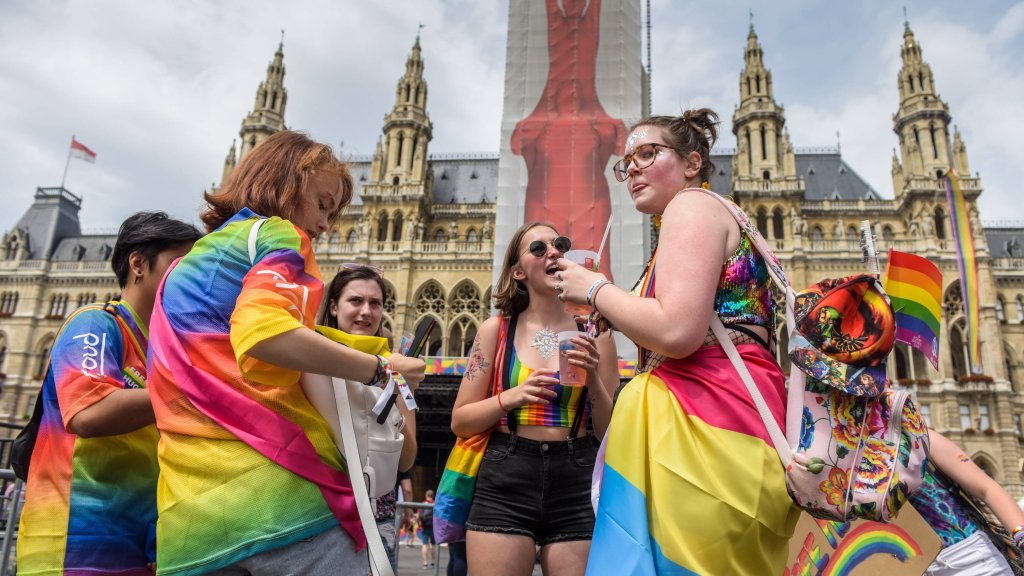
Increasing discrimination against gay, lesbian, bisexual and queer people in Austria is having a significant impact on their mental health, according to experts. Children and young people in particular are suffering in a social climate marked by growing rejection and uncertainty.
Key points at a glance
- Discrimination is increasing: in Vienna, the proportion of queer people regularly experiencing discrimination in public spaces rose from 28 to 38 per cent within ten years.
- Young people are particularly affected: a quarter of queer school pupils, university students and apprentices have not come out. A fifth report explicitly negative experiences.
- The mental health burden is growing: according to a study by Bielefeld University, LGBTQ+ people are two and a half times as likely to develop depression as people outside the community.
- Violence fuels fears: following the suspected homophobic killing of a 29-year-old in Langenzersdorf, particularly large numbers of people sought support.
- HOSI Wien is calling for more decisive action against violent networks and better access to queer-friendly psychosocial counselling.
Increasing discrimination
Ewald Lochner, the City of Vienna’s coordinator for psychiatry, addiction and drug issues, and Ann-Sophie Otte, chair of Homosexuellen Initiative (HOSI) Wien, have highlighted the latest negative developments. Both see an urgent need for action to better protect those affected from violence and exclusion. Lochner speaks of a “social backlash” that is increasingly worsening living conditions for queer people. Otte holds the political climate and the “massive shift to the right across Europe” particularly responsible for this development. Figures from a City of Vienna study show how much the situation has changed.
According to the study, in 2015, 28 per cent of respondents from the LGBTQ+ community reported regularly experiencing discrimination in public spaces. Ten years later, that proportion had already reached 38 per cent. This represents an increase of ten percentage points within a decade. According to Lochner, the growing rejection is also apparent in everyday situations. “If you walk through the city hand in hand with your partner as a gay man, you face hostility more often.” The consequences are not limited to individual encounters. Those who have to expect insults or hostile reactions at any time may also feel less safe in public life. Young people in particular are under considerable strain as a result, he says.
Young people hide their sexual orientation
For many gay, lesbian, bisexual and queer young people, coming out remains fraught with uncertainty. According to the available figures, a quarter of LGBTQ+ school pupils, university students and apprentices have not yet come out. A fifth report explicitly negative experiences. Fear of rejection and discrimination can lead young people to hide their sexual orientation or gender identity from those around them. Psychosoziale Dienste in Wien is also observing a growing need for support. Increasing numbers of people from the queer community are contacting its accessible point of contact, “First Level Support”. Young people in particular use the service to discuss personal fears, distressing experiences and their circumstances.
Killing fuels fears
The extent to which acts of violence can affect an entire population group’s sense of safety became clear following the death of a 29-year-old gay man from Vienna. The man was killed in the summer in Langenzersdorf near Vienna. According to findings so far, he was lured into a trap through a dating app and beaten to death out of hatred of gay men. The suspected perpetrator is an 18-year-old man from Hungary. According to Otte, support services received particularly large numbers of enquiries after the case became public. Such events have far-reaching consequences, even for people not directly affected by the violence, she said. Discrimination and violence affect not only the victims themselves, “but everyone else experiences fear as a result”, Lochner also said. This can heighten the perception of a possible threat throughout the community. It creates additional psychological pressure for those affected, who may fear becoming victims of a similar attack themselves.
Increased risk of depression
According to the experts, the consequences of exclusion, rejection and violence can also manifest themselves in mental illness. In this context, Lochner points to a study by Bielefeld University. It found that people from the LGBTQ+ community are two and a half times as likely to develop depression as people from the heteronormative majority population. This psychological strain does not arise solely from directly experienced discrimination.
The expectation of potentially facing rejection or hostility at any time can also intensify fears and impair wellbeing. Lochner and Otte view the growing spread of disinformation about queer people as particularly problematic. Repeatedly portraying them as a danger to children contributes to entrenching social prejudices and images of them as enemies, they say. Such portrayals could fuel fears and further worsen the climate towards sexual and gender minorities.
Violence by “paedo-hunters”
Another problem is organised attacks on gay men by groups calling themselves “paedo-hunters”. The phenomenon has also been known in Austria for some time. According to HOSI Wien, the perpetrators often become radicalised online and deliberately contact gay men. They falsely accuse their victims of being paedophiles. They then arrange face-to-face meetings under a pretext, where violent assaults take place. The attacks thus follow a targeted approach in which gay men are first contacted online and then lured into a trap. Otte is therefore calling for more decisive action by the Austrian federal government against such networks. Those responsible must be systematically identified and existing legislation tightened where necessary, she says. “The online space must not be a lawless space,” the HOSI chair stresses. Alongside prosecuting such acts, she says it is important to offer those affected easily accessible psychosocial support.
Major differences between urban and rural areas
Otte sees significant regional differences in the provision of suitable counselling services for LGBTQ+ people. While functioning support structures already exist in Vienna, she says, comparable services in rural areas are often inadequate. As a result, access to expert help that is sensitive to discrimination depends heavily on where people live. A trusted counselling service can be particularly important for young people who cannot be open about their sexual orientation or gender identity in their immediate surroundings. HOSI Wien is therefore calling for existing gaps in provision to be closed and for queer-friendly support services to be made more accessible outside the capital too. In Otte’s view, this does not require entirely new facilities everywhere. Existing psychosocial services could also make an important contribution if their staff were appropriately trained and queer people received support there without prejudice.








