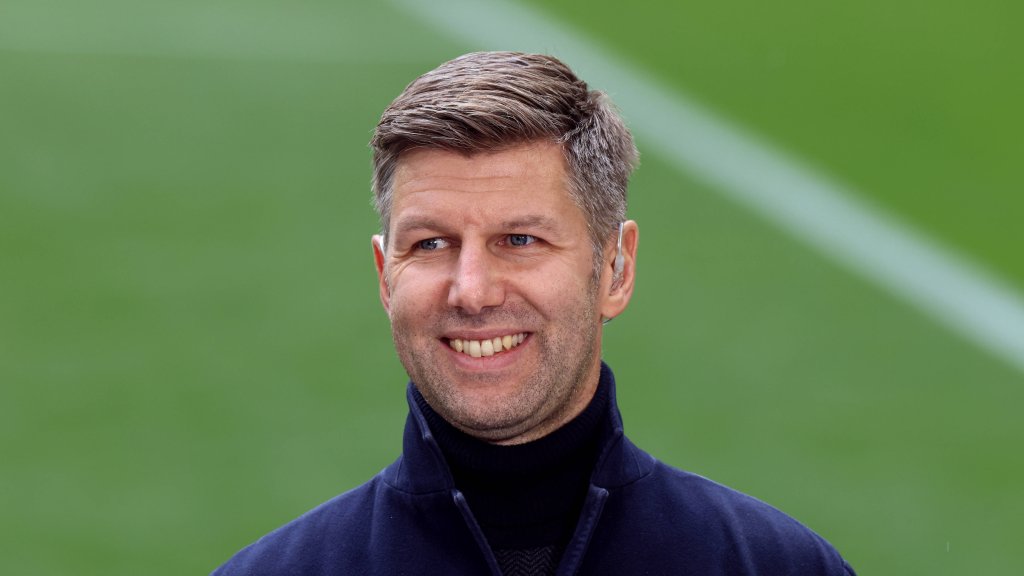
More than twelve years after coming out himself, former Germany international footballer Thomas Hitzlsperger (44) still sees significant obstacles for gay professional players. Despite growing support for diversity in football, he says few players publicly come out as gay. Fear of rejection by society prevents some from doing so even after their playing careers have ended.
Key points at a glance
- Thomas Hitzlsperger criticises the fact that many gay professional footballers do not publicly acknowledge their homosexuality even after retiring from playing.
- The former international points to anti-discrimination campaigns and rainbow captain’s armbands as signs of positive change.
- Criticism of the social climate: homophobia and racism remain major problems, he says. Hitzlsperger sees toxic models of masculinity in particular as an obstacle.
- Less commitment to diversity: commercial interests and declining public support have led to some initiatives being scaled back.
Social change
The 44-year-old, who publicly came out as gay in early 2014, discussed developments in professional football, the role of social prejudice and responses to discrimination in an interview with Yahoo Sports. In the former midfielder’s view, football has made important progress in tackling homophobia over the past decade. However, he says the sport is still far from being an entirely discrimination-free environment. The central problem does not lie solely with clubs, players or fans: “When it comes to homophobia, the biggest challenge lies in society. The world has become a harsher place, and the situation regarding discrimination is quite sad. Racism, like homophobia, is a major problem in society and, of course, in football too. Sometimes people ask: ‘Why can’t we just watch the games?’ I understand that perspective, but we have a responsibility to take a stand on social issues, because football has a great deal of influence.” For Hitzlsperger, it is therefore clear that football must also use its social significance to combat exclusion. Given football’s considerable public reach, he considers separating sporting events from social issues an inadequate approach.
Signs of change
As examples of positive developments, Hitzlsperger cites anti-discrimination initiatives that have become established in professional football in recent years. These include wearing rainbow captain’s armbands, which players use to express their support for diversity and acceptance. In the English Premier League, 19 of the 20 team captains took part in such a campaign at a league match during the 2024/25 season. The former international sees this as an important step forward which, in his view, receives too little attention in public debate.
“Sometimes the media seem positively fixated on focusing on the few who go against the grain and cause conflict. But I believe we have taken a big step forward when you see how many high-profile Premier League players wear these armbands. That is a key aspect we should be talking about, along with the progress made, rather than constantly dwelling on the few who reject diversity and live differently from the social norm. I would like us to focus more on positive stories rather than negative ones. I know many people who take the problem of homophobia in football very seriously and work tirelessly to make the sport more inclusive,” Hitzlsperger stressed.
Commercial interests
At the same time, Hitzlsperger sees developments that could jeopardise the progress made so far. “However, we also have to acknowledge that football is now all about business. Various initiatives launched over the years have been scaled back. Equality, diversity and inclusion are also no longer as popular, because many people believe things have been taken too far. I have met an incredible number of people in football who firmly believe in the importance of an inclusive environment – and that is wonderful. But that is not reported in the media every day.”
Hitzlsperger also advocates making football more accessible to people outside its traditional audience. He says the sport could use its reach within society to engage people with different life stories and backgrounds. This is not just about existing fan groups, but also about those who have not yet felt adequately represented in football. After all, “there are many opportunities to genuinely connect with people from all kinds of backgrounds and convey to them that football is for them too”. In his view, a more open environment could help break down social prejudices and strengthen different groups’ sense of belonging.
Gay professionals remain hidden
Hitzlsperger is particularly critical of the continuing low number of openly gay professional footballers. Although public support for diversity has grown in many areas, coming out remains an exception in men’s football, he says. “The reality is that there are very few openly gay footballers. The problem is rooted in toxic masculinity, but life itself is toxic, and that is the saddest thing about it. There is often talk of players not wanting to come out during their playing careers because they fear a toxic environment. But the truth is that some do not do so even after retiring – out of fear of society.” For Hitzlsperger, this makes clear that measures within football alone are not enough. A social environment in which gay people can live openly without fear is equally crucial, he says.
An advocate for acceptance
Hitzlsperger can look back on a successful career in international professional football. The former midfielder was under contract with clubs including FC Bayern München, Aston Villa, West Ham United, VfL Wolfsburg and FC Everton. In 2010, he also played for Lazio Rom in Italy. His greatest club success came with VfB Stuttgart, with whom he won the German championship in the 2006/07 season. He also enjoyed significant success with the German national team. At the 2006 World Cup in Germany, he won a bronze medal. At the 2008 European Championship in Austria and Switzerland, Hitzlsperger reached the final with Germany and won silver. A few months after retiring, he publicly came out as gay in early 2014.








