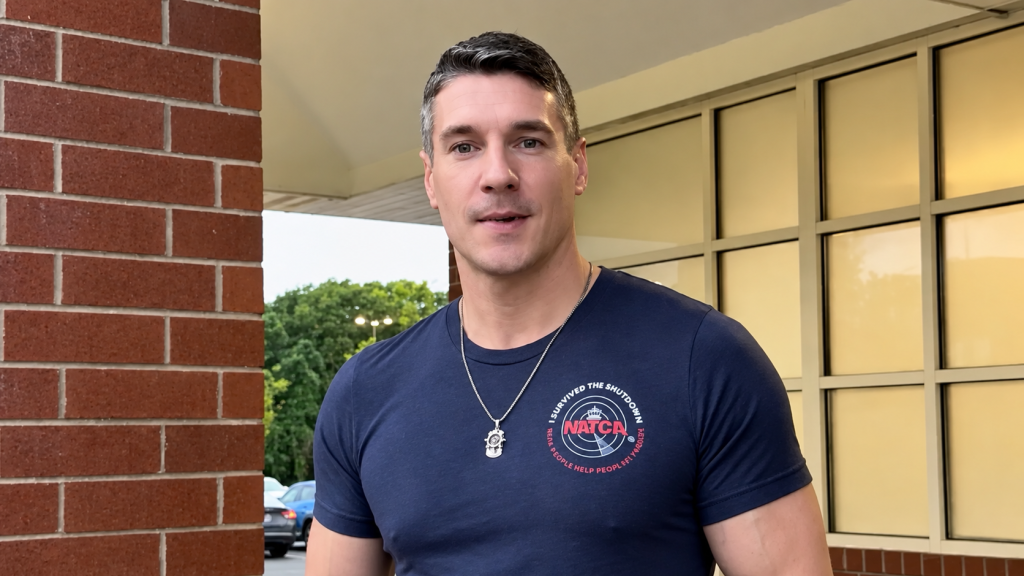
Openly gay US politician Chris Gallant has been confronted with images from his past as a fetish model since mid-September during his campaign for the House of Representatives. The Democratic candidate for New York state's 1st congressional district has now spoken out, accusing political opponents of trying to use his private life against him.
Key points at a glance
- Democratic US congressional candidate Chris Gallant worked as a model for a gay fetish brand around 2010. The images became accessible again through internet archives.
- Gallant stands by his past, saying he is neither ashamed of it nor willing to distance himself from it.
- The politician suspects a targeted campaign by his opponents intended to make him withdraw from the election race.
- Gallant is running against Republican incumbent Nick LaLota in New York's 1st congressional district.
- The openly gay former service member is addressing issues including the cost of living, healthcare and veterans' policy.
Fetish photos from 2010
In an interview with the New York Times, Gallant appeared unfazed by the republication of the photos. “I mean, all my friends know I'm damn kinky,” he said. “I make Christian Grey look like a complete novice.” Gallant was referring to the main character in the “Fifty Shades of Grey” novels and films, in which BDSM practices play an important role. The images, taken around 2010, show Gallant modelling for Mr. S Leather, a San Francisco brand specialising in fetish and leather clothing. In one of the photos, he is wearing leather clothing and bondage gear. Other images show sexual acts.
Before announcing his congressional candidacy, Gallant had asked the company to remove the images from its website. In September 2026, however, they were rediscovered using archived web pages and circulated again. The New York Post then reported on the images in mid-September, presenting them as a potential liability for the Democrat's campaign. According to Gallant, it is not known who alerted the newspaper to the material.

A targeted political campaign?
The congressional candidate describes the publication as part of a “coordinated political attack” intended to force him out of the race for a seat in the House of Representatives. He had already sharply criticised the coverage in a statement on social media. “This exemplifies everything that is wrong with our politics today,” Gallant wrote. “An entrenched power structure is clinging to power and engaging in mudslinging to avoid accountability at the ballot box.” The report cited no evidence of coordinated action by his political opponents. Gallant himself said he did not know who had made the photos public.
Gallant explicitly refuses to distance himself from his earlier work as a fetish model. “I am very proud of who I am. And I will not be shamed into silence,” he said on social media. “I will not allow my private life to be distorted and weaponised against me.” The Democrat also says withdrawing from the election race is out of the question. The explicit images would not intimidate him. “So hear me clearly when I say this: I'm running to win,” Gallant stressed.
Campaign against a Republican
Gallant is seeking the seat in New York's 1st congressional district, which includes parts of Long Island. His opponent is Republican incumbent Nick LaLota. The Democrat is himself from Long Island, where he was born and grew up. He now lives with his fiancé in Amity Harbor. Gallant has a military background. He served his country from the age of 17 and lived openly as a gay man within the military from shortly after the repeal of “Don't Ask, Don't Tell”. The policy, which remained in force until 2011, allowed gay members of the US armed forces to serve in principle, but prohibited them from publicly disclosing their sexual orientation.
Gallant's campaign focuses on economic and social policy issues. His key priorities include the cost of living, healthcare and investment in infrastructure. He also focuses on veterans' interests and public safety. The controversy surrounding his earlier modelling photos has at times pushed these political issues into the background.








