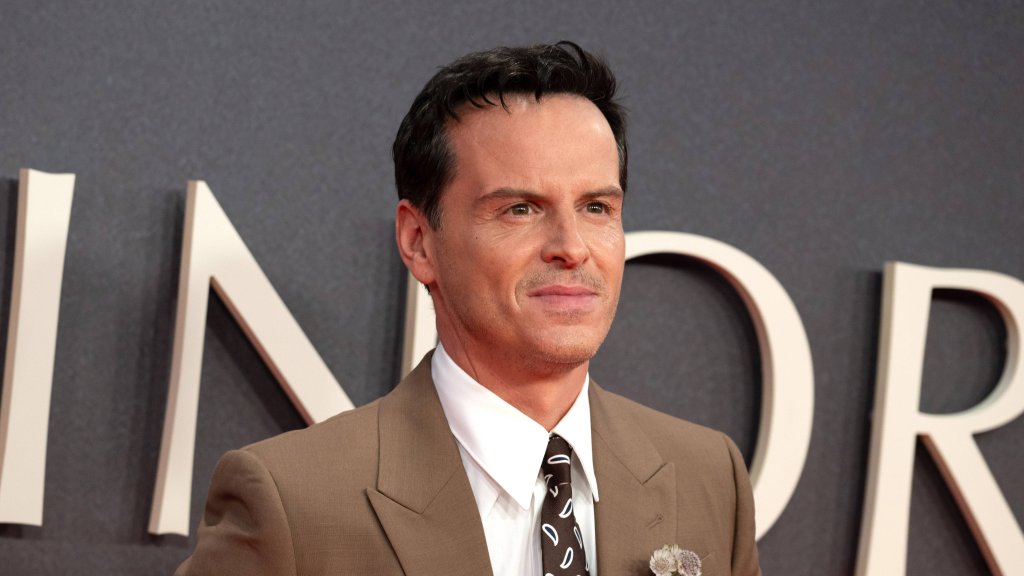
Gay Irish actor Andrew Scott (49) has warned against erasing the AIDS crisis and its consequences for the gay community from film and television history. Speaking at the European premiere of his new film “Elsinore” (German) at the London Film Festival, the 49-year-old argued that the painful experiences of earlier generations should continue to be explored alongside positive gay love stories.
Key points at a glance
- Remembering the AIDS crisis: Andrew Scott believes films about the persecution, stigmatisation and suffering of gay people during the AIDS epidemic remain essential.
- Criticism of society’s shame: It is not those affected who should feel ashamed, but governments and a society that abandoned people with HIV and AIDS.
- The actor welcomes gay love stories such as “Heartstopper”, “Heated Rivalry” and “Red, White & Royal Blue”, but also calls for engagement with the past.
Confronting the past
In an interview with US entertainment trade magazine Variety, Scott made clear that he wholeheartedly welcomes the growing diversity of gay productions. “I welcome productions like ‘Heartstopper’, ‘Heated Rivalry’ and ‘Red, White & Royal Blue’ and all these stories that convey joy. I really, really, really do,” he said. “And I think it’s extraordinary that there are now so many different kinds of gay stories in film and television, if you like.”
However, the actor takes issue with the idea that stories about the AIDS crisis are no longer relevant. “That worries me a little, because I think it says something about people who perhaps don’t want to return to a time when you talk about the AIDS crisis or about how incredibly difficult life was for gay people back then,” Scott explained. “And I think that sometimes comes from a sense of shame.” Yet that shame was misplaced if directed at the people who became ill, faced discrimination or died during the epidemic. “The shame lies with the governments that ignored the AIDS crisis, with the stigmatisation people faced and with the deeply rooted prejudices in society,” Scott said. “So that is other people’s shame.”
Remembering a gay actor
With his comments, the actor challenged the suppression of memories of a time when an HIV infection was often associated not only with serious illness but also with severe social exclusion. The new film centres on Scottish actor Ian Charleson, who became known, among other things, for his role in the film “Die Stunde des Siegers” (“Chariots of Fire”). Scott portrays Charleson in the drama, directed by Simon Stone. The story focuses on an extraordinary period in Charleson’s career at London’s National Theatre. In 1989, the actor took over the title role in William Shakespeare’s “Hamlet” there after Daniel Day-Lewis left the production. By that point, Charleson was already seriously ill with AIDS. Nevertheless, he performed on stage and received outstanding reviews for his portrayal. He died seven weeks after his final appearance in the production.
Honouring an HIV doctor
After the European premiere, Scott invited several people whose life stories are depicted in the film onto the stage. They were joined by the actors who portrayed them. Particular recognition was given to Dr Margaret Johnson, who is regarded as a pioneer in the medical treatment of people with HIV and AIDS. The doctor, portrayed in the film by Oscar winner Olivia Colman, received a standing ovation at the event. Scott paid explicit tribute to her achievements. “It is hard to overstate this woman’s importance to the development of treatments for people with HIV and AIDS,” he said. “To us, she is a true real-life heroine.”








