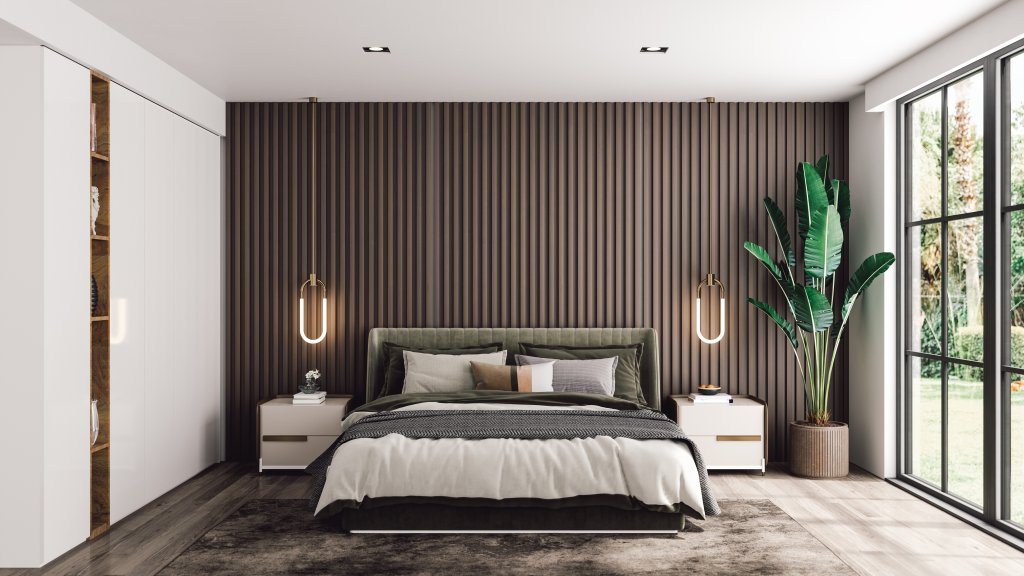
Those bedrooms that make you want to stay in bed in the morning: soft textiles, subdued lighting, perfect pillows, yet not the slightest hint of clutter. Boutique hotels have mastered the art of making rooms feel luxurious and relaxed at the same time. The good news: you can create that feeling at home without refurnishing your entire bedroom.
The biggest difference between an ordinary bedroom and a good hotel room is often not the price of the furniture, but the styling. Boutique hotels make deliberate use of lighting, fabrics, colours and uncluttered surfaces. Everything feels carefully considered, but not sterile. The same principle can be applied in your own home.
The bed takes centre stage
In a good hotel room, there is rarely any doubt about which piece of furniture plays the leading role. The bed is the visual focal point. At home, things can be different: a chair piled with clothes, a laundry basket, storage surfaces or open shelves compete for attention.
If you want more of a hotel feel, start by creating a sense of calm around the bed. Keep bedside tables as clear as possible, hide cables and remove unnecessary items from your immediate field of view. This alone will make the room feel tidier and more refined.
Bed linen also makes a big difference. Light, calm colours look particularly elegant, but they do not necessarily have to be white. Cream, sand, taupe, sage green or a muted blue can work just as well. The precise colour matters less than a harmonious overall look.
More than one pillow
Hotel beds often look so inviting because they are arranged in layers. Sleeping pillows, additional larger pillows and one or two smaller decorative cushions create volume.
There is a caveat, though: your bedroom is not a furniture catalogue. If you have to clear ten cushions off the bed every evening, you have missed the point. Two extra pillows are usually quite enough to give the bed more presence.
A bedspread or throw at the foot of the bed enhances this effect. Fabrics with visible texture, such as chunky knits, wool, linen or velvet, look particularly inviting. Materials like these bring warmth to the room and make it feel less sleek.
Keep the main light off
Few things destroy a hotel atmosphere more reliably than a glaring ceiling light. Good hotels almost always use several light sources.
Bedside lamps on both sides of the bed are ideal, supplemented by an indirect light source elsewhere in the room. A floor lamp, a small table lamp or indirect lighting behind a piece of furniture may be enough.
The colour temperature of the light is also important. Very cool light can quickly feel functional, more reminiscent of an office or bathroom. Warm, subdued light, by contrast, instantly creates a cosy atmosphere.
And if you get up during the night, you will appreciate a small, discreet light source rather than having to illuminate the entire room every time.
Curtains make more difference than you think
In many homes, curtains are something of an afterthought. In hotels, they are an important part of the interior design.
Long curtains that start as close to the ceiling as possible and reach the floor make a room feel taller and more spacious. Fabrics also often improve the acoustics. A room with a rug, curtains and upholstered surfaces automatically sounds quieter than one with lots of hard surfaces.
Good blackout curtains or blinds offer an additional benefit for sleep. Particularly in the city or during the bright summer months, they can make sleeping significantly more comfortable.
A calm colour palette
Boutique hotels often use just a few colours and repeat them consistently. This is precisely what stops a room from feeling visually busy.
A simple rule: choose two or three base colours and pick them up repeatedly in bed linen, curtains, rugs and accessories.
This need not be boring at all. Deep colours such as dark green, burgundy or chocolate brown can look very luxurious, particularly when combined with light, natural tones.
If you do not want to paint, you can bring colour into the room through an upholstered headboard, pictures, textiles or a rug.
Small things create luxury
Luxury often comes from the details. A glass of water on the bedside table, a small carafe, a beautiful book, fresh flowers or a carefully chosen artwork feel more personal than a collection of random decorations.
Scent plays a role too. Hotels often use room fragrances very deliberately, because smells are directly linked to atmosphere and memory. At home, a subtle fragrance or simply airing the room regularly is often enough.
Restraint is important. Five different scented candles do not automatically make a bedroom more luxurious.
Tidiness is part of the look
Perhaps the least spectacular hotel trick is also one of the most effective: very little is left lying around.
This does not mean the bedroom has to look as though housekeeping has just been in every morning. But visible piles of laundry, overflowing surfaces and too many small objects can quickly rob a room of its sense of calm.
Closed storage is therefore often better than open shelving. Even a basket for worn clothes can make a surprising difference.
And what about the television?
Many hotel rooms have one, but it rarely looks particularly cosy. If you really want to make your bedroom a retreat, you should at least consider how prominent you want screens, smartphones and other technology to be.
This does not mean your phone has to stay outside the door. But a bedroom feels noticeably calmer when technology is not constantly centre stage.
Ultimately, creating a boutique-hotel feel does not require gold fittings or a bed costing several thousand euros. What matters is calm, good lighting, high-quality textures and a clear design.
And perhaps that is the greatest luxury of all: a bedroom where you close the door in the evening and feel as though you are somewhere else entirely for a few hours. (tb)