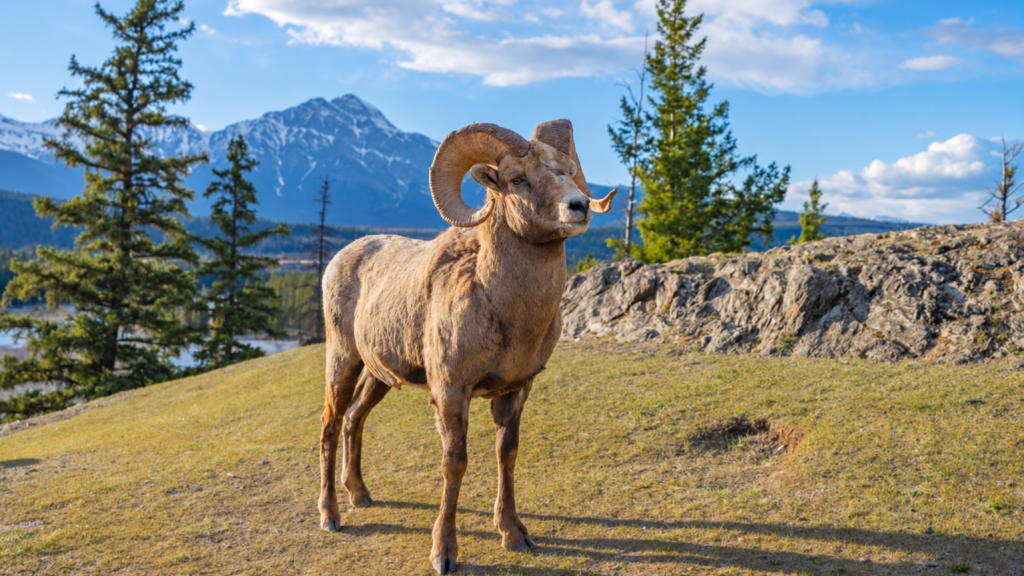
Rams that prefer other males are no zoological myth. Researchers have observed a lasting same-sex partner preference in some male domestic sheep. The often-cited figure of around eight per cent corresponds to roughly one in twelve animals – but is not an exact proportion that applies to all sheep flocks. The finding is part of a much broader diversity of sexual behaviour in the animal kingdom.
Key points at a glance
- In the ram populations studied, up to around eight per cent are reported to have a same-sex partner preference.
- Same-sex sexual behaviour has been reported in more than 1,500 animal species.
- Behaviour, lasting preference and human sexual identity are distinct categories.
- Research also examines social functions such as bonding and reducing conflict.
What has been observed in sheep
The 2022 study by Surajit Bhattacharya and colleagues in PLOS One describes domestic sheep as an important model for researching sexual partner preferences. Some rams consistently direct their sexual behaviour towards other males, even when females are available. This distinguishes the observation from a single same-sex encounter.
The team also investigated differences in DNA methylation and gene activity in the hypothalamus, a region of the brain, between male-oriented and female-oriented rams. It found differences, but stressed that future work would need to clarify the specific mechanisms. These findings do not provide a simple explanation of human homosexuality.
Much more than behaviour in captivity
A 2023 study in Nature Communications compiled evidence of same-sex sexual behaviour in 261 mammal species. This included courtship, mounting, genital contact and pair bonds. The authors also refer to reports covering more than 1,500 species across different animal groups.
For many mammal species included in the analysis, there were observations in the wild or under semi-wild conditions. The behaviour is therefore not solely a consequence of being kept in zoos. At the same time, the research team cautions that the data are incomplete: not all species are observed equally intensively. A lack of reports therefore does not automatically mean that a behaviour is absent in a species.
What social bonds have to do with it
The comparative analysis suggests that same-sex sexual behaviour could stabilise social relationships and reduce conflict in some mammals. This is one possible explanation of evolutionary relationships, not a single answer for all species and every individual encounter.
Our overview of same-sex love in the animal kingdom (German) also illustrates how broad the spectrum of observed behaviours is. SCHWULISSIMO has covered research on primates in its article on new findings from Britain (German).
A ram does not have a human identity label
When people talk about “gay sheep” or “queer wildlife”, these are evocative human terms. Scientifically, more precise distinctions are needed: an observed encounter is different from a partner preference that is evident over a longer period. Neither, in turn, can be equated with a self-described sexual identity.
Looking at animals disproves the notion that same-sex behaviour does not occur in nature. It does not, however, determine human rights. Acceptance must not depend on whether an animal equivalent can be found for every human way of life. Above all, the animal kingdom provides one finding: sexual behaviour is more diverse than a perspective narrowly focused on reproduction alone would suggest.








