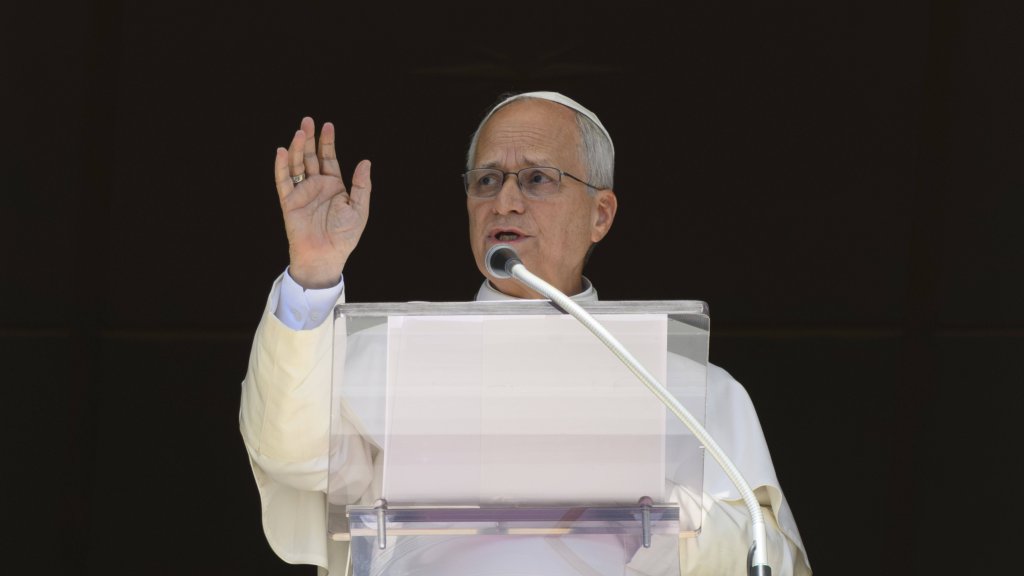
How should the Catholic Church respond to changing family structures such as rainbow families, marriages that have broken down and social developments such as LGBTQ+? Leading Church representatives from around the world are currently considering this question at a week-long meeting at the Vatican. Pope Leo XIV has now urged participants not to sidestep difficult and controversial questions. He also called for greater understanding towards people whose family circumstances do not conform to the Church’s traditional ideas.
The key points at a glance
- Church meeting at the Vatican: Church representatives from around the world are discussing marriage, family and pastoral challenges until 14 October. Around 250 bishops, along with families and experts, are attending.
- Pope calls for courage: Leo XIV is urging participants to address difficult questions about sexuality, relationships and family crises openly.
- Ten years of “Amoris Laetitia”: The focus is on Pope Francis’s document, which encouraged a more compassionate approach to people in difficult circumstances.
- The former pope also explicitly addressed gay people in his document.
- No specific reform decisions announced: Participants are simply to review experiences to date and develop perspectives for pastoral care for families.
New approaches to families
The discussions began last week and continue until 14 October. According to the Vatican, around 250 bishops from across the world are attending, including the presidents of national bishops’ conferences and representatives of the Eastern Catholic Churches. Families and experts are also taking part. According to the Associated Press (AP) news agency, participants include 115 presidents of bishops’ conferences. The occasion is the tenth anniversary of the papal document “Amoris Laetitia” (“The Joy of Love”), with which Leo’s predecessor Francis sparked an intense debate in 2016 about marriage, family and the treatment of people in difficult circumstances.
The situation of gay people was also explicitly addressed in “Amoris Laetitia”. In the 2016 document, Francis emphasised that everyone must be welcomed with dignity and respect, regardless of their sexual orientation. He also opposed unjust discrimination, aggression and violence, and called for respectful pastoral support for families with gay members. However, he maintained traditional Catholic teaching on marriage: the document explicitly rejected placing same-sex partnerships on an equal footing with marriage between a man and a woman.
Not sidestepping difficult questions
Leo has now also pointed to the profound social changes facing families worldwide. Economic insecurity, migration, violence, loneliness and relationship problems, he said, influenced many people’s life choices. At the same time, the Church was observing a growing distance in many societies between how sexuality and intimacy were actually approached and the Christian understanding of marriage. Many young people longed for love, fidelity and belonging, but struggled to commit to a lifelong bond. The pope therefore urged bishops to engage seriously with the experiences of those affected. The Church needed to examine whether its language and pastoral services were actually reaching people and could help them in difficult situations. Leo called for particular attention to families affected by crises, hurt or unmet personal expectations. It was precisely at such times that the Church needed to show closeness, patience and compassion.
Debate over remarried couples
The meeting builds on one of the most controversial approaches to reform pursued by Pope Francis, who died in 2025. Ten years ago, in “Amoris Laetitia”, he argued that Catholics should not be judged solely on whether their way of life fully complied with Church norms. This was particularly evident in the approach to people who had remarried after divorce. Under Catholic teaching, a validly contracted and consummated sacramental marriage remains indissoluble in principle. A subsequent civil marriage is therefore not automatically recognised as a valid new marriage under canon law. However, Francis’s document opened up the possibility of considering admission to the sacraments in certain individual cases even without this prerequisite. This process was to take account of personal circumstances, individual responsibility and support from pastoral carers.
Differing positions
During his papacy, Francis also advocated a comparatively open approach to gay people and others in the LGBTQ+ community. In doing so, he set new directions in the Church’s relationship with people whose partnerships or gender identity do not conform to traditional Church ideas. Questions about the treatment of queer and gay people also form part of the wider social and Church context of pastoral care for families. However, Leo did not announce any specific change to Church teaching on same-sex partnerships or gender identity at the opening of the meeting. Instead, the current discussions focus on the experiences the Church has gained over the past ten years in implementing “Amoris Laetitia” and the implications for its future pastoral work.
Vatican prioritises dialogue
According to the organisers, the meeting is not intended to fundamentally revise Francis’s document. Instead, participants are to examine how its content has been put into practice in different countries and cultural contexts. Families themselves are also to have a say. Their experiences of relationships, bringing up children, passing on the faith and personal crises are to inform the discussions. Those responsible are placing their emphasis on listening to one another and a shared decision-making process. Different experiences from local churches are intended to help develop new approaches to pastoral care for families. In his address, Leo stressed that the Church must learn from families’ experiences. It was not simply a matter of assessing social changes, but also of critically examining its own pastoral responsibility. Whether the discussions will lead to concrete changes in Church practice remains unclear. For now, the findings are intended to provide further guidance for bishops’ conferences and local churches.








