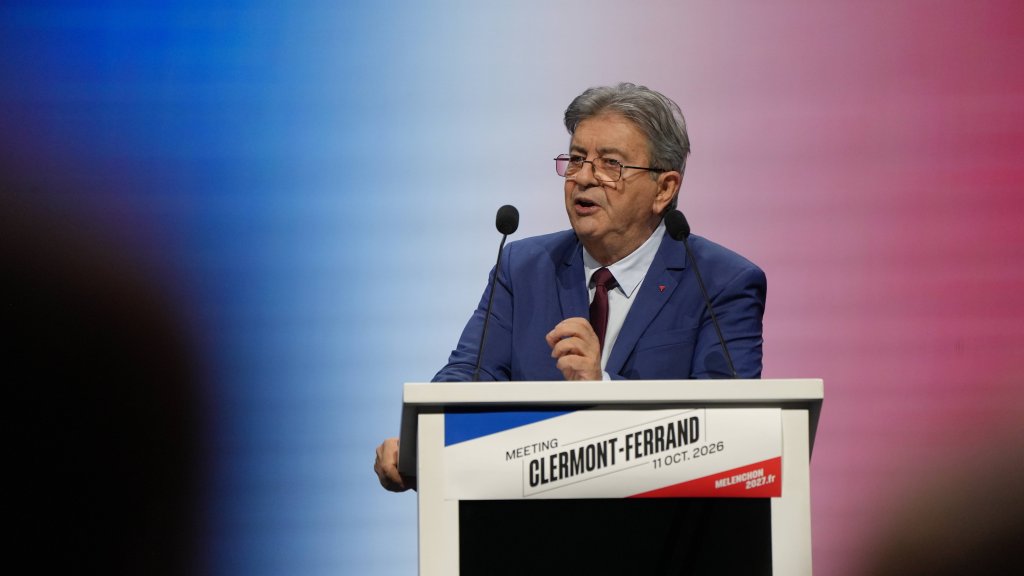
The intensified persecution of gay people in Senegal is putting France’s left-wing party La France Insoumise (LFI) in a difficult political position. While Jean-Luc Mélenchon’s movement champions the rights of sexual minorities in France, it has maintained close ties with Senegal’s ruling party Pastef for years. Its leading politician, Ousmane Sonko, has significantly intensified the criminal prosecution of gay people. Critics accuse LFI of taking only a muted stand against the measures out of consideration for its political allies.
Key points at a glance
- Harsher penalties in Senegal: Since March 2026, same-sex sexual acts have carried sentences of up to ten years in prison. Almost 100 people have been arrested so far amid the intensified persecution.
- France’s left under pressure: La France Insoumise (LFI) supports LGBTQ+ rights in principle but maintains close ties with Senegal’s ruling party Pastef.
- Criticism of muted responses: While some LFI politicians have condemned the persecution, critics accuse the party of failing to oppose it firmly enough for political reasons.
Tensions are rising
In March 2026, Senegal’s parliament passed a law raising the maximum sentence for same-sex sexual acts from five to ten years in prison (German). Since then, the situation on the ground has become increasingly extreme, with at least 100 people already arrested. LGBTQ+ organisations in Senegal and France warn of a growing threat to sexual minorities. These developments are straining relations between two political movements that long shared common ground in their criticism of colonial power structures and established political elites. Their differing positions on homosexuality were known before Senegal tightened its criminal law, but are now increasingly taking centre stage.
During a joint appearance before students in Dakar in May 2024, Senegal’s then prime minister, Ousmane Sonko, criticised the prominence of LGBTQ+ issues in international organisations’ programmes. According to his account, such positions were sometimes made a prerequisite for financial partnerships. Jean-Luc Mélenchon publicly disagreed with his political ally. “I am the first French parliamentarian to have introduced a bill to allow same-sex marriage. I stand by the political position I have chosen and will not try to impose it on you.” Even then, the appearance highlighted the two politicians’ differing views on social policy. Initially, however, this did nothing to change the close ties between LFI and Pastef.
Taking a position on the arrests
Pastef, the African Patriots of Senegal for Work, Ethics and Fraternity party founded by Sonko in 2014, came to power in 2024 with the election of Bassirou Diomaye Faye as president. The party had previously presented itself as a force for political change. Its programme combined pan-Africanist and sovereigntist positions with a call for a break with existing power structures. On social issues, however, Sonko had explicitly opposed homosexuality from an early stage. Back in 2022, he announced on X: “The law criminalising homosexuality will be one of the first I push through.”
Same-sex sexual acts were already punishable by law in Senegal at that time. A law passed in 1965 provided for prison sentences of one to five years. The new legislation of March 2026 significantly increased the penalties. Sonko described the initiative as a personal political success. “This is the first law I have personally introduced in the National Assembly,” he said. The subsequent rise in arrests caused considerable concern among LGBTQ+ organisations. In France, too, questions were raised about the position taken by the Senegalese government’s political allies on the measures.
Muted responses
La France Insoumise had repeatedly spoken out against human rights violations and discrimination in the past. However, leading party figures initially responded comparatively cautiously to developments in Senegal. It was not until late May that MEP Manon Aubry expressed her “profound opposition to this persecution” on the platform X. The French LGBTQ+ magazine Têtu then criticised what it saw as the party’s contradictory stance on the situation of gay people in Senegal. LFI MP Andy Kerbrat reacted angrily to the coverage. He described the magazine as a “right-wing gay newspaper”. Nevertheless, criticism of the party and its silence has since gained prominence nationwide.
The close relationship between Mélenchon and Sonko developed primarily during the power struggle over Senegal’s political future, with the French party leader affirming his support early on. Mélenchon’s adviser, LFI MP Arnaud Le Gall, has since backtracked, stating: “We supported democratic change, but at no point endorsed Pastef’s programme. We have very clearly condemned homophobia in Senegal and have not entered into a formal alliance with Pastef.”
Still no agreement
Apparently, however, the party still has no consensus on opposing the persecution of gay people in Senegal, as an example from the city of Saint-Denis shows. A resolution supporting persecuted LGBTQ+ people in Senegal was due to be introduced there, but ultimately fell through because of reservations and fears that people with close ties to Senegal might see it as an attack. The issue is also politically difficult for the party: the number of people of Senegalese origin in France is estimated at up to 300,000, making them a significant potential voting constituency. How the French left-wing party intends to resolve this contradiction remains an open question.








