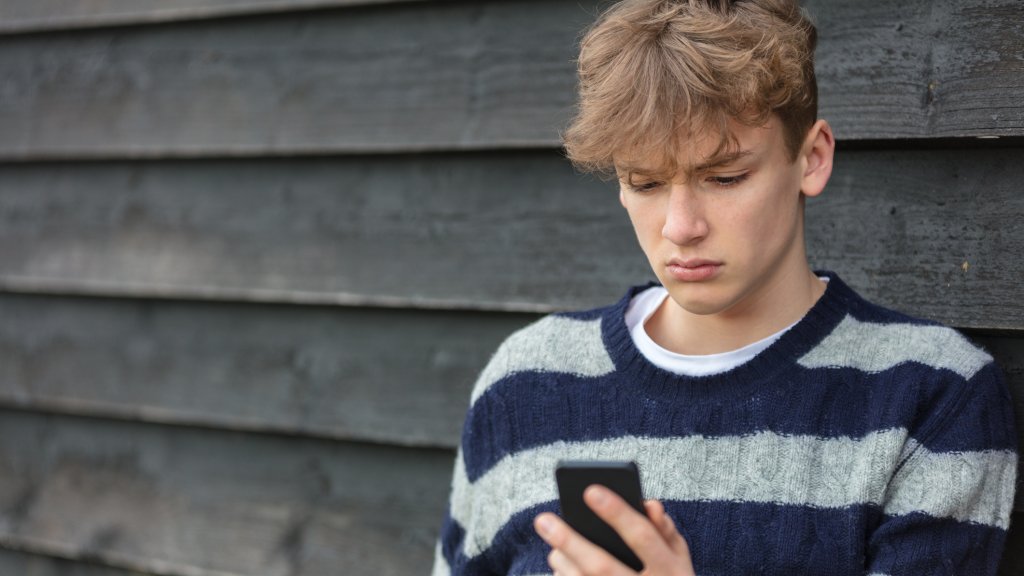
Insults in group chats, degrading comments on social media or the public sharing of personal information: cyberbullying is part of everyday life for a growing number of children and young people in Germany. Such attacks can be particularly distressing for young people targeted because of their sexual orientation or gender identity. Gay and queer young people are not only exposed to general forms of online abuse. They can also become targets of homophobic insults, exclusion and threats.
Key points at a glance
- More than 2.4 million affected: according to a new survey by Bündnis gegen Cybermobbing, around one in five pupils in Germany now experiences online harassment.
- Queer young people at particular risk: gay, bisexual, trans and queer young people can also be attacked because of their sexual orientation or gender identity.
- According to the latest Cyberlife study, 25 per cent of children and young people affected by cyberbullying report suicidal thoughts. Turning to alcohol, pills or drugs is also mentioned more frequently.
- Attacks extend into private life: insults, public humiliation and threats of being outed against their will can put those affected under pressure outside school too.
- Parents and teachers overwhelmed: Bündnis gegen Cybermobbing is calling for more prevention, education and a more responsible approach to digital platforms.
- Around 6,300 pupils, parents and teachers across Germany were surveyed for the sixth edition of the Cyberlife study.
Rise in cyberbullying
New figures from Bündnis gegen Cybermobbing show how widespread the problem has become. According to its latest study, around one in five pupils is affected by cyberbullying. Across Germany, this equates to more than 2.4 million children and young people, of whom, statistically speaking, at least 22 per cent are LGBTQ+. The reported proportion rose by more than two per cent compared with the 2024 survey. For the sixth Cyberlife study, the organisation surveyed around 6,300 pupils, parents and teachers. The situation of queer young people is an important aspect of the debate. This is because online hostility can compound discrimination they already experience at school, within their families or in public life.
LGBTQ+ young people at high risk
For lesbian, gay, bisexual and queer young people, online attacks can have an additional dimension. While cyberbullying can generally target a range of personal characteristics, LGBTQ+ young people are often subjected to hostility specifically because of their actual or perceived identity. Research by the European Union Agency for Fundamental Rights (FRA) also shows this. The findings for young people are particularly striking. Across Europe, 70 per cent of queer and gay respondents aged 15 to 17 said they had been harassed because of their identity in the twelve months before the survey.
Another finding concerns everyday school life. In Germany, 70 per cent of LGBTQ+ respondents said they had been mocked, insulted, threatened or bullied during their school years because of their sexual orientation or gender identity. The findings make clear that, for many of those affected, exclusion does not begin on social media. Rather, digital platforms can help extend existing conflicts at school beyond lesson time.
Sexual orientation as a target
One key difference from other forms of cyberbullying is that homophobic and anti-queer attacks can directly target a young person's identity. Those affected do not even have to be openly gay or queer. Rumours about a supposed sexual orientation alone can be enough to trigger insulting messages, degrading images or public humiliation. During puberty in particular, many young people think deeply about their own identity and how others perceive them. Being attacked because of their sexual orientation or gender identity at this stage can leave them feeling even more insecure.
Forced outing of young people
So-called forced outing poses a particular danger. This involves sharing information about a person's sexual orientation or gender identity without their consent. Online, this can happen through messages in class group chats, published screenshots or social media posts, for example. For young people who have not yet come out to their parents, classmates or friends, such a disclosure can have serious consequences. They lose the ability to decide for themselves when and with whom they wish to share personal information. In addition, insulting or intimate content online can be forwarded, saved and republished. This often makes it difficult for those affected to control its spread.
Severe psychological consequences
The new Cyberlife study by Bündnis gegen Cybermobbing shows how severely online hostility can affect children and young people overall. According to the organisation, it is particularly concerning that 25 per cent of children and young people affected by cyberbullying have already expressed suicidal thoughts. More young people than before also reported turning to alcohol, pills or drugs out of desperation. The study thus makes clear that online harassment can go far beyond short-term conflicts between peers. Suicidal thoughts are also particularly prevalent among young LGBTQ+ people.
Parents and teachers overwhelmed
In light of current developments, Bündnis gegen Cybermobbing sees a considerable need for action. According to the organisation, many parents and teachers feel insufficiently prepared for the challenges posed by online hostility. One problem is that conflicts between young people have long since ceased to be confined to the playground or classroom.
Insulting messages can be sent at any time of day. Degrading posts may remain visible long after those affected have left school. Uwe Leest, chair of the organisation's board, also points to anonymity online. He says this can enable people to insult or humiliate others without immediately facing the consequences of their behaviour. The organisation is therefore calling for more education and prevention, particularly in schools. At the same time, parents should familiarise themselves early on with how social networks work and the content shared on them.
Where to find help
If you are experiencing mental health or other emotional difficulties, including depression or anxiety disorders, for example, try to talk to other people about them. These could be friends or relatives. There are also many support services you can contact. Telefonseelsorge is anonymous, free and available around the clock. The telephone numbers are 0800/111 0 111 and 0800/111 0 222.
The Coming Out Day association also offers advice via messenger, email and video chat at www.coming-out-day.de and www.comingoutundso.de. Telefonseelsorge also offers a support chat service. Email counselling is available too. You can register on the website, again anonymously and free of charge. You can find information at: www.telefonseelsorge.de








