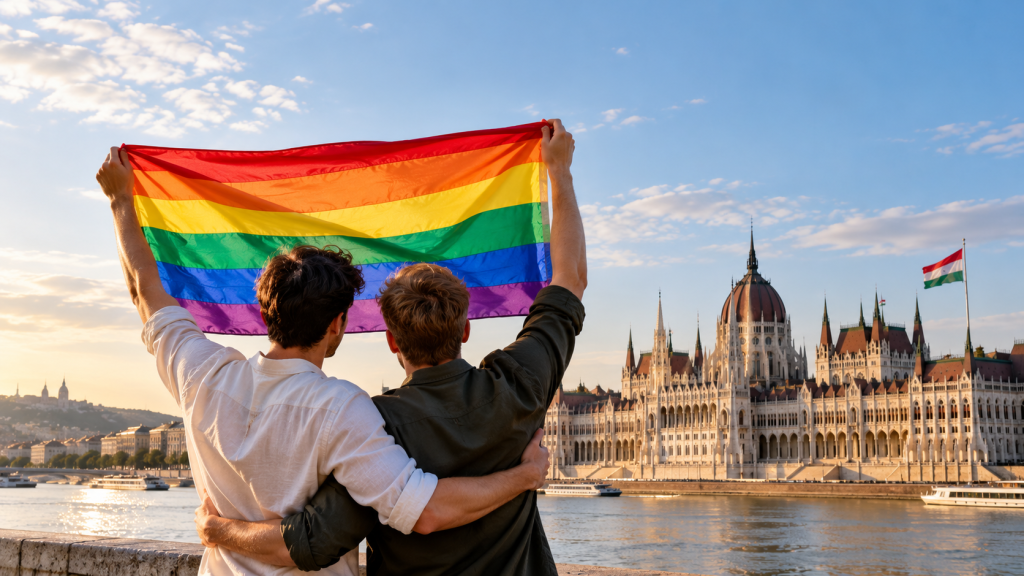
Hungary is rolling back major restrictions on the LGBTQ+ community. Today, Tuesday, parliament in Budapest passed an amendment to the controversial child protection law, repealing key provisions that had prohibited the depiction of homosexuality to minors since 2021. The decision marks a significant change in Hungarian legislation under the new prime minister, Peter Magyar.
Key points at a glance
- Today, the Hungarian parliament repealed major provisions of the so-called anti-gay law passed in 2021.
- The depiction and so-called “promotion” of homosexuality in media for minors will no longer be subject to a blanket ban.
- Instead, content that could “seriously impair” children's physical, mental, emotional or moral development will be banned.
- This is the first significant rollback of LGBTQ+ restrictions from Viktor Orban's time in government since Prime Minister Peter Magyar took office in May.
- ECJ ruling: in April, the European Court of Justice ruled that the existing law violated EU law.
- Magyar's conservative Tisza party won a two-thirds majority in April's parliamentary election, ending Orban's time in government, which had lasted since 2010.
Parliament scraps bans
MPs approved a government bill to this effect. Just over five years after the provisions were introduced, major parts of the rules adopted under Magyar's predecessor, Viktor Orban, are being removed. Since Magyar took office in May, there had been no comparably far-reaching rollback of the LGBTQ+ restrictions introduced under Orban. The amendment focuses on provisions previously enshrined in Hungary's child protection law. These prohibited the so-called “promotion” and “depiction” of homosexuality in content aimed at children and young people. Films and television programmes were particularly affected. MPs have now voted to remove these passages. They will be replaced by a more broadly worded provision to protect minors. In future, content will be banned if it could “seriously impair” children's physical, mental, emotional or moral development. The new version of the law thus drops the previous explicit ban on depicting homosexuality.
Far-reaching restrictions
The provisions now repealed were introduced in 2021 during Prime Minister Viktor Orban's time in government. The child protection law passed at the time was intended to prevent minors under 18 from receiving information about homosexuality. The rules extended beyond schools and also covered the public depiction of such topics; the law was subsequently tightened further. Depicting same-sex partnerships on television could therefore also have criminal consequences. The rules were part of a policy through which Orban's government restricted the rights of LGBTQ+ people over several years. Pride parades also came under pressure. The government used the legal provisions to ban such events.
European Court of Justice
Hungary's approach to LGBTQ+ rights also had legal consequences at European level. In April, the European Court of Justice (ECJ) ruled that the law passed in 2021 violated European Union law. The existing Hungarian rules therefore faced not only domestic political criticism but also conflicted with the EU member state's legal obligations. The amendment now adopted comes after this ruling. By removing the key prohibitions, the new government is changing a substantial part of the previous legislation.
The political change of direction became possible after April's parliamentary election. Peter Magyar's conservative Tisza party won the election, securing a two-thirds majority in parliament. Its electoral success ended Viktor Orban's time in government, which had lasted since 2010. Magyar, who is regarded as pro-European, took office as prime minister in May. With its new parliamentary majority, his government has the ability to make far-reaching changes to the legislation of recent years. The repeal of the key LGBTQ+ restrictions is among the first significant decisions of this kind since the change of government. After the Tisza party's election victory, many LGBTQ+ people in Hungary had hoped for an improvement in their legal situation. However, Magyar had largely avoided commenting on LGBTQ+ rights during the election campaign. An explicit pledge to repeal the controversial provisions was therefore not a central part of his campaign. Parliament's decision now brings a concrete change to the existing legal situation.








