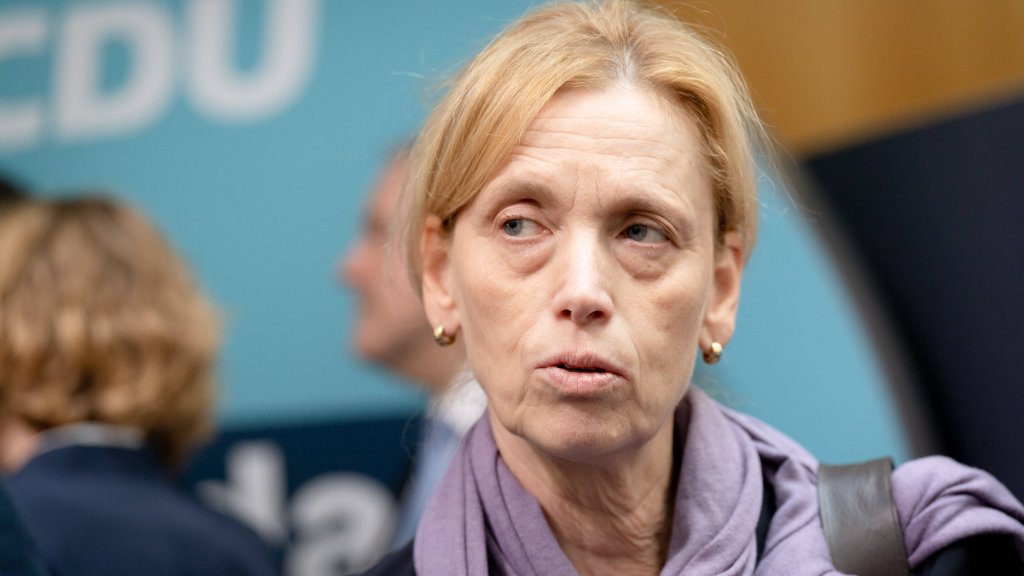
Gay, lesbian, bisexual and queer young people must be protected from sexualised violence at school just like all other children and young people, although they often face higher levels of bullying and attacks (German). Federal Minister Karin Prien (CDU) is therefore pressing for mandatory safeguarding policies at every school in Germany. According to research by ZDF, five federal states still have no corresponding general requirement.
The key points at a glance
- Protection for queer young people: School safeguarding policies must also protect lesbian, gay, bisexual and queer pupils from sexualised violence.
- Minister calls for mandatory policies: Federal Minister Karin Prien (CDU) is demanding that all schools in Germany implement binding policies against sexualised violence.
- Five federal states without a general requirement: According to research by ZDF, Hamburg, Bremen, Saxony-Anhalt, Saxony and Bavaria do not yet generally require their schools to have such safeguarding policies.
- Prien describes abuse in schools as particularly brutal and cruel. Sexualised violence by teachers who exploit their position of authority is particularly serious, she says.
- The Federal Government’s Commissioner for Child Sexual Abuse Issues, Kerstin Claus, points out that perpetrators deliberately establish relationships of closeness, dependency and power with children and young people.
- Prien believes the state has a duty to protect children and young people effectively.
Missing safeguarding policies
The call concerns the protection of all pupils. For queer young people, it is particularly important that prevention measures take different lived realities into account and that those affected receive support regardless of their sexual orientation or gender identity. A study by the Bundesinstitut für Öffentliche Gesundheit (BIÖG) from spring 2026 showed that gay and bisexual young people were particularly severely affected by sexualised violence. Prien’s comments today come in the context of a ZDF documentary about sexualised violence by teachers. The investigation showed that many schools are only now developing appropriate safeguarding policies.
Sexualised violence can affect children and young people regardless of their sexual orientation or gender identity. An effective school safeguarding policy must therefore also reach LGBTQ+ minors. This includes ensuring that young people affected can seek help without being discriminated against because of their identity or sexual orientation. Particularly in confidential conversations about sexual assaults, it must be ensured that personal information remains protected.
Particularly cruel violence
The federal minister spoke to ZDF in clear terms about cases of abuse in school settings. Such acts were a “particularly brutal and cruel way” of harming children and young people, the CDU politician said. Sexualised violence was particularly reprehensible when perpetrated by teachers within a relationship of dependency. Teachers have authority over their pupils. They assess performance, make decisions on school matters and are often important trusted adults. When this position is exploited to commit sexual assaults, the abuse itself is compounded by a power imbalance that can make it harder for those affected to defend themselves or seek help. Prien is therefore calling for safeguarding policies not to be left to the voluntary commitment of individual schools.
Mandatory safeguarding policies
In the minister’s view, appropriate prevention and safeguarding measures must be implemented at every school. Ultimately, there was no alternative to making the introduction of such policies mandatory everywhere, she told ZDF. Responsibility also lay with the state, which must protect children and young people from violence and exploitation. Safeguarding policies are intended to help identify risks early, define responsibilities and enable those affected to access support. This is not just about dealing with assaults that have already come to light. Preventive measures and clear procedures for suspected cases are also important in protecting minors. For LGBTQ+ young people, a comprehensive approach also means that support services must be accessible and trustworthy regardless of personal identity.
Five federal states fall short
As the ZDF documentary reports, many schools in Germany are only now working on safeguarding policies against sexualised violence. Differences between the federal states are particularly apparent when it comes to whether schools are required to introduce appropriate measures. According to ZDF, there is still no such general requirement in Hamburg, Bremen, Saxony-Anhalt, Saxony and Bavaria. This means that whether safeguarding measures are mandatory still also depends on the federal state in which a school is located. Prien wants to overcome these differences and is campaigning for corresponding requirements to apply to all schools nationwide.
Abuse of power by teachers
The ZDF investigation focuses in particular on teachers who abuse their position in relation to children and young people to commit sexual assaults. Dealing with such cases remains a taboo subject, according to the reporting. A central problem is the relationship of dependency between teachers and minors. Those affected may fear that they will not be believed or that a complaint will have consequences for their everyday school life. Clearly defined responsibilities and access to independent points of contact are therefore particularly important. LGBTQ+ young people, too, must be able to rely on reports of sexualised violence being taken seriously and their personal circumstances being treated confidentially.
Expert warns of risks
In this context, the Federal Government’s Commissioner for Child Sexual Abuse Issues, Kerstin Claus, warned of the risk of sexual exploitation in institutions where children and young people are cared for. She said there would be no long-established school where such incidents had not yet occurred. The commissioner pointed out that people intent on sexual exploitation deliberately tried to build relationships with minors in order to gain control over them. Wherever children and young people spent time, there were people seeking to establish a relationship of closeness, dependency or power with the aim of sexual exploitation.








