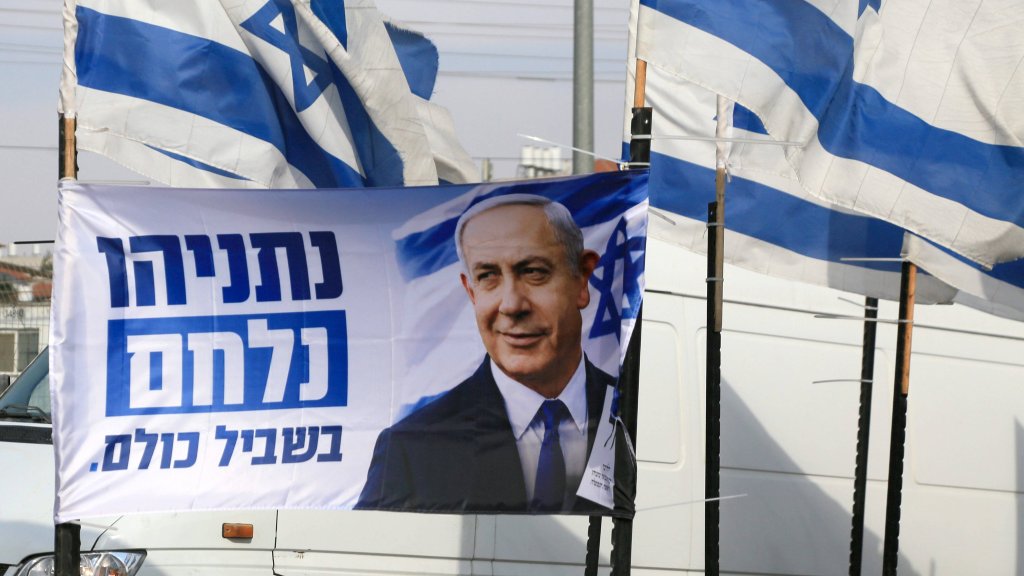
When Israel elects a new parliament on 27 October, both Prime Minister Benjamin Netanyahu’s political future and the country’s social direction will be at stake. For the LGBTQ+ community, the composition of the next government could determine whether legal equality advances or existing political obstacles remain.
Key points at a glance
- Parliamentary election on 27 October: Israel will elect a new Knesset for the first time since the Hamas attack of 7 October 2023. The vote is also seen as a decision on Prime Minister Benjamin Netanyahu’s political future.
- LGBTQ+ rights remain contested: Israel has comparatively extensive rights for gay and queer people. However, civil marriage does not exist, and conservative and religious parties are preventing further reforms.
- LGBTQ+ community divided: The war in Gaza and accusations of pinkwashing are causing considerable conflict within the Israeli and international LGBTQ+ movement.
- A difficult path to a majority: Polls suggest a close race. They indicate that neither Netanyahu’s camp nor the opposition has yet secured a governing majority.
Israel and LGBTQ+ rights
The Knesset election is the first since 7 October 2023 and takes place at a time of profound domestic political conflict. The issues include the war in Gaza, the role of religious parties, the independence of state institutions and the protection of minorities in society. Netanyahu’s governing alliance with ultra-Orthodox and far-right parties, several of which oppose legal equality for gay people, is particularly controversial. Nevertheless, compared with other countries in the region, Israel has extensive legal protections for lesbian, gay, bisexual, trans and queer people. In almost all other countries in the Middle East, same-sex sexual activity remains a criminal offence, in some cases even punishable by death.
Israel decriminalised same-sex sexual activity in 1988. Discrimination in the workplace on grounds of sexual orientation has been prohibited by law since 1992. A year later, gay men and lesbian women were allowed to serve openly in the armed forces. Further advances followed, primarily through court rulings. The Supreme Court played a central role in this, often against opposition from religious parties. Since 2006, Israel has recognised same-sex marriages performed abroad. Unmarried couples were granted equal inheritance and pension rights. In 2021, access to surrogacy was also extended to gay men. Same-sex couples also achieved legal equality in adoption through a Supreme Court ruling. Previously, heterosexual couples had been given preference for years.
Calls for civil marriage
Despite these advances, civil marriage still does not exist in Israel. This affects both heterosexual and same-sex couples. Marriage falls within the jurisdiction of religious institutions. As these do not conduct same-sex weddings, gay couples cannot marry within Israel. Marriages performed abroad, however, are recognised. Conversion therapies, which are mostly religious and aim to change sexual orientation, are also not explicitly prohibited by law. Further developments therefore depend heavily on political majorities. While secular and progressive parties support reforms, ultra-Orthodox forces oppose the introduction of civil marriage in particular.
Violence and rejection
These legal achievements have not eliminated anti-LGBTQ+ violence and social rejection. In 2015, an ultra-Orthodox extremist attacked six people with a knife at Pride in Jerusalem. Sixteen-year-old Shira Banki died as a result of the attack. More recently, LGBTQ+ organisations have also reported growing problems. Aguda, one of Israel’s leading queer advocacy organisations, documented an increase in hatred, threats and assaults in its report for 2024. The organisation also criticised a deterioration in public discourse and state policy under the current government. Reports of growing hostility towards queer and gay people point particularly to ultra-Orthodox religious circles. At the same time, Israel continues to promote Tel Aviv internationally as a particularly LGBTQ+-friendly metropolis and the gay capital of the Middle East.
Disputes within the community
Israel’s international portrayal as a progressive state on LGBTQ+ rights is increasingly contested. Critics accuse the government of pinkwashing. The dispute has led to considerable tensions within the international LGBTQ+ movement. In October 2024, the global umbrella organisation ILGA World suspended the Israeli organisation Aguda after it proposed Tel Aviv as the venue for an international congress. In Italy, the Jewish LGBTQ+ organisation Keshet was excluded from Roma Pride in June 2026, with criticism focusing on its alleged failure to take a public position on the Gaza war.
The differences are not confined to relations between Israeli and international organisations. Groups protesting against pinkwashing have been taking part in Pride events in Jerusalem, Tel Aviv and Haifa for years. At this year’s Pride in Tel Aviv, which returned after two cancellations due to the war, long-standing activist Anat Nir criticised the occupation policy. There was no pride in occupation, she said. The Israeli organisation Aguda caused further controversy in August. On social media, it welcomed the candidacy of openly gay Knesset Speaker Amir Ohana in one of the top positions on Likud’s electoral list. Ohana is regarded as a close Netanyahu confidant.
Difficult alliances
The existing government camp consists of Netanyahu’s Likud, the ultra-Orthodox parties Schas and Vereinigtes Tora-Judentum, and the far-right forces around Itamar Ben-Gvir and Bezalel Smotrich. On Palestinian policy, the alliance rejects an independent Palestinian state and takes a hard line towards Gaza. On LGBTQ+ policy, there is a clear contradiction between the public presentation of individual politicians and the positions of the coalition partners. Likud points to Amir Ohana as an openly gay parliamentary speaker. At the same time, the party works with forces that explicitly reject gay people. In 2022, Netanyahu appointed Avi Maoz as a deputy minister. Maoz had previously described gay people as “perverts and paedophiles”. The ultra-Orthodox parties also oppose civil marriage in principle. Former military chief of staff Gadi Eisenkot is considered a key challenger to Netanyahu. He leads Yashar, a party whose name can be translated as “Honest”. Eisenkot also opposes the establishment of a Palestinian state. He calls for the dismantling of Hamas and wants to make Gaza’s reconstruction conditional on its disarmament. On social policy, however, his party places different emphases. Israel Zari, Ramat Gan’s first openly gay local politician, is standing for Yashar.
Political currents
Former right-wing prime minister Naftali Bennett is standing alongside centrist politician Yair Lapid. On Gaza policy, they take a line similar to Eisenkot’s position. Under this approach, a withdrawal and the reconstruction of the Gaza Strip would only be possible after Hamas had been disarmed. On LGBTQ+ rights, Bennett supports the introduction of civil marriage for gay people. This distinguishes him from the ultra-Orthodox parties, which oppose such a reform in principle. Die Demokraten, led by Yair Golan, are considered the only Zionist left-wing party in the election campaign. They take clear positions in favour of LGBTQ+ equality. At the same time, they are among the strongest critics of Israel’s conduct of the war. Another political force is the secular right led by Avigdor Lieberman.
Around one fifth of Israel’s population are Arab citizens. Their political interests are primarily represented by two electoral lists. The Joint List, led by Yousef Jabareen, comprises three parties: the communist-oriented Hadash, with Arab and Jewish candidates, Ta'al and the nationalist Balad. The Islamist-conservative party Ra'am, led by Mansour Abbas, is also standing. Together, the Arab parties could win 12 to 13 seats, potentially making them decisive in the formation of a government. However, major Jewish parties rule out a coalition with them. Likud is campaigning against such cooperation with the slogan “Either the right or Palestine”. There are considerable differences on LGBTQ+ rights. Hadash explicitly supports equality. Ra'am, by contrast, rejects such demands.
A difficult path to a majority
The Knesset’s 120 seats are allocated through proportional representation. Parties must receive at least 3.25 per cent of the vote to enter parliament. A governing majority requires 61 seats. As no party can reach this number alone, alliances are necessary. After the election, the president tasks the politician whom he considers most likely to secure a parliamentary majority with forming a government. In the available polls, Eisenkot’s Yashar leads in almost every survey. A poll by public broadcaster Kan puts Yashar at 22 seats, Likud at 20 and Bennett at 12. What matters, however, is the strength of the respective political camps. According to the poll, almost one in three eligible voters is still undecided.
Three scenarios for LGBTQ+ people
Different government configurations are possible after the election. They could have significant consequences for the LGBTQ+ community. One possibility would be a minority government under Eisenkot, enabled by Arab parties abstaining. This would remove the ultra-Orthodox and particularly anti-LGBTQ+ forces from government. However, major legislative advances would not automatically be guaranteed. The introduction of civil marriage, in particular, would probably remain difficult. A second scenario would be another Netanyahu-led government with support from the existing opposition camp. Bennett is seen as a possible partner, but without Lapid. For LGBTQ+ people, such a coalition would probably bring little change. The ultra-Orthodox parties could continue to block civil marriage. If no viable governing majority emerges, Israel could have to vote again. Netanyahu would then probably remain in office as caretaker prime minister for several more months. On LGBTQ+ rights, too, neither major advances nor new legal restrictions would initially be expected. For the LGBTQ+ community, however, the central question is what influence religious-conservative and far-right forces will have on the government in future.








