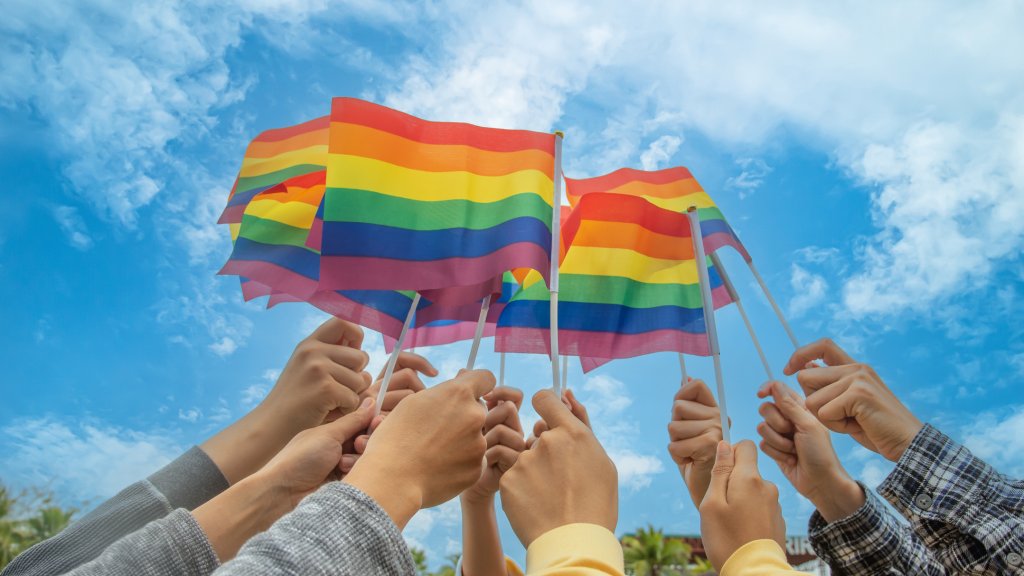
Many LGBTQ+ young people in the US feel directly affected by political decisions, but are not yet eligible to vote. A new initiative aims to change that – at least in terms of their opportunities to exert influence. Five high school students have founded “Queer the Ballot”, a non-partisan campaign designed to encourage young queer people to get involved in politics.
Key points at a glance
- Political participation: Five US students have founded the non-partisan initiative “Queer the Ballot” to give LGBTQ+ young people greater political influence.
- More than 2,000 young people: Through more than ten workshops and over 200 information packs, young people will learn how to get involved in politics.
- Concerns about LGBTQ+ rights: Political attacks on queer people are a concern for the organisers.
- Practical support: Among other things, young people will learn how to contact politicians and school authorities, understand legislation and protest safely.
- Long-term goal: The initiative aims to continue beyond the US midterm elections in November 2026 and empower young people to pass on their knowledge.
Reaching their peers
The campaign is not just about preparing young people for future elections. The organisers want to show that political participation is possible before turning 18 – for example, by speaking to decision-makers, making public statements or getting involved in local initiatives. The campaign is part of the international youth organisation “Dear Queer Youth”. It was founded by Sophia Wong from Los Angeles, Jay Roy and Bekah Garlikov from the San Francisco Bay Area, Christopher Grady from Virginia and Alex Howard from North Carolina. Above all, the young organisers want to reach peers who are becoming increasingly resigned in the face of political battles over their rights.
Growing frustration
One of the founders is 17-year-old Bekah Garlikov, who attends a high school in the San Francisco Bay Area. He began collecting daily screenshots of news headlines about queer people back in eighth grade. He wanted to understand the challenges faced by people like him. Initially, however, following the news left him feeling powerless. “I no longer feel like I’m in control. And I hate that, because it’s my life, my body and my experiences. But the people making decisions about them don’t have those experiences and perspectives.” He finds it particularly frustrating that he will still be unable to vote in the upcoming midterm elections in November 2026. He will not turn 18 until April 2027. That is precisely why he wants to show other young people that their opportunities to exert political influence do not begin only when they gain the right to vote.
Sophia Wong, who launched “Queer the Ballot”, has observed growing political exhaustion among those around her. As chair of her school’s Gay-Straight Alliance (GSA), she spoke to numerous young people who felt unsettled by political attacks on LGBTQ+ rights. Many had begun deliberately avoiding news and debates on the subject. “I would say the majority of my friends and the people I know are really tuning it out now,” Wong explained. The other organisers had similar experiences in their home regions. The initiative therefore aims not only to provide political information, but also to help overcome the feeling of being powerless in the face of developments in society.
Practical ways to take action
Plans include more than ten workshops and the distribution of over 200 information packs and toolkits for political participation. In total, the campaign aims to reach more than 2,000 young people. Its activities and resources will be shared through schools, school LGBTQ+ groups, libraries, and youth and LGBTQ+ centres. At the sessions, participants will learn, among other things, how to contact school authorities, attend city council meetings, critically assess political messages and take part in demonstrations safely. Writing persuasive letters to political decision-makers and understanding legislation are also among the planned topics.
The initiative explicitly describes itself as non-partisan. Rather than prescribing particular political views, it aims to enable young people to identify and represent their own interests. “We ask: What matters to you? What do you want the government to do for you?” Garlikov explained. The project received a grant of US$7,500 through the “Carnegie Young Leaders for Civic Preparedness Program” to put its plans into practice. It also receives support from mentors. Team members connected to the organisation “It Gets Better” through its “Youth Voices” programme also sought advice and feedback through that network.








