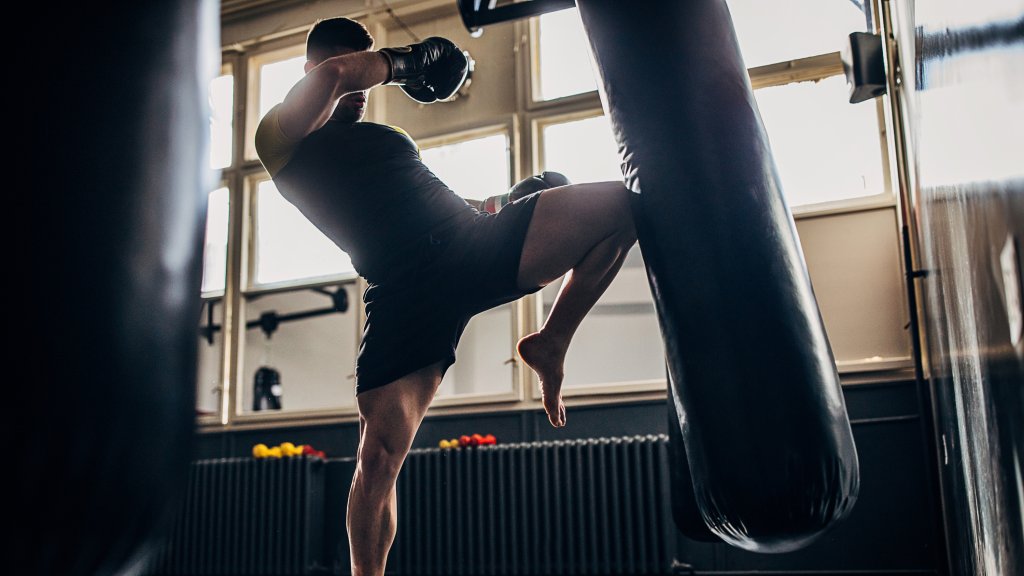
Far-right groups in Germany are increasingly using martial arts and physical training to recruit new members and expand their capacity for violence. Young men are a particular focus of recruitment. According to the German federal government, the number of such networks has risen significantly. At the same time, specialist organisations are warning of growing radicalisation, in which rejection of and hostility towards LGBTQ+ people also play an important role.
Key points at a glance
- More far-right networks: the federal government is now aware of around 20 regional so-called Active Clubs. In June 2024, there were around twelve.
- Increasing professionalisation: according to the Federal Ministry of the Interior, members of far-right groups are deliberately improving their capacity to use violence.
- Recruiting young men: Active Clubs, which originated in the USA, use fitness and martial arts activities to attract people, particularly young men, to far-right ideologies.
- Specialist organisations warn that far-right actors are increasingly spreading hatred against LGBTQ+ people and targeting events such as Christopher Street Day Pride celebrations.
Rise in combat groups
The federal government is currently aware of around 20 regional so-called Active Clubs. In June 2024, there were around a dozen. This emerges from the Federal Ministry of the Interior's response to a minor interpellation submitted by the Greens' parliamentary group in the Bundestag, as reported by Redaktionsnetzwerk Deutschland (RND) and Deutsche Presse-Agentur (dpa). The response notes a marked increase in the number of such groups, particularly in the current year, 2026. According to the security authorities' assessment, however, this development is not limited to the spread of the networks. The physical training of their members also appears to be gaining importance.
The Federal Ministry of the Interior's response refers to the professionalisation of the capacity for violence within far-right martial arts networks. This is accompanied by concerns that members are deliberately acquiring skills that could be used in violent confrontations. However, the government's response goes on to state that no specific direct confrontations with political opponents can currently be identified. Nevertheless, this development illustrates the importance that sport and physical training now appear to hold for parts of the far-right scene.
Active Clubs from the USA
The concept of so-called Active Clubs originated in the United States. Similar groups have since become established in other countries. They centre on shared sporting activities, particularly fitness and martial arts training. These activities also serve to build contacts within the far-right scene and recruit new followers. They primarily target young men, seeking to draw them into far-right networks through physical training and membership of a group. Martial arts are not inherently linked to extremism. Rather, the problem lies with explicitly far-right networks that use sporting activities to pursue their ideological and organisational goals. Alongside physical training, such groups can also facilitate the spread of extremist views.
Hatred against LGBTQ+ people
According to specialist organisations, increasing anti-LGBTQ+ hostility in far-right circles plays a particular role. Demokratiezentrum Hessen has already warned (German) that extremist actors deliberately use rejection of lesbian, gay, bisexual, trans and queer people to mobilise supporters. LGBTQ+ people and their rights are cast as the enemy. In the centre's assessment, far-right actors also seek to use such attacks to challenge democratic achievements. The connection between far-right martial arts networks and anti-LGBTQ+ mobilisation is therefore relevant to security policy. Both developments concern the radicalisation of extremist circles. Specialist organisations observe, in particular, that portraying minorities as enemies can be used as a means of mobilising young people. This development is particularly visible at LGBTQ+ community events. Christopher Street Day (CSD) Pride events are also increasingly being targeted by far-right protests and disruptive actions (German).
Focus on young people
Alongside the development of far-right martial arts groups, experts are also concerned about the increasing radicalisation of young people. An analysis by the Baden-Württemberg State Criminal Police Office, conducted in cooperation with the public prosecutors general's offices in Stuttgart and Munich, showed in spring 2026 that young people in particular appear to be becoming increasingly susceptible to radicalisation (German). In many places, hatred against LGBTQ+ people is a central component of extremist views. The combination of ideological enemy images, group membership and a growing willingness to engage in confrontation poses particular challenges for prevention work. While far-right Active Clubs engage their members through shared sporting activities, other extremist actors use public events and digital spaces to spread their messages.








