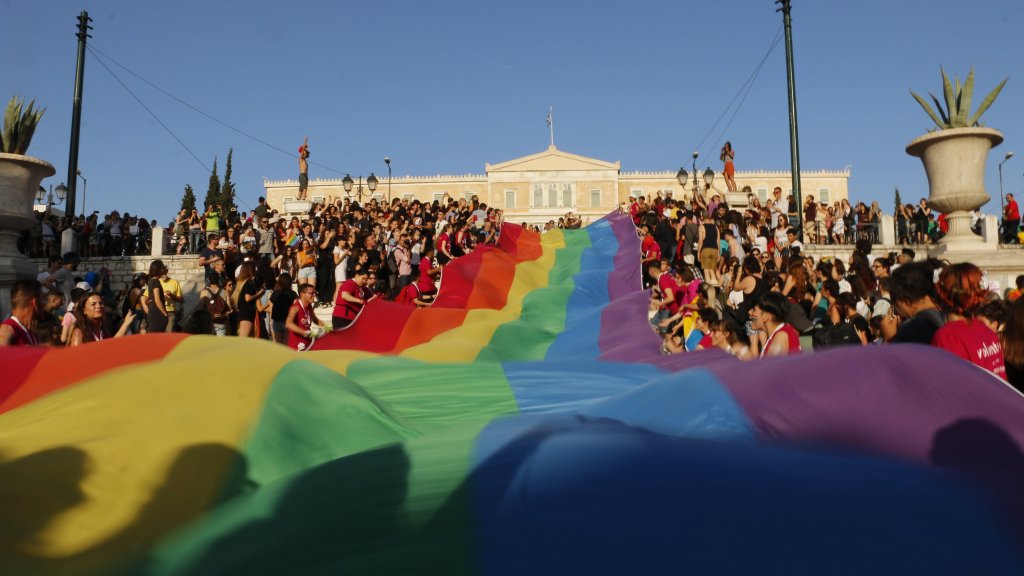
LGBTQ+ organisations in Greece are launching a new initiative to tackle hate, discrimination and violence. Several organisations have launched a campaign called “KAPOU OPA!”, roughly meaning “Enough is enough!”, which aims in particular to record previously unreported attacks on LGBTQ+ people. The goal is to offer those affected a safe point of contact and reveal the true scale of homophobic violence.
Key points at a glance
- New initiative against hate: The “KAPOU OPA!” campaign has launched in Greece. Its name roughly means “Enough is enough!”.
- Violence often goes undetected: In 2023, 61 anti-LGBTQ+ incidents were officially recorded in Greece. The organisers suspect substantial underreporting.
- Anonymous reporting available: Those affected can report attacks through a new online platform. The information will feed into the statistics of the Racist Violence Recording Network.
- Warning of growing hate speech: Following the introduction of marriage equality in 2024, the campaign's founders fear further hostility in the run-up to the next Greek elections.
- A model for Europe: The Greek initiative aims to inspire similar projects in other countries.
Attacks on the rise
Several organisations are involved in the project, including a Greek queer magazine, an advice service working with Athens Pride, and the European LGBTQI+ Media Association (ELMA). The initiative was presented at a press conference at the well-known Athens club Sodade. Those involved warned of growing social polarisation and a political climate in which queer and gay people are increasingly becoming targets of hostility. The organisers see the situation in Greece as part of an international trend. In their assessment, political attacks on LGBTQ+ people's rights are increasing in numerous countries (German). This trend, they say, shows that progress already achieved on equality is not necessarily secure in the long term.
Wave of hate after marriage equality
Greece legalised marriage for same-sex couples in 2024 (German). The decision was seen as a historic step towards equality in the country. However, the parliamentary debate was accompanied by fierce controversy across society. Numerous homophobic comments spread at the time, particularly on social media and in parts of the media. According to those running the campaign, this demonstrated how quickly political discussions about minority rights can turn into personal hostility. With national elections approaching, the organisers fear that the aggressive rhetoric could now intensify further. The initiative therefore targets more than physical violence. It also aims to draw attention to the consequences of hate speech. Its central message is that hate speech is neither “merely an opinion” nor a legitimate exercise of “freedom of expression”.
Numerous assaults and attacks
Nevertheless, a particular focus of “KAPOU OPA!” remains the recording of anti-queer and homophobic incidents. According to the annual report of the Racist Violence Recording Network (RVRN), a network documenting racist and bias-motivated violence, a total of just 61 attacks on LGBTQ+ people were officially recorded in Greece in 2023. However, the organisers believe the true number is considerably higher. So far, they say, it is primarily cases in which those affected contact the police or non-governmental organisations that come to light. Many people, by contrast, do not report insults, threats or physical attacks. Reasons cited include fear, uncertainty, a lack of trust in state institutions and the bureaucracy involved in filing a report. As a result, numerous attacks are missing from official statistics. This view is supported by research by the EU Agency for Fundamental Rights (German), which showed that only ten per cent of attacks on gay and queer people are actually reported.
Anonymous platform aims to help
To narrow this gap, the campaign's founders have set up a digital reporting system. A new platform allows people in Greece to document anti-LGBTQ+ incidents anonymously and in a secure environment. Reports submitted are intended to feed directly into the RVRN's official statistics. Those responsible hope this will provide a more accurate picture of the actual situation. The information collected is also intended to provide a basis for political demands. Without robust data, they argue, it is difficult to demonstrate how widespread violence against LGBTQ+ people really is and what state protection measures are needed. More comprehensive documentation could therefore help advance legislative changes and targeted support for those affected.
Problems in other EU countries
Developments in Greece appear to show clear parallels with the situation in Czechia. There, too, the parliamentary debate on marriage equality triggered a wave of homophobic comments. According to the Czech organisation In IUSTITIA, which has worked on bias-motivated violence for years, LGBTQ+ people are among the country's particularly vulnerable population groups (German). As in Greece, specialist organisations in Czechia suspect substantial underreporting. The consequences are comparable to the situation in Greece: a significant proportion of violence remains invisible to state authorities. The founders of “KAPOU OPA!” therefore want to inspire action beyond Greece. The campaign also sees itself as a potential model for other European countries.








