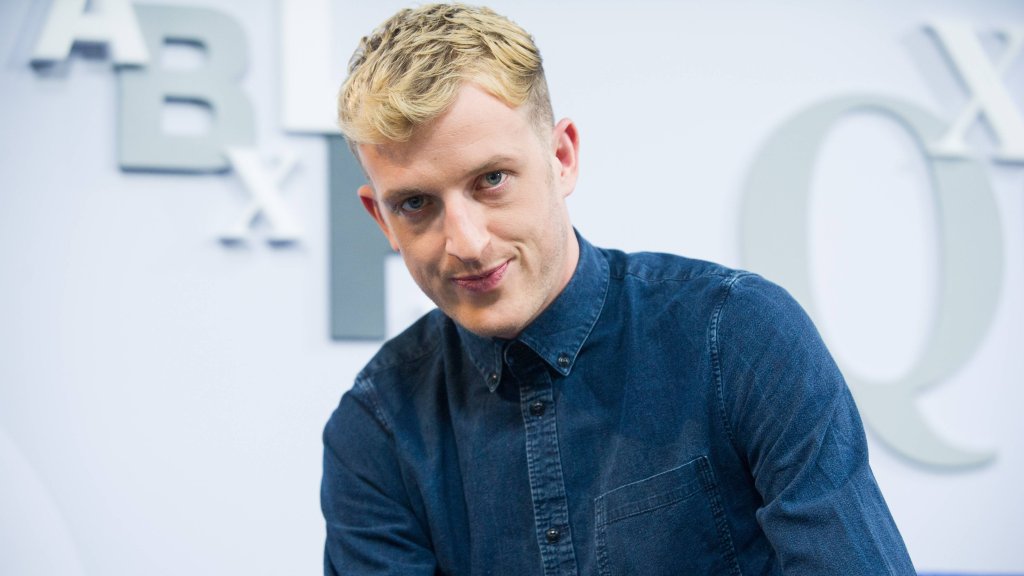
Following serious unrest at nationwide demonstrations in France, gay writer Édouard Louis (German) has sharply criticised President Emmanuel Macron's government. The 34-year-old accuses the security forces of disproportionate violence and also calls for decisive action against far-right parties. His comments come amid growing social tensions, as protests, demands for social change and violent clashes increasingly overlap.
Key points at a glance
- Édouard Louis makes serious allegations: The gay French writer criticises police violence and President Emmanuel Macron's social policies. He says that, for the first time, he is afraid to take part in a demonstration.
- Violence at nationwide protests: Several French cities saw rioting, arson, looting and attacks on police officers. According to provisional government figures, around 1,200 people were arrested and 150 members of the security forces were injured.
- Far-left groups under suspicion: The French government holds groups from the far left that are prepared to use violence partly responsible for the unrest. The demonstrations themselves are supported by a broad coalition across society.
- Call for a ban on far-right parties: Louis questions the democratic legitimacy of Rassemblement National and points to the debate about a possible ban on the AfD in Germany.
- Protests extend beyond schools: What began as a school pupils' movement has become a broader wave of protests involving university students, trade unions, migrants, workers and supporters of the yellow vest movement.
Fear of demonstrating
Louis took part in a demonstration in Paris a few days ago. In a video recorded and shared by Les Répliques, he spoke about his reasons for attending and his concerns about the police response. “It is the first time in my life, in my entire history of political engagement, that I have been afraid to demonstrate,” the author said. He cited “police violence” as the reason. His remarks relate to a protest movement that began in French schools in mid-September and now extends far beyond education. Alongside school pupils, those taking part include university students, trade unions, workers, migrants, left-wing political organisations and supporters of the former yellow vest movement. Among other issues, they are protesting against rising living costs, social inequality and the deterioration of public services.
Hundreds injured and arrested
The situation was particularly tense on 17 October. According to the French Ministry of the Interior, around 550,000 people took part in demonstrations nationwide. Organisers put the figure at about 800,000. While many rallies passed peacefully, major outbreaks of violence occurred in several cities. In Paris, Marseille, Lyon and other cities, barricades were erected, objects set alight, shops looted and police officers attacked. Public buildings were also affected. According to provisional figures from Prime Minister Sébastien Lecornu, around 1,200 people were arrested in connection with the unrest. About 150 police officers and gendarmes were injured. The government condemned the violence and announced firm action against those responsible. At the same time, the police operations prompted debate about the use of state force and the limits of the right to demonstrate.
Who is behind it?
The French government believes that organised groups from the far left that are prepared to use violence were among those involved in the riots. Prime Minister Lecornu explicitly blamed far-left groups for some of the violence. Reports on the unrest also mention looters and other participants prepared to use violence whose political affiliations are not clear in every case. People from student circles have also come under scrutiny in connection with the clashes, as have migrants. No verified overall breakdown of those responsible for the violence is yet available. The security authorities are also examining indications of possible links to extremist networks.
Louis holds Macron responsible
Édouard Louis sees the French government's policies as the main cause of the social conflicts. The writer criticises Emmanuel Macron's political direction, which he regards as right-wing despite Macron's portrayal of himself as a centrist. In his view, public services, schools, hospitals and the pension system have been increasingly weakened in recent years. The consequences, he says, particularly affect people on low incomes.
Louis accuses the government of responding to growing resistance to these developments with state violence rather than adequate political solutions. To counter this, he calls for broad mobilisation across society. “The only way to fight this is for there to be extraordinarily large numbers of us,” the writer said. He called for school pupils, teachers, university students, intellectuals, artists, workers and nursing staff to demonstrate together. Louis sees the participation of different social groups as essential to exerting political pressure.
Active from a young age
The French author has been engaged with education issues since his youth. Édouard Louis was born in 1992 as Eddy Bellegueule in Hallencourt, a working-class village in the Somme department in northern France. While still at school, he took part in political protests and called for better education systems. Louis became internationally known in 2014 through his autobiographical novel “The End of Eddy”. In it, he describes growing up gay in a working-class community in northern France, and his experiences of homophobia, violence and social exclusion. In the years that followed, social inequality and political responsibility became increasingly central to his literary work. His criticism extends to President Emmanuel Macron, and in 2018 the writer publicly supported the yellow vest movement.
Banning far-right parties
Alongside his criticism of police operations, Louis considers how democratic societies should deal with far-right organisations. Speaking on the French radio programme “Tout peut arriver”, he advocated banning such parties under certain conditions. His call is directed particularly at Marine Le Pen's Rassemblement National. In Louis' view, a democracy must not grant political organisations unrestricted freedom if their programmes are based on violence and the systematic exclusion of particular sections of the population. He therefore sees a ban on such parties not as a contradiction of democracy, but as a way of protecting it.
To explain his position, the writer refers to ideas put forward by the French philosopher Jacques Derrida. Democratic societies, he argues, must not only enable public debate but also be able to set certain fundamental limits. The extermination of a population group, for example, must not be subject to a democratic majority decision. Accordingly, Louis argues that political programmes advocating violence against particular groups do not acquire democratic legitimacy simply by participating in elections. This view goes beyond calling for political opposition to far-right parties. Rather, Louis asks whether such organisations should be allowed to participate in democratic competition at all.
Debate over banning the AfD in Germany
The writer explicitly links his ideas to political developments in other European countries. On his Instagram profile, he pointed to the debate about a possible ban on Alternative für Deutschland (AfD). Louis sees this as a possible starting point for an international debate. “It is time to open this debate at an international level,” he said. His criticism of France's Rassemblement National is also based particularly on its stance towards religious minorities, refugees and people with a migrant background. He accuses the party of “Islamophobia, antisemitic remarks, a determination to trample on the right to asylum and to consign migrants to certain death”. He summed up his position in an Instagram post with a stark comparison: “An arsonist is convicted when he starts a fire. Why are arsonist parties legal?”
Support from Preciado
Alongside Édouard Louis, the Spanish philosopher Paul B. Preciado has also addressed the French protests and the state's response. Preciado is among the world's best-known trans thinkers. In Preciado's view, fascism develops gradually. Its beginnings should therefore not be equated solely with a possible election victory for the far-right Rassemblement National. Rather, the decisive question is whether a society increasingly accepts institutional violence against particularly vulnerable people as normal. Preciado also counts the LGBTQ+ community among the social groups particularly affected by authoritarian developments.








