The latest postponement of elections in Haiti has caused disappointment and growing concern among queer human rights activists. The Caribbean country has not held elections for ten years. Now the vote scheduled for 13 December 2026 has also been postponed indefinitely.
Key points at a glance
- Elections postponed again: Haiti's electoral council has changed the electoral timetable. No new date has yet been set for the elections originally planned for 13 December.
- Ten years without elections: Haiti has been waiting a decade for fresh democratic votes. The political transition has already lasted five years.
- LGBTQ+ activists concerned: Human rights defenders are calling for a binding timetable, transparent procedures and democratically legitimate institutions.
- Calls for the prime minister to resign: Political parties and civil society organisations are demanding the replacement of Alix Didier Fils-Aimé.
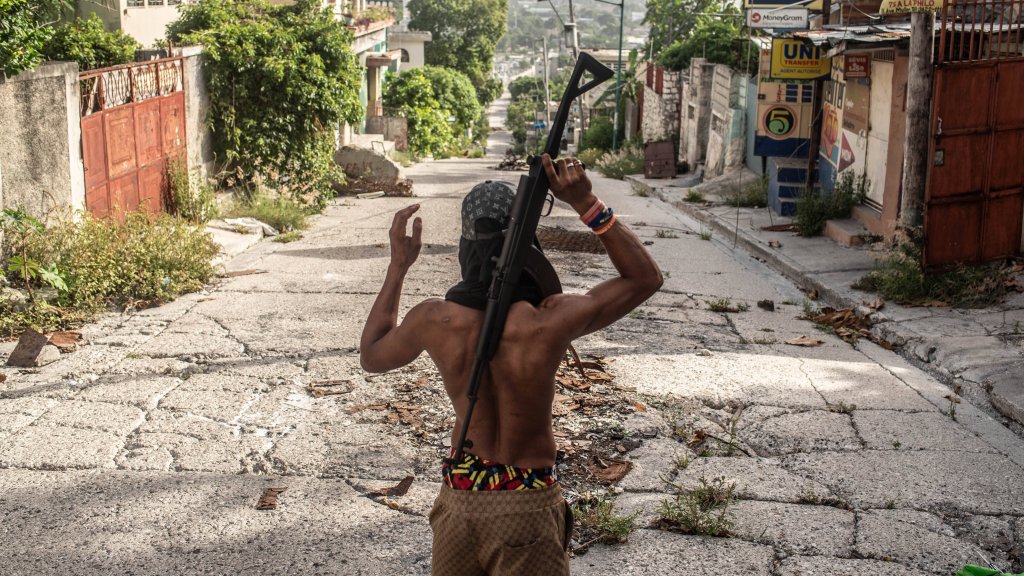
- Difficult security situation: Armed gangs control large parts of the capital, Port-au-Prince. Supply problems are also putting a strain on the population.
Deep concern in the community
The Provisional Electoral Council (CEP) has now announced that the electoral timetable must be adjusted because of organisational difficulties. No new date for the presidential and parliamentary elections has yet been announced. The votes were intended to elect a new head of state and a new parliament. However, Haiti remains in a severe security crisis. Armed gangs control large parts of the capital, Port-au-Prince. LGBTQ+ activists in particular are increasingly concerned that political uncertainty will persist and democratic reforms will fail to materialise.
The electoral council cites last-minute amendments to the electoral law of 2 June 2026 as the reason for the postponement. The law has now been revised for the third time in five months. Responsibility lies with the Council of Ministers, led by Alix Didier Fils-Aimé. The politician is currently prime minister and chairs the Council of Ministers. Haiti has no serving president. The amendments published in the official gazette mainly concern technical details of the electoral process. Among other changes, registration fees for candidates were reduced to make it easier to stand in presidential and parliamentary elections and to strengthen political competition. Despite these potential improvements, the latest changes to electoral law are causing further delays. The population must therefore continue to wait for a firm election date.
Calls for democracy
Merlin Jean, an LGBTQ+ activist from Ouanaminthe in north-eastern Haiti, understands the security problems. Nevertheless, he considers an indefinite postponement of democratic votes unacceptable. “I understand the difficulties associated with the precarious security situation. But Haiti cannot remain without elections indefinitely. The postponement of the elections must be accompanied by concrete commitments, a realistic timetable and guarantees of transparency. The population needs security, but it also needs legitimate elected representatives and democratic institutions,” Jean says. His call therefore goes beyond simply holding the elections. Transparent procedures and political institutions whose legitimacy rests on democratic votes are also crucial, he argues.
The prime minister's resignation
Johnny Clergé, an LGBTQ+ activist from Port-au-Prince, is also deeply concerned about the latest developments. In his view, the latest postponement could trigger further political tensions. “This postponement of the elections is not without consequences. Numerous political parties have recently come together to demand the prime minister's resignation. If Alix Didier Fils-Aimé were to resign, it would trigger another political explosion and plunge the country into complete uncertainty,” Clergé explains. Fils-Aimé has led Haiti's transitional government since February 2026. In mid-October, political parties and civil society organisations that had joined forces as the “Assemblée du Consensus National” (Assembly for a National Consensus) gathered in Pétion-Ville. The alliance backed the call to remove the head of government. It called for him to be replaced by a new transitional leadership consisting of a president and a new prime minister.
Transition without political stability
Clergé is particularly critical of the length of the political transition. After five years, he says, it has failed to organise democratic elections or secure a return to constitutional rule. “Today, the international community is no longer interested in Haiti – after five years of a never-ending transition that has failed to organise elections and whose sole purpose apparently is to keep itself alive,” the activist says. “Furthermore, a transitional period outside any electoral process provides an ideal breeding ground for fraud and a lack of transparency. However, I believe we can lead the country out of this impasse by involving the Haitian diaspora and civil society groups more closely through a national assembly.” Alongside the political conflicts, difficult living conditions are placing a strain on people in Haiti. The continuing violence of armed gangs and supply problems make everyday life harder. Many people's patience, he says, has finally run out.








