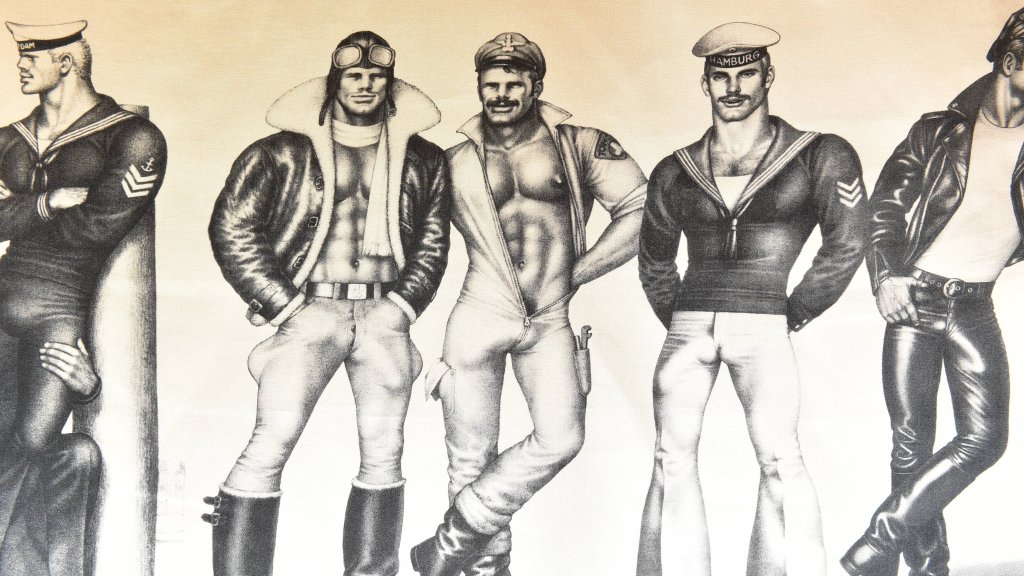
One of the most important centres of gay art history faces an uncertain future. The Tom of Finland Foundation wants to end its decades-long association with the Tom of Finland House in Los Angeles and move the art collection stored there elsewhere. Artists and former staff have responded with protests and concern for its cultural heritage.
Key points at a glance
- Historic site under threat: after around 40 years, the Tom of Finland Foundation wants to leave the famous artists' house in Los Angeles and move the art collection to a professional storage facility.
- Since June, all staff have been dismissed, artist residencies cancelled and events scrapped.
- Artists protest: more than 40 former residency recipients are demanding transparency over the foundation's finances and plans for the future.
- Dispute follows Nazi scandal: co-founder Durk Dehner had to relinquish his positions in 2025 following a controversy over Nazi symbols. He denies holding far-right views.
- Fears of a move to New York: Dehner suspects that the foundation wants to end its involvement in Los Angeles. The board has not confirmed any such move to date.
A place in gay art history
For four decades, the historic building in the Echo Park neighbourhood served as an archive, studio and meeting place for gay and queer artists from around the world. Since June, however, the foundation has suspended all programmes, dismissed its staff and cancelled artist residencies. Behind these developments lie financial difficulties, a deep conflict between the foundation's board and co-founder Durk Dehner, and a scandal involving Nazi symbols.
Tom of Finland, whose real name was Touko Laaksonen, shaped 20th-century gay culture with his drawings of muscular men depicted erotically. His works, initially distributed mainly through magazines and mail order, are now held by institutions including the Museum of Modern Art in New York and the Museum of Contemporary Art in Los Angeles. From 1980 to 1990, the Finnish artist lived with his partner Durk Dehner in the sprawling 14-room house. Dehner still lives there today. In 1984, the two founded the Tom of Finland Foundation to preserve the artist's work and promote gay erotic art. Alongside Tom's work, the collection now comprises thousands of artworks and historical documents, including art by John Waters and Robert Mapplethorpe, as well as records relating to Tom's international collectors. In 2016, Los Angeles designated the house a Historic-Cultural Monument. For decades, it hosted workshops, exhibitions, guided tours, festivals and artist residencies.
Artists are angry
The unexpected suspension of the programmes also left international artists in difficulty. German artist Georg Meyer-Wiel travelled from London in July for a planned residency. Only on arrival did he learn that all workshops, meetings and promotional activities had been cancelled. “This artist residency cost me a lot of money,” Meyer-Weil said. “I spent almost 20,000 dollars to be there and got nothing from these bastards because they cancelled everything. There was no publicity, there was nothing at all. Not even an apology.”
Italian artist Francesco Brunetti was informed that his planned September residency had been cancelled altogether just two weeks before it was due to begin. “It was a huge thing. I had planned everything, including with my company in the UK. I had to apply for a sabbatical and make all the arrangements for the flat I rent in London,” he explained. After speaking to Dehner, Brunetti was eventually able to work in the house nonetheless, without the foundation's involvement. “What happened is terrible. You don't treat people like that.”
Foundation plans to move collection elsewhere
The foundation stopped paying rent to Dehner in June. It explained that incoming funds had not been available in time to meet ongoing obligations. Dehner then tried to have an eviction notice served. By his own account, he wanted to get the board to communicate with him again at all. The notice was never actually served. “We wanted to get them to sit down with us and talk about what was going on, because they hadn't communicated with me at all about the fact that they were no longer paying rent, utilities or external storage costs,” Dehner said.
In a public statement, the foundation has since confirmed its departure from the Tom House. “After careful consideration, we have concluded that the foundation can no longer responsibly operate as a resident organisation in Mr Dehner's house.” To protect the collection, it said, it would be moved to a professional art storage facility. The move was already under way. The artist residency programme would be suspended for the time being. The foundation apologised for any inconvenience and announced that it would explore new funding opportunities, exhibitions and residency options.
Artists demand transparency
In an open letter, however, more than 40 former artists-in-residence are demanding full transparency. “For those of us who lived and worked at the Tom House, the artist residency was never simply accommodation or time in a studio,” the letter states. Its particular significance lay in the connection between the historic building, Tom's art, his archives and the people working there. The board has apparently not yet responded to further questions about its finances and future plans.
Nazi scandal weighs on foundation
The conflict intensified following a scandal involving co-founder Durk Dehner in January 2025. Photographs emerged at the time showing him at fetish events wearing Nazi symbols, including a leather cap with a Nazi emblem, Iron Crosses and a swastika pin. Dehner faced international criticism, lost his role as a judge at the International Mr. Leather competition and was apparently pressured to give up his positions and paid work at the foundation. The now 77-year-old firmly denies being a racist or supporting Nazism.
He described the use of the symbols as role play and a deliberate reinterpretation within his generation's fetish culture. Tom of Finland's art was also partly influenced by German military uniforms from the Second World War. In his official biography, the artist is quoted as saying: “The whole Nazi ideology, the racism and all that are abhorrent to me, but of course I drew them anyway.” Of the uniforms, he said: “They had the most erotic uniforms.”
A move to New York?
Following Dehner's departure, resignations and age-related departures reduced the foundation's board to five members, all of whom live in New York. Dehner accuses them of a lack of interest in the work in Los Angeles and inadequate fundraising. He says money is being spent on lawyers and public relations instead. He himself had to pay almost US$20,000 in legal fees simply to communicate with the board. He also fears that the foundation could sell artworks if its financial problems persist.
Dehner himself has already sold works from his private collection to fund the upkeep of the house. He said he had sold an original from Tom's first exhibition in Los Angeles to pay for a new roof. He originally intended to leave the house and his possessions to the foundation after his death. Now he suspects that it wants to move its activities entirely to New York. “I thought I would die one day, and everything I owned would go to them,” Dehner said. “But they don't want it. They want to break away, take everything they want to New York and re-establish themselves there.” No such decision by the board has yet been publicly confirmed.
Hope of saving the house
Dehner sees these developments as a threat to the foundation's original purpose. “This is not what Tom would have wanted. He wanted a community. He wanted the foundation to inspire other people to be creative and express themselves without restrictions.” Despite the disputes, he hopes that public pressure could bring about a change in leadership. “I haven't given up hope that the public response could actually help us regain control of it,” he explained. He would like a new board of committed artists who care about the historic house and its cultural significance. Whether the Tom of Finland House can continue as a vibrant meeting place for gay art or will be preserved only as a historic building remains uncertain.








