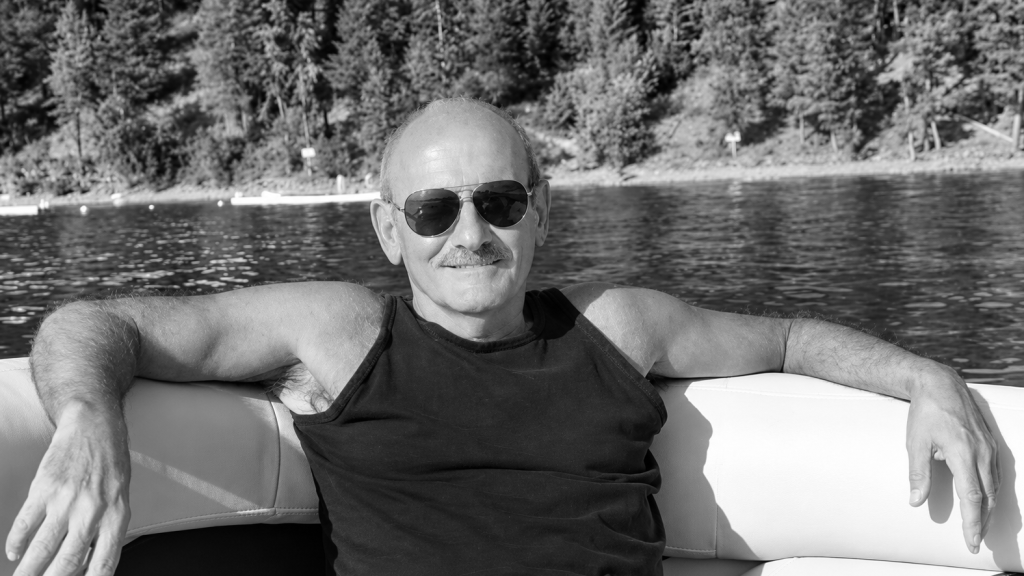
American film director Tom DeSimone, regarded as one of the pioneers of modern gay porn and later known for his horror and exploitation films, has died. It has now emerged that he died on 17 October at the age of 87. A few days before his death, he had posted a personal farewell message on Facebook.
The key facts at a glance
- Death at 87: American director Tom DeSimone died on 17 October 2026 in Palm Springs. A few days earlier, he had said goodbye to friends and fans in an emotional message.
- Gay porn pioneer: Under the pseudonym Lancer Brooks, he made The Collection (1970), one of the first gay porn films with a coherent plot and spoken dialogue.
- Setting new standards for the genre: DeSimone combined erotic content with cinematic storytelling, carefully crafted direction and professional editing.
- Success in mainstream cinema: His best-known works include Chatterbox (1977), Hell Night (1981), The Concrete Jungle (1982) and Reform School Girls (1986).
- Lifetime achievement recognition: He was inducted into the GayVN Hall of Fame in 2005. He also enjoyed decades of success as a television director.
An erotic storyteller
DeSimone belonged to the generation of filmmakers who fundamentally changed gay erotic cinema in the 1970s. Whereas such productions had previously consisted mostly of loosely connected erotic scenes, he increasingly focused on stories, dialogue and carefully crafted filmmaking. His career took him from gay porn through American exploitation cinema to numerous television productions. Throughout, he remained particularly known for his distinctive directing style and his ability to achieve professional results even on small budgets.
A farewell message before his death
Shortly before his death, DeSimone addressed his family, friends, companions and fans in an emotional message. “It seems the time has come for me to say thank you and goodbye,” he wrote on Facebook. He recalled people who had shaped his life, including family members, childhood friends and even former professional adversaries. “Every one of you who has touched my life in even the smallest way should know that it was meant to be,” the director explained.
He assured his family that he had loved them from the very beginning, regardless of what had happened. He commented humorously on his difficulties writing the message: “I wish I could express myself more poetically, but I’m tapping away on my iPad with just one finger.” By his own account, he faced his impending death without fear. “I’m not afraid, but above all curious. I hope some of you get to experience the joy and magic that fate has given me.” His final words in the public message were: “I LOVE YOU ALL. GOOD NIGHT.”
From film student to director
Tom DeSimone was born on 1 July 1939 in Cambridge, in the US state of Massachusetts. He studied film at Emerson College in Boston before completing a master’s degree in film production at the University of California, Los Angeles (UCLA). His 1965 student film “The Game” already explored unusual interpersonal situations. It centred on an actress and a young man who engage in role play. In 1968, DeSimone directed a sequence in the anthology film “Terror in the Jungle”. His early professional experience included editing educational films for children. However, his decisive entry into feature film production came through the porn industry, which was undergoing fundamental changes in the late 1960s and early 1970s.
Making gay film history
Under the pseudonym Lancer Brooks, DeSimone directed “The Collection” in 1970, widely regarded as the first gay porn film with a continuous plot and spoken dialogue. In doing so, he set new standards for a genre that until then had largely consisted of sequences of erotic images accompanied by music. DeSimone did not see porn films solely as a means of depicting sexuality. He was also interested in dramatic structure, character development and the possibilities of cinematic direction. His works were therefore among the most artistically ambitious productions in the gay porn industry at the time.
“Confessions of a Male Groupie, or How I Learned to Stop Worrying and Love the Electric Banana” followed in 1971. The film combined erotic content with experimental narrative forms and unusual visual ideas. In 1970, DeSimone had also made the documentary “Inside A.M.G. (The Athletic Model Guild Story)” without an on-screen credit. In it, performer Rick Cassidy guided viewers through the history of photographer Bob Mizer’s Athletic Model Guild. Mizer’s images of muscular men played an important role in early gay visual and film culture.
Working quickly and “on the fly”
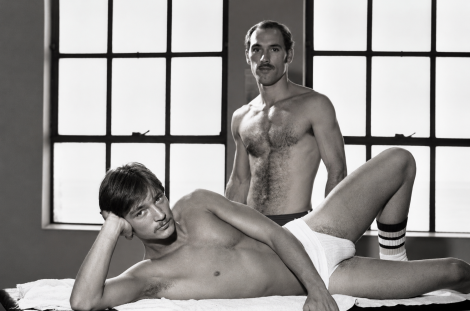
In the years that followed, DeSimone regularly worked for the production company Hand in Hand, one of the leading producers of gay porn films. His best-known directing credits from this period include “Catching Up” from 1975 and “The Idol” from 1979. The films stood out for their comparatively elaborate production values and careful direction. Looking back, DeSimone was pleased with his work from that time. “I did some really good work back then, considering the budgets and production conditions,” he said. “I learned to shoot quickly and on the fly.” Limited funds forced him to prepare shoots precisely and organise them efficiently. These experiences also proved helpful in his later career.
A master of editing
DeSimone paid particular attention to working with performers who often had no acting training whatsoever. In a 2019 interview with Bijou Blog, he explained his approach in detail. “Getting good performances was always a challenge,” he explained. He therefore planned every scene precisely in advance and systematically broke down the scripts. Even before filming began, he decided which lines of dialogue should be shot in close-ups, two-shots or wide shots. This ensured that there would be enough material in the editing room to assemble convincing scenes.
“I knew these guys would never be able to carry an entire scene in a single continuous take,” DeSimone recalled. Instead, he filmed short sections, focusing on just a few lines of dialogue at a time with the performers. He then shot the same scene from other angles. This allowed mistakes or weak performances to be corrected without having to reshoot an entire sequence. “I was a master of film editing, and I enjoyed piecing together a convincing performance from very little footage,” he said. The performers themselves were often surprised when they saw their performances in the finished film. “Many times, the actors were astonished — and impressed — when they came to the screening to see the film.”
Reaching mainstream cinema with “Chatterbox”
In 1977, DeSimone reached a wider cinema audience with the comedy “Chatterbox”. Starring Candice Rialson, the film tells the absurd story of a young woman whose vagina suddenly gains the ability to speak and even sing disco songs. The production combined elements of porn with grotesque comedy and the exploitation cinema popular at the time. “Chatterbox” became an unusual cult film that was later also shown on American cable television.
Following this success, DeSimone increasingly worked in American horror and exploitation cinema. In 1981, he directed the slasher film “Hell Night”, featuring Linda Blair, Vincent Van Patten and Kevin Brophy. In 1982, he made “The Concrete Jungle”, a women-in-prison film with Tracey E. Bregman and Jill St. John. Among the film’s memorable lines is one delivered by Carole Ita White: “And then there was this one goddamn idiot, Larry — what a body.” Four years later came “Reform School Girls”, a parody of the women-in-prison genre. The production poked fun at the exaggerated conventions of such exploitation films and also became a cult title. DeSimone’s final non-pornographic cinema film as a director was “Angel III: The Final Chapter” in 1988.
A career in US television
Alongside his cinema productions, DeSimone established himself as a sought-after television director. His work included episodes of the horror series “Freddy’s Nightmares” (1988 to 1989), the science-fiction series “Super Force” (1991 to 1992) and the comic book adaptation “Swamp Thing” (1992 to 1993). Other credits included “Dark Justice” (1991 to 1993), “The Big Easy” (1986 to 1987), “Pensacola: Wings of Gold” (1998) and “She Spies” (2002). In 1995, DeSimone also directed the entire telenovela “Acapulco Bay”.
Following his death, actress Katie Barberi paid tribute to the director on social media. She had worked with him on “Acapulco Bay” and particularly remembered his kindness during filming. She described him as “an incredibly lovely person whose career spanned decades”. She said she would always be grateful to him for receiving her kindly and making her feel welcome.
A pioneer in gay film history
DeSimone was inducted into the GayVN Hall of Fame in 2005 for his contribution to gay porn. The honour recognised a director who had played a major role in expanding the aesthetic and narrative possibilities of gay erotic films. His early work was made at a time when gay lives were barely visible in commercial cinema. Gay porn films then formed a cultural space of their own in which male homosexuality could be depicted openly. In his later years, DeSimone lived in Palm Springs, in the US state of California.








