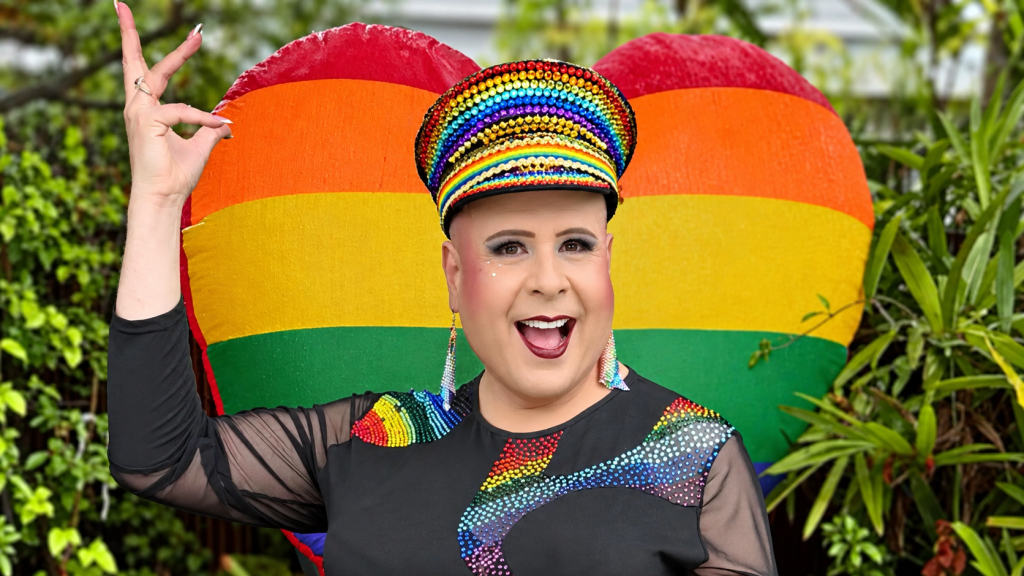
A political dispute over rainbow colours on Florida's streets has led to a highly successful fundraiser for the LGBTQ+ community. Drag queen Miss Bouvèé has restored and sold paving stones from a dismantled rainbow pedestrian crossing in Miami Beach. Within just a few days, this raised more than US$25,000, equivalent to around €22,500.
The key points at a glance
- Successful fundraiser: Drag queen Miss Bouvèé raised more than US$25,000 in four days by selling 50 paving stones from a former rainbow pedestrian crossing in Miami Beach.
- Rainbow ban in Florida: The state's Department of Transportation had the crossing removed in October 2025. Governor Ron DeSantis had previously ordered action against street art carrying social, political or ideological messages.
- Money for the LGBTQ+ community: The proceeds are intended to support Pride events in South Florida, particularly by funding live entertainment and security measures.
- Criticism of state intervention: Miss Bouvèé accuses Florida of restricting cities' right to self-government and pushing important symbols of the queer community out of public spaces.
- More rainbow crossings removed: Similar road markings were also removed in Orlando, Key West and Delray Beach in 2025. The removal of the memorial crossing at the former Pulse nightclub was particularly controversial.
Protest against DeSantis
The money will support Pride events in South Florida. The performer also sees her initiative as a protest against the policies of Republican Governor Ron DeSantis, whose administration has had numerous rainbow markings removed from public streets (German). The stones come from a pedestrian crossing that was dismantled in October 2025 on the orders of the Florida Department of Transportation. They have now become keepsakes intended to commemorate the history and visibility of the queer community. The conflict began with a directive from the Florida Department of Transportation (FDOT). The agency required municipalities to remove street art associated with “social, political or ideological messages”.
This particularly affected rainbow pedestrian crossings that had been installed in several Florida cities as visible signs of support for LGBTQ+ people. The administration officially justified its actions on road safety grounds and with the aim of standardising road markings statewide. The City of Miami Beach wanted to retain its rainbow crossing and appealed against the directive (German). Its efforts were unsuccessful, however. In October 2025, the crossing had to be removed.
Stones of the rainbow
Its removal did not mean that all the material was lost, however. As the Associated Press news agency reported, Miami Beach city commissioner Alex Fernandez explained that municipal public works staff had collected all the paving stones that had been removed. The city wanted to keep open the possibility of reusing the material later. Some of the original stones were indeed used again. Others went to an auction, where Miss Bouvèé placed the winning bid.
The South Florida-based drag queen then came up with the idea of using the stones to raise funds for the queer community. She cleaned the paving stones, repainted them and restored their rainbow colours. She also attached plaques to the pieces commemorating their original location in Miami Beach. The removed road markings thus became individual keepsakes of a public place that had previously stood for the visibility of gay and queer people.
50 Pride stones sold
The response to the initiative exceeded all expectations. Within four days, Miss Bouvèé sold 50 of the restored paving stones. The proceeds totalled more than US$25,000. Speaking to the Miami New Times newspaper, the drag queen described the buyers' enthusiasm. “People were incredibly excited to hold a piece of our history in their hands, because this isn't the first time we've used bricks for a protest,” she said. Referring to the stones' future owners, she added: “I just think it's wonderful that these stones are now getting a new life all over the country.” The paving stones are therefore not only being kept as mementoes. They are also intended to serve as reminders of the political disputes that led to the removal of the rainbow crossing.
Interference with municipal rights
For Miss Bouvèé, the dispute is about far more than the design of individual streets. She sees the Florida administration's measures as a troubling infringement of cities' freedom to make their own decisions. “I think the most frightening thing about it was that we had to watch cities lose their right to govern their own citizens,” she continued. She is particularly critical of the fact that local authorities could no longer make independent decisions about the design of public streets. “They have circumvented due process; they have taken away cities' right to manage their own streets. Something like this starts in one place and ends somewhere else entirely.”
Support for Pride events
The money raised is intended to benefit the LGBTQ+ community in South Florida directly. The plan is to use the proceeds for Pride events. Miss Bouvèé also hopes her initiative will encourage other artists and community members to find new ways to get involved in civic life. In particular, she wants to encourage other drag queens to use their artistic skills for political and charitable projects too. “I hope it inspires other drag queens to be innovative and think about how they can be just as creative as they are in their art. Look at what you can do to save your Pride events,” she explained.
The dispute over the rainbow crossing in Miami Beach is part of a wider conflict over LGBTQ+ symbols in Florida's public spaces. Back in August 2025, the Department of Transportation had a rainbow crossing outside the former Pulse nightclub in Orlando painted over (German). The crossing commemorated the 49 people murdered in the attack on the club in 2016 (German). To this day, it remains the deadliest hate crime against the LGBTQ+ community in the recent history of the United States. Before the attack, the nightclub was an important meeting place for gay and queer people. In September 2025, four rainbow crossings were also removed in Key West. That same month, four more such road markings disappeared in Delray Beach.








