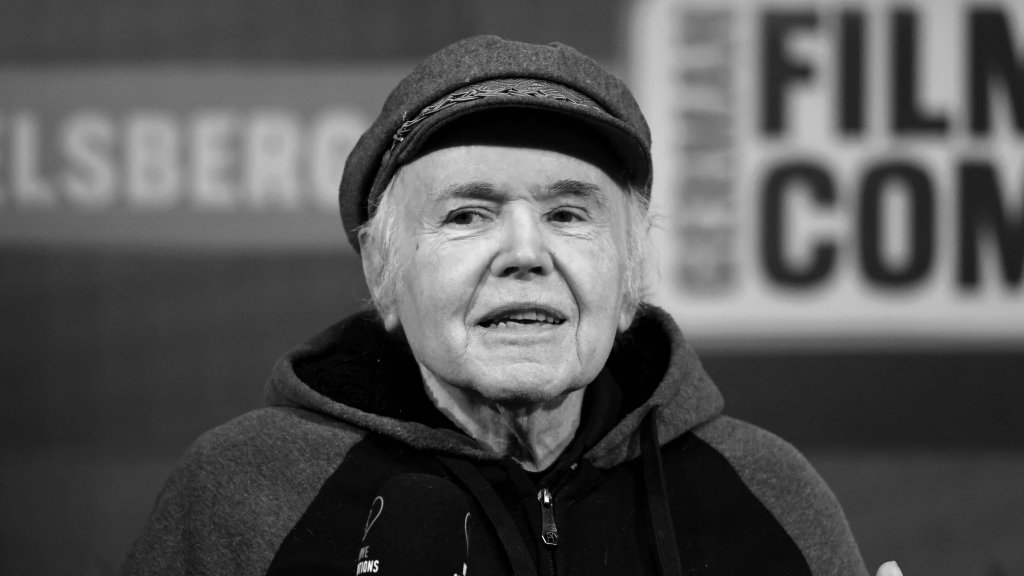
American actor Walter Koenig, who became world-famous as Pavel Chekov in the science-fiction series “Star Trek”, has died. He died on Sunday, 25 October, aged 90, at his home in North Hollywood, California. His agency, Galactic Productions, announced the news. According to the agency, Koenig died of old age. His daughter and niece were with him.
The key points at a glance
- Walter Koenig has died: The American actor died on 25 October 2026, aged 90, at his home in North Hollywood. Family members were with him.
- Known for “Star Trek”: From 1967, Koenig became one of the best-known faces of the science-fiction series “Star Trek” as navigator Pavel Chekov.
- A special connection with the LGBTQ+ community: Koenig supported his gay fellow actor George Takei for decades. Their friendship began in the 1960s.
- Best man at a same-sex wedding: When Takei married his long-term partner Brad Altman in 2008, Koenig stood by his side as best man.
- A moving farewell: George Takei paid a personal tribute to his late friend, recalling their bond of almost 60 years.
- The last members of the original cast: Following Koenig’s death, William Shatner and George Takei are the surviving members of the original Enterprise crew.
George Takei mourns
With Koenig’s death, the international “Star Trek” community has lost one of its best-known actors. His death has an additional significance for the LGBTQ+ community: for decades, the actor was a close friend and supporter of his gay colleague George Takei, who played helmsman Hikaru Sulu in the series. Their friendship extended far beyond their work together on screen. It became particularly visible in 2008, when Koenig served as best man at Takei’s wedding to his long-term partner Brad Altman. George Takei, now 89, responded to the death of his former co-star with moving words. On Facebook, he wrote: “My heart is heavy. Walter Koenig, our Ensign Pavel Chekov, passed away early this morning.”
Takei recalled their early days: “Walter and I met in the 1960s on the bridge of the Enterprise and remained friends for almost six decades. When Brad and I married in 2008, Walter stood by our side as our best man.” The actor paid tribute to his friend not only as a colleague, but also as someone distinguished by his loyalty, thoughtfulness and wide-ranging interests. “Walter was more than just Chekov. He was a writer, a teacher, a thoughtful person and a loyal friend. To the fans who loved him for so many years: thank you. He loved you too. Rest in peace, my dear friend. Keep holding a steady course.”
Support in difficult times
Koenig and Takei’s relationship began at a time when homosexuality was largely taboo in the American entertainment industry. When the two appeared on screen in “Star Trek” in the 1960s, Takei was not yet open about his sexual orientation. He did not come out until 2005. Koenig was among the people in his professional circle from whom Takei apparently experienced acceptance early on. An anecdote Takei told about their time filming together illustrates their special bond. According to his account, one morning at the coffee stand, Koenig drew his colleague’s attention to an attractive male extra and winked at him.
For Takei, this small gesture was a sign of quiet support. At a time when being openly gay could have serious professional and social consequences, such signals were by no means something to be taken for granted. Koenig respected his colleague and showed no apparent reservations about his sexual orientation. The two actors’ friendship thus also became an example of how much personal solidarity could mean to gay people, long before public support became commonplace.
A symbol of diversity in society
The series that made Koenig and Takei famous also had a special social significance. When “Star Trek” aired on American television in the 1960s, international and ethnically diverse casts were by no means the norm. With the crew of the starship Enterprise, series creator Gene Roddenberry deliberately presented a vision of the future in which people from different backgrounds worked together. As Pavel Chekov, Koenig played a Russian navigator in the midst of the Cold War, when political relations between the USA and the Soviet Union were marked by deep mistrust. As Hikaru Sulu, George Takei played an Asian officer portrayed as an integral part of the ship’s crew. Nichelle Nichols also made television history as communications officer Nyota Uhura.
In the episode “Plato’s Stepchildren”, broadcast in 1968, she took part in one of the best-known kisses between a black woman and a white man on American television. Her partner in the scene was William Shatner as Captain Kirk. The series thus depicted a society in which a person’s background and skin colour were not supposed to determine their worth. However, the original crew did not include an explicitly gay main character at the time. This was precisely why Takei’s later coming out held special significance for many LGBTQ+ fans. Koenig’s decades-long friendship with Takei also connects the history of the series with the development of social acceptance of gay people.
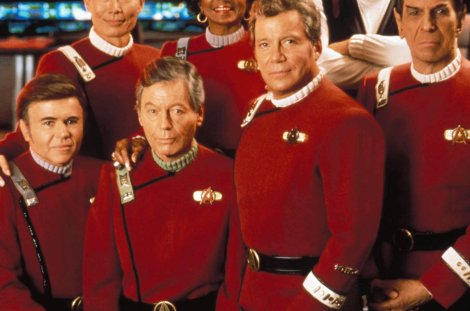
World-famous as Pavel Chekov
Walter Koenig was born in Chicago on 14 September 1936. His parents were Russian-Jewish immigrants. After training as an actor in New York, he began his television career in the early 1960s with guest appearances in various series. His breakthrough came in 1967, when he joined the cast of “Star Trek”. Alongside William Shatner, Leonard Nimoy, George Takei, Nichelle Nichols, James Doohan and DeForest Kelley, Koenig became part of a television cast that achieved cult status across generations. After the original series ended, he continued to play Chekov in several “Star Trek” feature films.
He later appeared in productions including “Babylon 5”, “Columbo” and “Futurama”. He remained a well-known figure for decades, particularly within the science-fiction community. Even in later life, Koenig maintained close contact with “Star Trek” fans. He regularly attended Comic-Con events and fan conventions, answering questions and talking about his work on the famous television series. Alongside his professional successes, Koenig suffered devastating family losses. In 2010, his son Andrew died by suicide at the age of 41. In 2022, the actor lost his wife Judy, to whom he had been married for almost 60 years. Koenig remained connected to his family and the international “Star Trek” community until the end. Following his death, William Shatner, now 95, and George Takei are the last two surviving principal cast members of the original Enterprise crew.








