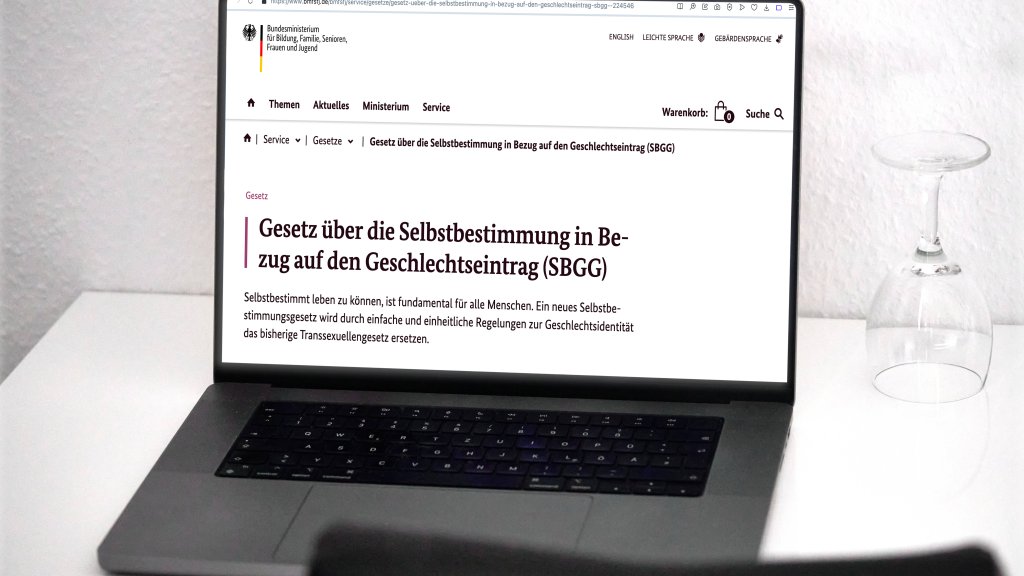
Two years after the introduction of the Self-Determination Act, Bundesverband Trans* (BVT*) and LSVD+ – Verband Queere Vielfalt have delivered a positive interim assessment. At the same time, the organisations see data protection for trans, intersex and non-binary people as being at risk. Their assessment comes ahead of the second anniversary of the law, which came into force on 1 November 2024.
Key points at a glance
- 1 November 2026 marks two years of the Self-Determination Act (SBGG).
- Around 30,000 trans, intersex and non-binary people have used the option to change their registered gender and first names.
- The law replaced the previous procedure involving expert assessments for the courts and sometimes degrading questioning.
- Bundesverband Trans* and LSVD+ give a positive assessment and stress the importance of the new legislation for participation in society.
- At the same time, the associations warn that new population registration rules could weaken the prohibition on disclosure.
- The automatic transmission of previous personal details to security authorities in Bavaria has drawn particular criticism.
30,000 people
Since then, those concerned have been able to change their registered gender and first names by making a declaration at the registry office. The court proceedings previously required, with mandatory expert assessments and personal questioning, have become a thing of the past. Medical certificates, as required under the Civil Status Act (PStG), are no longer needed either. The figures to date show how great the need for such legislation was: around 30,000 people have used the SBGG since it came into force. For decades, the previous Transsexuals Act (TSG) had allowed changes to civil status only subject to restrictions and conditions. Many people had therefore waited a long time for the new legislation. In November 2024 alone, the first month after the law came into force, more than 7,000 people had their registered gender changed. The number of declarations fell significantly as early as the following month, December. The latest available figures from the Federal Statistical Office for the first half of 2026 show a relatively steady trend: each month, between 550 and 750 people across Germany made use of the legal option.
Associations see progress
The two organisations point out that the Self-Determination Act did not create the legal possibility of changing one's registered gender for the first time. Rather, they say, it simplified existing procedures and reduced existing discrimination. Under both the former Transsexuals Act and the Civil Status Act, as well as under the new legislation, the procedures end with a changed first name and registered gender. In the associations' view, the law is therefore much more than an administrative simplification. They say it enables those concerned to use their own details in everyday life, thereby avoiding situations involving discrimination. Experiences from advice centres and LGBTQ+ communities also confirm its positive impact, they say, with reports of a tangible easing of the burden and better opportunities to participate in society. The law could also strengthen trust in state institutions. For that to happen, fundamental rights must apply without restriction to everyone.
Criticism of population registration rules
Despite their positive assessment, Bundesverband Trans* and LSVD+ see a considerable need for action to protect personal data. Their focus is on the prohibition on disclosure under Section 13 of the Self-Determination Act. This is intended to prevent previous first names or a previous registered gender from being disclosed or deliberately sought out against the wishes of those concerned. In the associations' view, however, changes to population registration rules threaten to weaken this protection.
New data fields were introduced at federal level in April 2025. Since then, information on a person's previous registered gender, the authority responsible for the change and the relevant file reference has been added to their personal record. The organisations are particularly critical of a rule in Bavaria. A registration regulation there stipulates that previous first names and a previous registered gender are automatically transmitted to security authorities. A comparable provision was also planned in Baden-Württemberg. It was due to come into force on 1 November and had prompted protests in advance. Now, however, the rule is to be revised again and scaled back. The associations would welcome such a change.
Federal and state governments must act
They also warn against placing people who have used the Self-Determination Act under blanket suspicion by sharing their data indiscriminately and without specific grounds. The law already permits the transmission of relevant information where there is a specific reason, they say. Storing data beyond that and automatically forwarding it to security authorities is neither necessary nor proportionate. Federal and state governments must ensure that population registration rules remain compatible with the statutory prohibition on disclosure. In particular, there must be no permanent “lifelong file” recording previous personal details that could confront those concerned with their past every time they move home or have contact with the authorities.
Further strengthening self-determination
In the two associations' assessment, the second anniversary of the Self-Determination Act remains an occasion for a positive appraisal, despite the data protection concerns. Developments so far show that the legislation is needed and works in practice, they say. At the same time, the progress achieved must not be jeopardised by new administrative rules. The shift from determination by others to self-determination brought about by the law, as required by human rights, must be protected in the long term and developed further.








