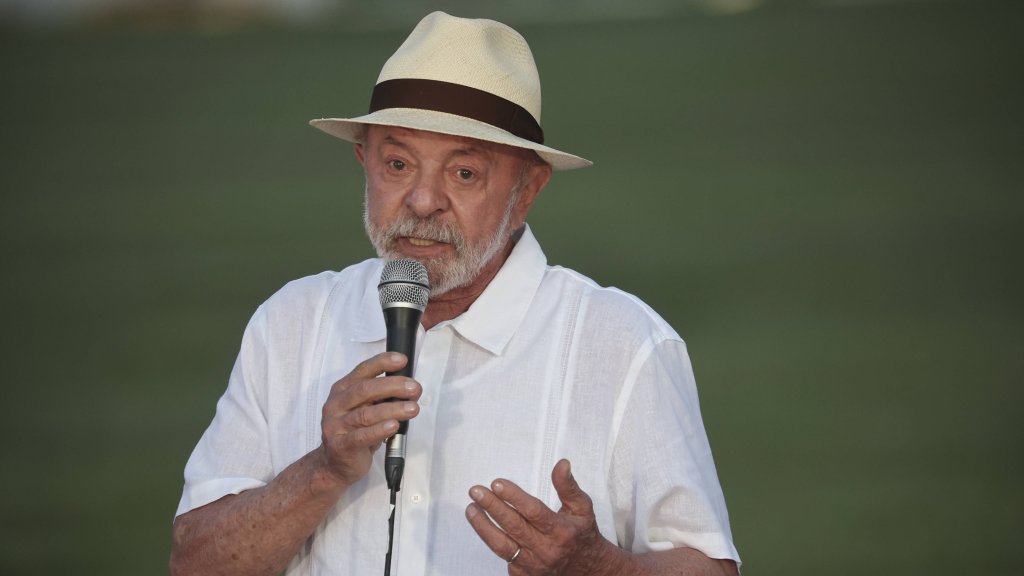
Brazil aims to tackle organised crime with a far-reaching security reform. The Senate has now approved the proposal put forward by President Luiz Inácio Lula da Silva, who won the country's pivotal election only at the end of October. It strengthens the government's powers and provides more funding to combat criminal organisations. Tougher penalties are planned for the leaders and members of such groups. The LGBTQ+ community hopes the situation will improve.
Key points at a glance
- Brazil's Senate has approved a far-reaching security reform proposed by President Luiz Inácio Lula da Silva.
- The reform strengthens the government, secures additional funding and provides for tougher penalties for criminal groups.
- Protection from violence is particularly urgent for LGBTQ+ people: 273 homicides were recorded in 2024 alone.
- LGBTQ+ organisations stress that the number of unrecorded murders is considerably higher.
- Gay and trans people feature particularly heavily in the murder statistics.
- Homophobia, prejudice and organised crime are considered major reasons for the high numbers.
Action against crime
The broad support is seen as a political success for the left-wing president. Lula proposed the move a few days after his re-election. He secured a fourth term in the run-off election at the end of October. The reform now allows him to establish a ministry of public security, fulfilling a key election pledge. According to the Brazilian Senate, the reform is intended in particular to improve cooperation between the federal government, states and municipalities. To this end, the unified public security system will be enshrined in the constitution. Closer coordination is intended to enable more effective action against organised crime.
Hope for the community
For LGBTQ+ people, the security debate touches on a distressing reality of everyday life. The organisation Grupo Gay da Bahia most recently documented a total of 273 homicides involving LGBTQ+ victims in 2024 (German) in Brazil. Its findings draw on sources including media reports. The situation barely improved in 2025, with gay men and trans people in particular among the victims. According to Grupo Gay da Bahia, at least 257 violent deaths of LGBTQ+ people were documented last year, including 221 homicides and 20 suicides. This equates to an average of one death every 34 hours. In the absence of systematic government recording, queer organisations believe that many cases go unrecorded. Brazil thus remains among the countries with the highest murder rates among gay and queer people worldwide.
According to the organisation's assessment, these acts of fatal violence take place both as targeted attacks motivated by homophobia and hostility towards queer people and in the context of organised crime. LGBTQ+ people in Brazil have faced a particularly high risk of violence, discrimination and fatal attacks for years. Despite legal progress, including the recognition of same-sex marriages and the criminalisation of homophobic and transphobic discrimination, social prejudice and hostility towards sexual and gender diversity still shape everyday life in many places. Those affected are attacked, threatened and sometimes murdered in the street, within their families or by partners.








