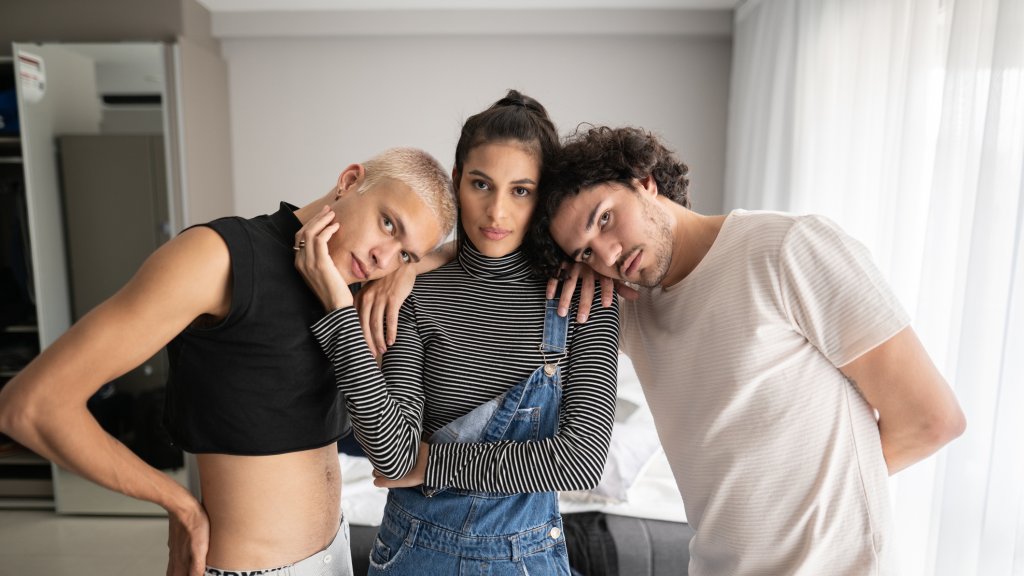
A relationship does not necessarily have to consist of two people. The Californian city of West Hollywood is now acknowledging this social reality with a new measure. It is becoming the first municipality in the United States (German) to establish a dedicated register for polyamorous relationships. This will allow people who live with multiple partners to register their relationships officially and receive certain municipal legal protections.
Key points at a glance
- Historic decision: West Hollywood in California is the first US city to recognise polyamorous partnerships through a dedicated register.
- Unanimous decision: All five members of the city council voted in favour of its introduction.
- Greater legal security: Registration is intended to protect families with multiple partners in areas including rent-controlled housing and hospital visits.
- LGBTQ+ organisations welcome the move: Activists see it as an important step towards equality for different family structures.
- A pioneer for decades: Back in 1985, West Hollywood became the first US city to introduce a partnership register for same-sex couples.
More rights for those affected
The five-member city council adopted the measure without a vote against. The city is thus extending its existing equality policies to include explicit recognition of families whose relationships are not limited to two people. The register is intended to give people in non-monogamous partnerships additional legal options. The decision is particularly relevant to families whose members have not previously been recognised equally as partners or relatives.
The new measure covers protections relating to rent-controlled housing, among other things. Hospital visiting rights are another area in which registered partnerships are to receive greater consideration in future. However, this does not amount to full equality with marriage. The decision applies at municipal level and is no substitute for comprehensive reform of family law in California or across the United States. It does, however, create a way to document relationships involving more than two people officially.
Different family structures
The initiative originated with Christina Fialho. The founder and president of the non-profit organisation Rewrite the BiLine brought the proposal to the city in March 2025. Rewrite the BiLine advocates in particular for bisexual people and families outside the traditional nuclear family model. Mayor John Heilman took up the issue and introduced the corresponding legislation. He argued that the city needed to take account of how its residents actually live. It was about “recognising that there are people today living in households where they are in a three-person relationship”, Heilman explained. Legal safeguards were just as important for these households as for other families. The city should therefore give them “as much protection as possible as a family and for their children”.
What does polyamory mean?
The term polyamorous describes relationships in which people have multiple romantic relationships with the knowledge and consent of everyone involved at the same time. Those involved may share a household or structure their partnerships in different ways. One possible form is a committed three-person relationship, also known in English as a “throuple”. Polyamory differs from secret affairs in that the relationships are fundamentally based on mutual consent and openness. This relationship structure is not tied to any particular sexual orientation. Heterosexual, gay, bisexual and other people can all be polyamorous. However, many legal provisions continue to be based exclusively on two-person relationships. This can put people with multiple partners at a disadvantage, for example when it comes to shared housing, medical decisions or recognition of family ties.
The new partnership register is not the city's first measure to provide legal safeguards for different relationship structures. West Hollywood had already introduced anti-discrimination provisions protecting people from discrimination based on their family or relationship structure. The new register complements these existing protections by allowing people in polyamorous partnerships to have their family ties officially recognised. In doing so, the city is going beyond simply stating that no one may be discriminated against because of their relationship structure.
A historic success
Rewrite the BiLine warmly welcomed the decision. Founder Christina Fialho sees it as an important signal of equality for people whose ways of life do not conform to traditional social expectations. She also referred to the policies of the US federal government under President Donald Trump. “At a time when the federal government is stepping up its attacks on LGBTQ+ people, we are grateful to the City of West Hollywood for showing what equality looks like in practice,” Fialho said. At the same time, she stressed that the municipal decision could represent only part of the changes needed. Comprehensive legal recognition of diverse partnerships would ultimately have to come at state level. Fialho recalled that West Hollywood had already provided important momentum for equality in the past. “Although comprehensive reform must take place at state level, West Hollywood proved 40 years ago that local action can spark progress across the country. Today's step is truly historic and the first of many more to come,” she added.
OPEN, an organisation advocating for the rights and social acceptance of non-monogamous people, also views the decision positively. Its executive director, Brett Chamberlin, said that legislation had long failed to take sufficient account of the diversity of relationships people actually have. “Families have always been more diverse than the law allows for,” Chamberlin said. In his view, West Hollywood is now showing that change is possible at municipal level too. “West Hollywood has just granted people in non-monogamous relationships rights they never had before, and shown what is possible when a city leads the way.” For the organisation, the decision therefore represents not only symbolic recognition but also a tangible improvement in the legal position of the families affected.
Non-monogamous Americans
Research into non-monogamous relationships in the United States also demonstrates the social significance of partnerships involving more than two people. According to a 2019 study reported on by US television network CBS, an estimated five per cent of people in the US are in non-monogamous relationships. The term encompasses different relationship models. Not every non-monogamous partnership is necessarily polyamorous or consists of a shared household with several committed partners. However, the figures make clear that non-monogamous ways of life are part of social reality. In many places, such partnerships still receive only limited legal recognition. This is particularly apparent where regulations provide exclusively for spouses or two officially recognised people.
A pioneer for same-sex couples
West Hollywood has a long tradition of recognising different forms of partnership. Back in 1985, it became the first municipality in the US to introduce a domestic partnership register for same-sex couples. At a time when marriage was not yet open to same-sex couples in the United States, municipal measures of this kind offered the first opportunities for official recognition. That decision became an early example of how cities could advance legal improvements for same-sex couples. More than four decades later, West Hollywood is once again addressing a family structure that has so far received only limited recognition under existing law. Human rights organisations hope the decision will encourage other municipalities to consider similar measures.








