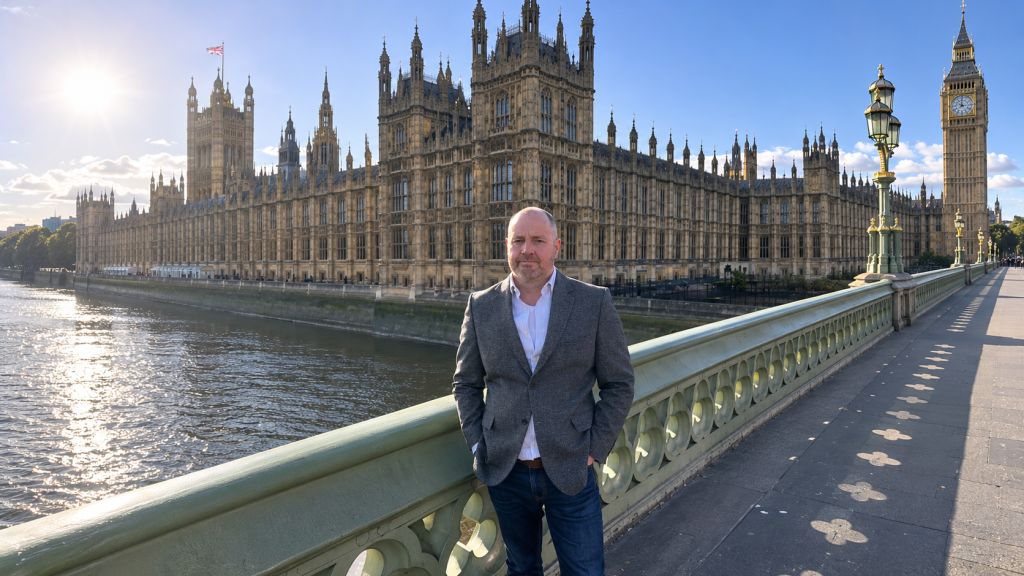
For ten years, Ian Smith tried to overcome his homosexuality through religious rituals, prayers and counselling. He underwent exorcisms, attended Christian self-help groups and sought support from religious counsellors. By the end, his mental health had deteriorated so severely that he attempted to take his own life. The gay man's case is currently making headlines across Britain, fuelling heated debates over conversion therapy as well as plans to ban these discredited “cures” (German).
Key points at a glance
- Serious allegations: Britain's Ian Smith reports that, between 1987 and 1997, he was subjected to religious rituals, exorcisms and counselling intended to rid him of his homosexuality.
- Psychological consequences: He says years of conversion practices caused severe psychological distress. Following a suicide attempt, he was admitted to a psychiatric hospital.
- Parliamentary testimony: The now 56-year-old described his experiences to a joint parliamentary committee scrutinising a bill against conversion practices.
- A gap in legal protection: Such practices are not yet prohibited as a matter of principle in England and Wales. Existing laws apply particularly where violence, threats or injuries are involved.
- Victims demand action: According to the figures cited in the report, 75 per cent of victims of conversion practices support a ban.
- Organisations still exist: Smith warns that institutions that enabled such practices still exist. Humanists UK is calling for effective legal protection.
A loophole for religion
Smith is now 56 and campaigns to protect others from similar experiences. This week, he told a joint committee of the British Parliament about the consequences of so-called conversion practices. The committee is examining a bill intended to ban such practices (German). His case highlights an existing gap in legal protection in England and Wales. Physical violence, threats and injuries can already lead to criminal penalties. However, religious and psychological practices aimed at changing or suppressing a person's sexual orientation are not prohibited as a matter of principle. Smith is among the 75 per cent of those affected who support such a ban.
Faith intensified his conflicts
Smith grew up in Lancashire in northern England. His family was working-class, and he attended a Church of England school. He told the BBC that homosexuality had not been accepted in the community around him at the time. As a result, he had struggled from an early age to reconcile his sexual orientation with social and religious expectations. At 18, he moved to Newport in Wales to study film. He says he felt profoundly insecure there. During his studies, he met a “born-again Christian” and eventually embraced the religious movement himself. He was baptised at around the age of 19.
His new faith initially gave him a sense of direction. At the same time, however, it reinforced his belief that his homosexuality was incompatible with a Christian life. Smith explained that he had not wanted to be homosexual at the time. Instead, he had tried to “become the person I believed God wanted me to be”. He later married a woman, with whom he had two children. He said he had tried to “build a family, live according to my religious beliefs and change my sexuality”.
An exorcism with ten men
Between 1987 and 1997, Smith took part in various conversion practices. These took place within a network of churches, Christian counselling services and support groups in Wales and Bristol. The practices included prayers, conversations and exorcisms supposedly intended to eliminate his same-sex attraction. Smith gave a particularly harrowing account of a session he had attended at around the age of 20. He said he had told the group that he was attracted to men and asked for help.
The women present were then asked to leave the room. Around ten men gathered around him. “They laid their hands on me, spoke in tongues and shouted at the demons they believed were inside me. It lasted more than two hours,” Smith reported. He said the experience had haunted him for months afterwards. He repeatedly woke up screaming at night. Despite these reactions, he continued trying to change his sexual orientation.
Suppression or abstinence
Alongside the exorcisms, Smith sought help from Christian counsellors. In self-help groups, he was told that he had to either overcome his homosexuality or suppress it permanently. If change was not possible, he was to remain sexually abstinent and deny his feelings. He said some counsellors had attributed his same-sex attraction to his relationship with his father. He had been told that a better relationship with God could resolve the supposed problem. The repeated attempts failed to produce the outcome those responsible were seeking. Rather than questioning the methods they were using, the counsellors blamed him.
They claimed he had not prayed enough or had not developed a sufficiently close relationship with God. “I was unhappy. I was trying to change something fundamental about myself while also believing that failure would be proof of personal or spiritual inadequacy,” Smith said. He said it had been particularly distressing that his growing mental health problems were not recognised as a possible consequence of the treatments. “Nobody considered that the attempts to ‘cure’ me might themselves be causing the harm,” he explained. At the time, Smith recorded in his diary how desperate his situation had become: “The past must be forgotten, the present endured and the future feared.”
A psychiatrist changed his life
After years of mounting psychological distress, Smith eventually attempted suicide. He was then admitted to a psychiatric hospital. There, he met a psychiatrist on duty who challenged his previous beliefs with a simple statement. The doctor told him that “there is nothing wrong with being homosexual”. For Smith, the encounter became a crucial turning point. “After years of prayer, exorcisms, therapy and attempts to change myself, a single sentence opened up something I had barely been able to accept before: perhaps I wasn't the problem after all,” he reported.
Smith told the parliamentary committee that the years of conversion practices had left him increasingly disconnected from his own identity. “I spent so much time in these institutions that I no longer knew who I was. And if that psychiatrist hadn't said those simple words, I probably wouldn't be here today.” After his hospital stay, he turned away from Christianity. Over an extended period, he worked to overcome the religious beliefs that had led him to see his homosexuality as something wrong. “I have never forgotten how close I came to losing my life while trying to become someone I wasn't,” Smith said.
A Netflix documentary brought recognition
Although Smith had left conversion practices behind decades earlier, it was only around five years ago that he recognised he had been a victim of them himself. The catalyst was the Netflix documentary “Pray Away”, which examines Christian organisations that promised to change people's sexual orientation. Among other subjects, the film looks at the US organisation Exodus International. For years, it had claimed that homosexual people could overcome their same-sex attraction through prayer and religious support.
According to Smith, Exodus International also provided financial support to church institutions and organisations in Britain. The organisation ceased operating in 2013. Before that, the US state of California had passed a law banning conversion practices on minors. Smith told the committee that it was only while watching the documentary that he “realised I was a victim”. He said he found it particularly disturbing that similar institutions still existed. “The institutions that apparently oversaw the kinds of practices I was subjected to still exist today,” he explained.
Voluntary participation does not make it harmless
A key question in the political debate over a ban is how to address conversion practices that adults undergo of their own accord. Smith stressed that he had voluntarily sought out most of the religious counselling and group support at the time. He had been convinced that they could help him lead a life consistent with his religious beliefs. However, that consent should not be equated with an absence of risk. “I actively sought out these services because I believed they could help me become the person I thought I should be. My willingness to take part did not make them harmless,” Smith said.
Under current law in England and Wales, many of the practices he was subjected to would still not clearly constitute criminal offences today. This applies in particular to prayers, counselling and group sessions explicitly aimed at changing or suppressing sexual orientation without the use of physical violence or threats. Humanists UK believes that the severe psychological harm in Smith's case resulted from a multitude of individual practices, each of which appeared lawful when considered in isolation. Smith therefore sees a need for a comprehensive ban. “Beyond individual cases, a ban sends a clear message to institutions and society: attempting to change or suppress a person's sexual orientation is unacceptable.”
Humanists UK calls for protection
The British organisation Humanists UK is also pressing for legislation that effectively protects people from conversion practices. Nathan Stilwell, a representative of the organisation, pointed to the severe consequences such practices can have. “Ian was subjected to exorcisms because he was homosexual, and this brought him to the brink of losing his life,” Stilwell said. He said the fact that most of the practices Smith described had not clearly breached existing law demonstrated the urgent need for new legislation. “Yet most of what he had to endure would still not clearly be illegal today. That is precisely why this law is so important.”
At the same time, Stilwell stressed that freedom of religion or belief must be upheld. People should remain free to pray and seek open-ended support on personal matters. However, a line was crossed when religious beliefs were used to harm others. “Freedom of religion or belief is vitally important, and people must remain free to pray and seek open, open-ended support. But it has never meant having the freedom to harm others,” Stilwell explained. After working through his own experiences, Ian Smith trained as a counsellor. Today, he leads the Welsh initiative “Helpu”, which promotes men's mental health and focuses particularly on preventing suicide.
Help is available here
Reporting on suicide is an extremely sensitive matter. We do NOT wish to glorify or romanticise it in any way. Many people who die by suicide have a mental illness. If you are struggling or thinking about taking your own life, try to talk to other people about it. They could be friends or relatives. There are also a wide range of support services you can contact. Telefonseelsorge is anonymous, free and available around the clock. The telephone numbers are 0800/111 0 111 and 0800/111 0 222.
The Coming Out Day Verein also offers counselling via messenger, email and video chat at www.coming-out-day.de and www.comingoutundso.de . Telefonseelsorge also offers a support chat service. Email counselling is available too. You can register on the website, again anonymously and free of charge. You can find information at: www.telefonseelsorge.de








