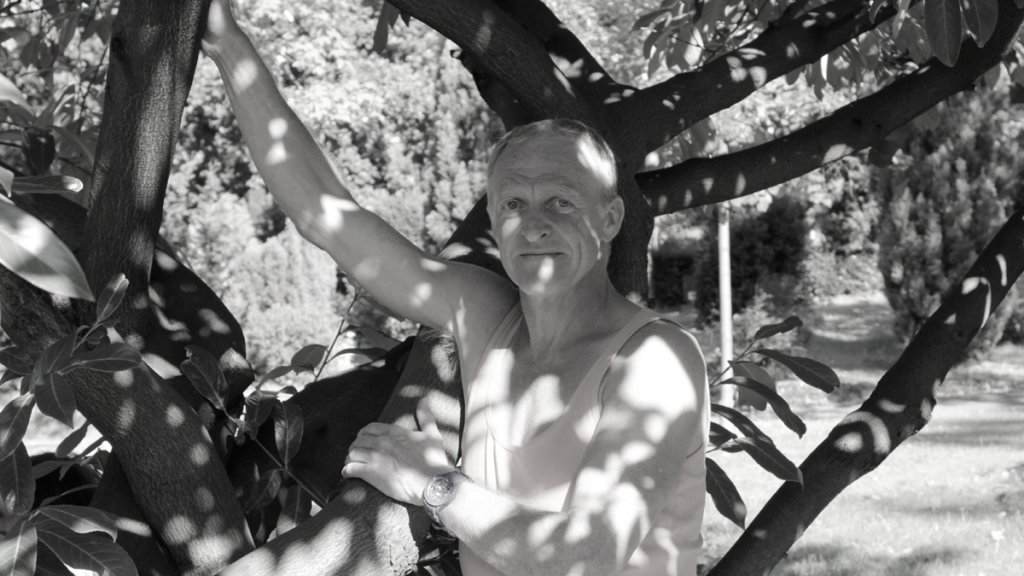
Berlin’s gay scene has lost one of its best-known figures. Actor, artist and gay rights activist Bernd Boßmann died of cancer on Monday morning at the age of 66. Under the stage name Ichgola Androgyn, he became a fixture of the capital’s cultural and political life over several decades. Alongside his stage work, he was particularly committed to supporting people with HIV and AIDS and encouraging an open approach to death and grief.
Key points at a glance
- Death at 66: Bernd Boßmann, known as Ichgola Androgyn, died of cancer on Monday morning.
- A defining figure in Berlin’s gay scene: Boßmann had been active as an actor, stage performer and political activist since the 1980s.
- Known through Rosa von Praunheim: Boßmann appeared in several of the director’s films, including “Ein Virus kennt keine Moral” and “Ich bin meine eigene Frau”.
- Activism against AIDS: A trained nurse, Boßmann was involved in the Act-Up movement, among other activities.
- A distinctive legacy: With Café Finovo at the Alter St.-Matthäus-Kirchhof cemetery in Berlin-Schöneberg, he created a meeting place that brought together grief and a joy for life.
- Honours and personal archive: Boßmann received the Order of Merit of Berlin. His personal papers and materials are held in the archives of the Schwules Museum.
A Berlin drag legend
Originally from North Rhine-Westphalia, Boßmann moved to West Berlin in the 1980s. There, he became part of a politically engaged arts and gay scene that challenged social norms through provocative performances. His early artistic work included the drag ensembles Ladies Neid and O-Ton-Piraten. As Ichgola Androgyn, Boßmann developed a stage persona that deliberately challenged traditional ideas about gender and belonging in society. His performances were characterised by sharp satire, political messages and a pronounced taste for glamorous staging.
Fighting AIDS
Alongside his artistic work, Boßmann became involved early on in the political movement against AIDS. A trained nurse, he took part in actions by the Act-Up movement, which campaigned for the rights and medical care of people with HIV and AIDS. At a time when the disease was claiming many lives within the gay scene, Boßmann combined his political activism with support for those affected and public engagement with dying and loss. He was among the activists who made space both for remembering those who had died and for living and celebrating together.
Beyond Berlin’s scene, Boßmann became known primarily through his appearances in films by director Rosa von Praunheim. These included “Ein Virus kennt keine Moral” from 1986 and “Ich bin meine eigene Frau” from 1992. With the documentary “Tunten lügen nicht”, released in 2002, von Praunheim created a film portrait of Ichgola Androgyn and her fellow performers. The production documented a distinctive form of gay performance art and its connection to social protest and political self-assertion.
A meeting place
Another focus of Boßmann’s work was the Alter St.-Matthäus-Kirchhof cemetery in Berlin’s Schöneberg district. There, he opened Café Finovo, regarded as Germany’s first cemetery café. With the project, he wanted to create a space where visitors could come together and engage with the subject of death, whether or not they were experiencing a bereavement. The historic cemetery is the final resting place of numerous well-known figures, including musician Rio Reiser. Many people who died of AIDS-related causes were also buried there. The site therefore holds particular significance for the history of Berlin’s gay scene. The café created a meeting place within the cemetery that deliberately departed from traditional notions of a place of mourning as exclusively quiet and solemn. Over homemade cake and speciality coffees, visitors could strike up conversations, share memories or simply enjoy the peaceful atmosphere of the grounds.
Boßmann wanted to break the social taboo around engaging with death. The café therefore combined cemetery culture with an open, life-affirming approach and became a distinctive meeting place in Schöneberg. This work was also documented on film. The documentary “Garten der Sterne”, released in 2017, explores the Alter St.-Matthäus-Kirchhof cemetery, with Bernd Boßmann as its central figure. Boßmann received several honours for his many years of work in society and his commitment to the common good. These included the Order of Merit of Berlin.
Museum honours his life’s work
Following the artist’s death, Berlin’s Schwules Museum recalled his importance to the city’s cultural and political development. In a published obituary, the institution paid particular tribute to Boßmann’s decades of activism and his influence on Berlin’s LGBTQ+ history. The museum also said that Boßmann had taken steps during his lifetime to ensure that his personal papers and materials would be permanently preserved. At his express wish, these were added to the archives of the Schwules Museum.








