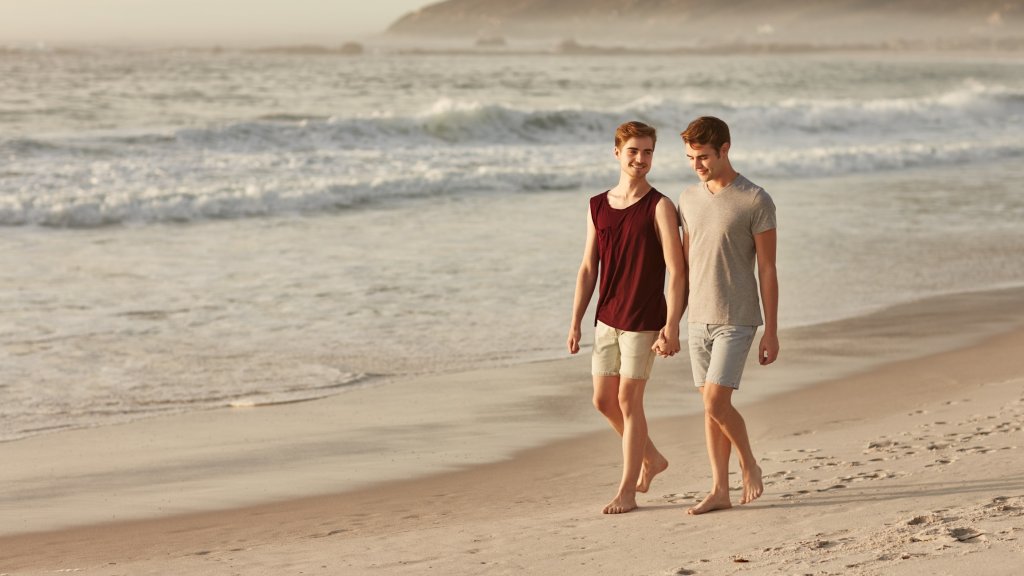
Whether on holiday or travelling for work, many LGBTQ+ people behave more cautiously abroad than at home, avoiding openly revealing their sexual orientation or gender identity. An international study has now shown that safety concerns influence their choice of destination, their behaviour while there and even their career decisions.
Key findings at a glance
- Identity is often concealed: only 31 per cent of LGBTQ+ respondents are open about their identity when travelling, compared with 68 per cent among close friends.
- Negative experiences are widespread: 58 per cent report at least one negative experience related to their sexual orientation or gender identity over the past year.
- Safety through concealment: 40 per cent would hide their identity to visit a destination of their choice.
- Digital safeguards: 62 per cent have taken at least one digital safety precaution while travelling.
- Problems on business trips: almost 45 per cent have previously hidden their identity on a business trip for safety reasons. Some 42 per cent have passed up a financially attractive career opportunity because of safety concerns or a lack of support.
- Risks worldwide: according to Germany's Federal Foreign Office, homosexuality is criminalised in at least 67 countries.
Keeping a low profile while travelling
A total of 13,331 LGBTQ+ people from 19 countries were surveyed between February and March 2026 for Booking.com's “Travel Proud Research 2026” report. The study examines their travel experiences, attitudes and safety needs. The difference between their private lives and their behaviour while travelling is particularly striking. While 68 per cent of respondents are open about their identity with close friends, only 31 per cent are open when travelling. This restraint is often a conscious decision to avoid uncomfortable situations or potential dangers. The study also shows a clear link between being open about one's identity and negative experiences while travelling. Of the LGBTQ+ people who do not disclose their identity, 34 per cent reported having had a negative experience related to their sexual orientation while travelling in the past year.
Among respondents who live openly, the figure was 62 per cent. In addition, people who conceal their identity were the only group studied in which a majority said they had no travel-related fears. However, the findings do not support the conclusion that concealing one's identity necessarily protects against discrimination. Rather, they show that many of those affected adapt their behaviour for safety reasons. To take a holiday in a country they particularly wanted to visit, 40 per cent of respondents would deliberately conceal their identity. Fear of rejection therefore influences not only behaviour at the holiday destination, but also the initial decision about which countries to consider visiting.
Positive experiences
Alongside safety concerns, the study also documents numerous positive experiences. Of the LGBTQ+ people surveyed, 82 per cent reported at least one positive travel experience linked to their identity. Often, small gestures helped create a sense of safety and acceptance. Some 34 per cent cited a particularly good first impression made by staff, for example through respectful treatment at a hotel. Visible signs of openness and the presence of LGBTQ+ staff each also played an important role for 32 per cent. Examples mentioned included Pride flags and stickers reading “Everyone welcome”. Overall, 58 per cent of respondents believe that social acceptance of LGBTQ+ people has improved recently. Nevertheless, discrimination remains part of the travel experience for many.
Avoiding holding hands
Similarly, 58 per cent of respondents said they had had at least one negative experience related to their LGBTQ+ identity while travelling within the past year. Particularly common were reports of changing their behaviour to avoid attracting attention. Some 18 per cent described a situation in which they behaved differently from usual for fear of judgement or for safety reasons. This included, for example, refraining from holding hands with their partner or changing their gestures. Incorrect assumptions about relationships were also among the experiences documented. Some 16 per cent reported that other people had mistakenly assumed their partner was a sibling or a friend.
To reduce risks, many travellers turn to technology. According to the report, 62 per cent of respondents have taken at least one digital safety measure while travelling. The most common was sharing their location in real time with people they trusted. Some 25 per cent used this option so that friends or relatives could keep track of their whereabouts. A further 19 per cent used a virtual private network (VPN) to conceal their online activity or access blocked websites. Another 18 per cent took a second smartphone with them. Some 17 per cent deleted dating apps before crossing a national border.
Travelling for work
Similar concerns arise on work-related trips. In this context, employees often cannot choose their destination themselves. Almost 45 per cent of LGBTQ+ respondents have previously concealed their sexual orientation or gender identity on a business trip for safety reasons. Only around half generally feel comfortable travelling for work. Some 23 per cent report anxiety associated with business travel.
This uncertainty can also affect career development. Some 42 per cent of respondents said they had previously passed up a financially attractive career opportunity. Safety concerns or a lack of support from their employer were the deciding factors. A further 44 per cent have turned down job offers or decided against applying to companies that have no clear safeguards for business travellers. Only 52 per cent believe they could refuse a business trip to a high-risk country without fearing adverse consequences for their career. Of the LGBTQ+ people surveyed, 58 per cent would consider the safeguards in place for business travel when choosing an employer.
Criminalisation of homosexuality
The safety situation for LGBTQ+ people continues to vary considerably internationally. According to Germany's Federal Foreign Office, homosexuality is criminalised in at least 67 countries worldwide. This particularly affects consensual sexual acts between people of the same sex. In addition, social attitudes, state checks and the way laws are enforced in practice can affect travellers' safety. Discrimination and other forms of disadvantage can also occur in countries where same-sex relationships are not explicitly criminalised. The situation is particularly difficult for business travellers who have to visit countries for work where LGBTQ+ people face legal or social risks.
The Danish company Riskline, which assesses international travel risks, finds a challenging security situation in numerous regions of the world. For its assessments, the company combined artificial intelligence with expert analysis. According to the company, information from more than 100,000 data sources was incorporated. In total, Riskline places 91 countries in its highest risk categories.








