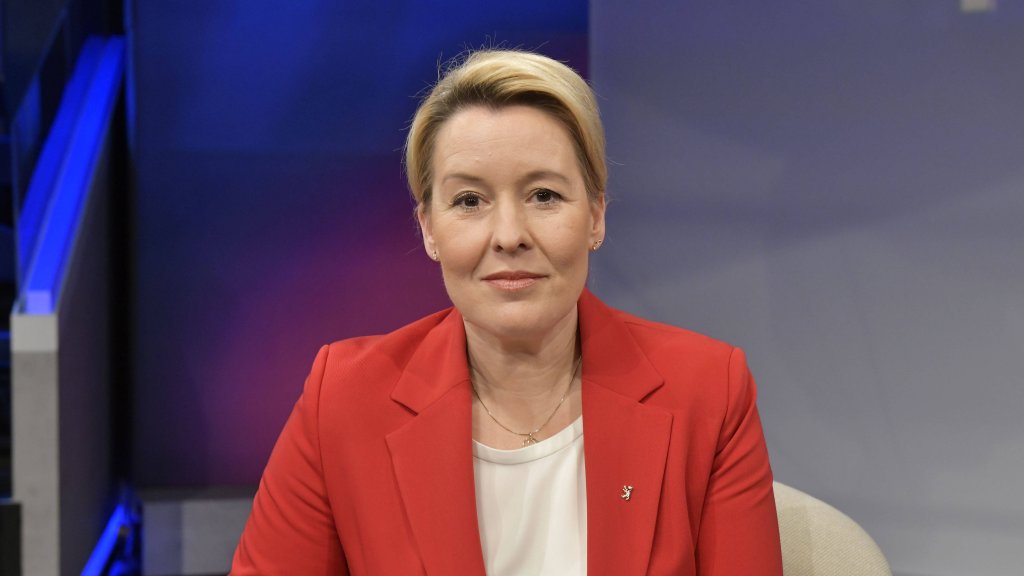
The German capital could become the setting for one of the most important international LGBTQ+ festivals in 2032. Efforts are under way in Berlin to bring World Pride to Germany for the first time. The proposal now has the support of Franziska Giffey (SPD), who has been serving as Berlin’s economy senator. She backs a bid and also sees it as an economic opportunity for the city.
The key points at a glance
- Bid for 2032: Berlin wants to host World Pride, bringing one of the world’s largest LGBTQ+ events to Germany.
- Political support: Economy senator Franziska Giffey (SPD) welcomes the initiative and sees significant opportunities for tourism and the economy.
- Links with other events: Giffey proposes linking World Pride with existing major Berlin events such as Berlin Freedom Week.
- Funding still unresolved: Private partners are to be sought alongside state support. LSVD+ is calling for a binding political and financial commitment from the next state government.
- International competition: London is also bidding for 2032. Berlin previously submitted a bid in 2017, but lost to Madrid.
Berlin as a place of diversity
“World Pride in Berlin would be amazing for me,” said Giffey. “Berlin needs major events like this.” International events on this scale were an important factor in tourism and the capital’s economic development, she said. In her view, spending on such events would generate additional revenue significantly exceeding the initial investment. The scale of World Pride’s international appeal was demonstrated in Amsterdam this year (German). The Dutch capital staged a two-week programme of concerts, festivals, demonstrations, conferences and public discussions. Hundreds of thousands of people from the international LGBTQ+ community attended the events. Prominent guests included US pop star Madonna, who contributed a performance to the festival. In the view of the local LGBTQ+ community, a comparable major event in Berlin could not only attract numerous international visitors, but also highlight the capital’s significance as a place of social diversity and freedom.
The question of funding
Giffey advocates thinking beyond a standalone festival when planning the event. In her view, World Pride could be linked with established events, provided their themes fit the international LGBTQ+ gathering. The SPD politician cited Berlin Freedom Week as a possible example. This currently takes place around the anniversary of the fall of the Berlin Wall and features numerous conferences and larger events addressing freedom and social issues over the course of a week.
“Berlin as a city of freedom – that would also be a perfect motto for World Pride,” said Giffey. She believes linking relevant event formats could help further strengthen Berlin’s international profile. However, the economy senator’s support does not come with a promise to cover all costs from public funds. Giffey made clear that an event of this scale would depend on several funding partners. “We need more partners on board. It has to be planned as a business case and put on a professional footing, to be honest.” At the same time, she offered the prospect of support in the search for seed funding. Alongside the political decision on a bid, this puts particular focus on how the project could be delivered in organisational and financial terms.
LSVD+ calls for commitments
Within Berlin’s LGBTQ+ community, pressure is also growing on politicians to secure early backing for a potential bid for 2032. Even before Giffey’s comments, there had been calls for the project to be explicitly included in the next coalition agreement and backed by financial and political commitments. LSVD+ approached the SPD, the Greens and the Left Party on this issue. The association demanded that the parties agree to support the bid as part of their talks on potentially forming a government. It argued that this should go beyond a general declaration of political intent. Instead, the organisation called for explicit, binding support to be written into any coalition agreement.
In the association’s view, both the political backing and the financial conditions for a successful bid must be put in place. The organisation also offered to provide the parties involved with expert advice during further discussions. To this end, LSVD+ wants to contribute its experience of working with the LGBTQ+ community, providing advice and political advocacy. The offer also included support in developing specific measures and drafting corresponding agreements. So far, however, these demands have not been incorporated into the political preparations. The proposed World Pride bid was not included in the exploratory talks paper drawn up so far by the SPD, the Greens and the Left Party. None of the three parties included the relevant requests in that document. It therefore remains unclear whether, and to what extent, a future Berlin state government will actually support the bid.
Competition from London
World Pride is one of the LGBTQ+ community’s major international events. With some interruptions, the festival is held annually in different cities across various continents. Alongside large demonstrations and cultural events, its programme includes political conferences, discussions and international encounters. World Pride made its debut in Rome in 2000. Numerous major cities have hosted it since then. Last year, the festival took place in Washington, with Amsterdam taking over as host in 2026. Cape Town is the planned venue for 2028.
Planning is already under way for subsequent editions too. Bangkok and Barcelona are bidding to host the event in 2030. For 2032, a contest between Berlin and London (German) is taking shape, as both cities have expressed an interest in hosting. Germany has never hosted World Pride. Berlin previously tried to bring the international event to the capital in 2017. However, that bid was unsuccessful: Madrid was awarded the event. London, meanwhile, hosted World Pride in 2012.








