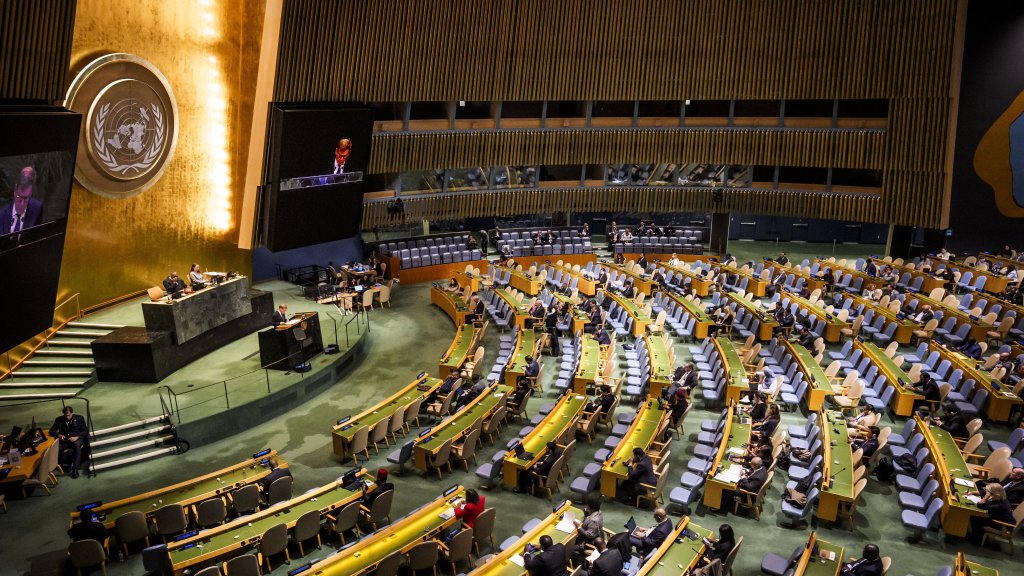
An attempt to remove explicit protection for LGBTQ+ people from a United Nations resolution has failed in a UN General Assembly committee. In the vote, a narrow majority of states backed retaining references to sexual orientation and gender identity in the document. The US, however, supported an amendment proposed by Egypt that sought to delete the relevant wording.
Key points at a glance
- Vote on LGBTQ+ protection: A UN General Assembly committee has rejected a proposal to remove explicit references to sexual orientation and gender identity from a resolution.
- US supports deletion: The American delegation voted for the amendment tabled by Egypt, reversing its position from 2024.
- Narrow result: 74 states rejected the amendment, while 69 supported it. A further 24 countries abstained.
- Growing support for the proposal: Compared with a similar vote two years ago, the number of states supporting deletion rose by 22.
- Decision in December: The draft resolution was subsequently adopted with 131 votes in favour and none against. The final vote in the UN General Assembly is still pending.
Important decision
The proposal received the support of 69 states. 74 countries voted against the amendment, while 24 delegations abstained. Both characteristics therefore remain explicitly included in the draft resolution, which addresses the prevention and investigation of unlawful killings. The decision is considered significant for the international visibility of violence against LGBTQ+ people. The text explicitly identifies cases in which people are killed because of their actual or perceived sexual orientation or gender identity. Egypt wanted this wording replaced with a more general description of circumstances that could put people at risk.
Egypt sought amendment
At the heart of the dispute was the question of whether particularly vulnerable population groups should be explicitly named in the UN document. The draft resolution calls on member states to protect people from unlawful killings and to investigate such crimes effectively. The existing version also takes account of killings in which the victims' sexual orientation or gender identity plays a role. It covers both cases involving these actual characteristics and those in which perpetrators merely attribute them to their victims.
Egypt wanted to remove this specific wording. Instead, the text was to refer generally to other circumstances that could place people at increased risk. This would have removed any explicit mention of sexual orientation and gender identity. Human rights organisations had spoken out against such an amendment ahead of the vote. They pointed out that targeted violence against LGBTQ+ people is not adequately documented and investigated in many countries. Explicitly naming the groups affected was therefore important to make these forms of violence visible, they argued. In the organisations' view, general wording is insufficient to draw attention to the particular risks people may face because of their sexual orientation or gender identity.
US adopts new position
The United States' vote attracted particular attention. The American UN delegation supported the Egyptian amendment, thereby backing the removal of the two characteristics from the draft resolution. Just two years earlier, the US had taken the opposite position. In a comparable vote in 2024, the American delegation had explicitly opposed deleting the relevant wording. The current decision therefore marks a clear shift in Washington's stance within this UN body. At the same time, the voting figures show that the Egyptian proposal now has greater international support.
According to the human rights organisation Outright International, a total of 47 states voted for a similar amendment in 2024. At the time, 78 countries rejected it. In the latest vote, the number of supporters rose to 69, an increase of 22 votes. While the proposal was defeated by a margin of 31 votes two years ago, this time the difference was just five votes. The decision was therefore considerably closer than in the previous vote. More generally, the situation appears to be deteriorating further, as recently became apparent in efforts to decriminalise homosexuality.
Lack of visibility
The dispute over the wording touches on a fundamental question of international human rights protection: should specific characteristics that put people at risk be explicitly named in resolutions, or is a general reference to particularly vulnerable people sufficient? Human rights organisations argue that specific wording is necessary. Particularly in cases of violence against LGBTQ+ people, they say, it can be crucial to identify possible motives and take them into account during investigations.
In the organisations' assessment, such crimes are still inadequately documented in many countries. In their view, deleting the explicit references to sexual orientation and gender identity would have weakened the visibility of those affected within the UN document. Following the rejection of the Egyptian proposal, the existing wording remains part of the draft. The resolution therefore continues to call explicitly on states to also take account of killings in which actual or perceived sexual orientation or gender identity plays a role.
Resolution passes without opposition
After deciding on the amendment, the delegations voted on the full draft resolution. The document received considerably broader support than the previously disputed individual issue. A total of 131 states voted in favour of the resolution. No country voted against it, and 47 states abstained. The draft was therefore adopted in the relevant UN General Assembly committee. The result shows that the fundamental demands for protection against unlawful killings enjoy broad support. Explicit mention of sexual orientation and gender identity within the document remains far more contentious, however. The committee vote is not the final step. The UN General Assembly is due to decide on the resolution in December. Until then, the explicit reference to LGBTQ+ people remains in the draft adopted by the committee.








