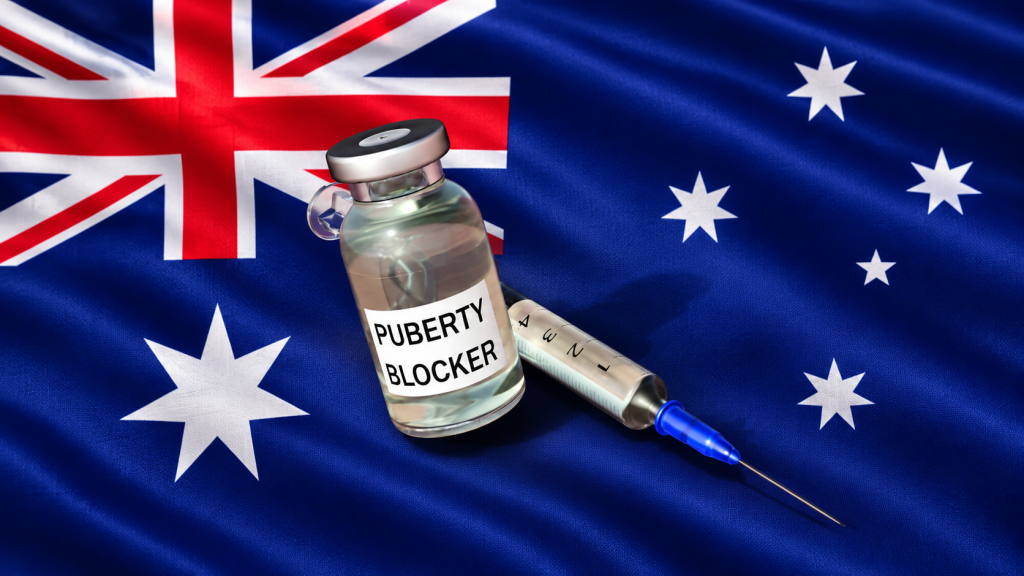
The dispute over medical care for trans adolescents in Australia is intensifying. While a national expert body now explicitly recommends puberty blockers as a treatment option under certain conditions, two regions are maintaining existing restrictions. Queensland and the Northern Territory intend to continue banning the administration of the medication to trans minors in public hospitals.
Key points at a glance
- New medical recommendations: Australia's National Health and Medical Research Council (NHMRC) supports continuing to allow puberty blockers for minors with gender incongruence under certain conditions.
- Two regions refuse to ease restrictions: Queensland and the Northern Territory intend to retain their bans for trans adolescents in public hospitals.
- Calls for shared decisions: Young people, parents or guardians and doctors should jointly weigh up benefits, risks and individual needs before treatment.
- Further guidelines planned: Submissions on the interim recommendations can be made until mid-January 2027. Full guidelines are due to follow in 2028.
Expert body supports puberty blockers
The renewed debate was triggered by interim national treatment guidelines that the National Health and Medical Research Council (NHMRC) has now published. In them, the body supports the continued use of puberty blockers for children and adolescents with gender incongruence under certain circumstances. The NHMRC is Australia's leading national institution for funding medical research and developing evidence-based health recommendations. Its guidelines carry considerable weight in medical care and political debate. However, they are not legally binding on individual states and territories.
Queensland and the Northern Territory
Immediately after the recommendations were published, Queensland Health Minister Tim Nicholls reaffirmed his government's existing position. There were no plans to ease the current restrictions. “Our position remains unchanged, and we will continue to give the highest priority to the health, safety and wellbeing of young people in Queensland,” Nicholls said. The Northern Territory government also made clear in a statement that it would retain its ban. It said the new medical recommendations would not change the existing rules for public hospitals. Access to puberty blockers therefore remains restricted for the minors concerned in both regions, despite the national recommendations.
Doctors and families
Individual medical assessment is central to the interim guidelines. The NHMRC recommends that puberty blockers should not be ruled out as a matter of principle, but that their use should be considered in light of each person's circumstances and the available scientific evidence. Shared decision-making between the young people concerned, their parents or guardians and their treating doctors plays a particularly important role. “Shared decision-making means that young people, their parents or guardians and their treating doctors discuss the available scientific evidence, potential benefits and risks, and the young person's individual circumstances and wishes before deciding together whether treatment is appropriate,” the NHMRC explained. The recommendations therefore do not prescribe blanket treatment. Instead, whether puberty blockers are medically appropriate should be decided on a case-by-case basis.
Warning from the expert body
In its guidelines, the research council also critically examines a treatment approach that initially consists solely of observing the young person's further development. The NHMRC rejects such a “wait and see” approach when it effectively results in medical care being withheld. This could “adversely affect the young person's physical and mental health, wellbeing and ability to manage everyday life”, the recommendations state. The experts thus emphasise that deciding against medical treatment can also have consequences. These must be considered in each individual assessment alongside the potential benefits and risks of treatment with puberty blockers.
No power to intervene
Although the recommendations come from a national medical expert institution, Australia's federal government cannot directly overturn the existing bans. Federal Health Minister Mark Butler pointed out that the relevant rules fall within the remit of the governments of Queensland and the Northern Territory. The federal government therefore could not intervene. At the same time, Butler made clear that he expected the governments responsible to consider the new recommendations carefully. “I am very confident that every state government, regardless of its political affiliation, will consider the recommendations of our leading expert institution very carefully,” the minister said. Whether publication of the guidelines could lead to changes to the existing bans in the long term therefore remains an open question.
The restrictions in Queensland already have a legal history. In October 2025, the state's Supreme Court overturned the ban on puberty blockers. Justice Peter Callaghan based the decision on the responsible authorities' failure to consult the relevant bodies adequately before issuing the original directive. However, the decision did not lead to a lasting removal of the restrictions. Just hours after the ruling, the Queensland government reinstated the ban.
Guidelines planned for 2028
The recommendations now published are an interim version. The NHMRC has launched a public consultation allowing submissions on the proposed medical guidelines. The deadline is 18 January 2027. The feedback will then inform the further development of the national recommendations. Publication of the full guidelines is planned for 2028. In addition to puberty blockers, these will cover other areas of medical care for young trans people, particularly gender-affirming hormone therapies. Until then, access to care in Australia will continue to vary by region.








