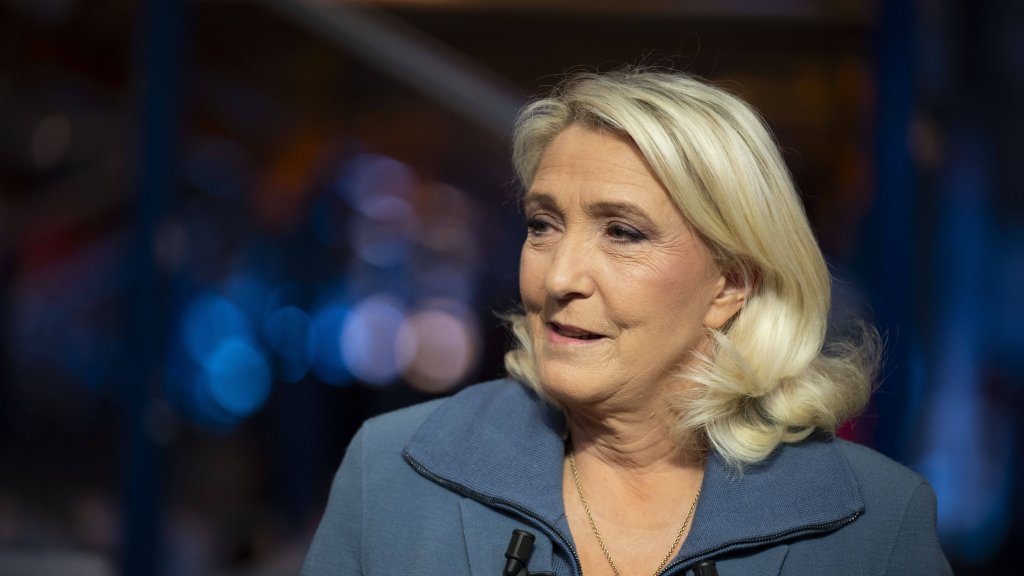
French right-wing populist Marine Le Pen (58) has fundamentally revised her former stance on same-sex marriage. More than 13 years after marriage equality was introduced in France, the politician has explicitly acknowledged for the first time that her opposition at the time was a mistake. The former leader of the right-wing populist Rassemblement National (RN) made the comments in a television interview.
Key points at a glance
- Change of course on marriage equality: French right-wing populist Marine Le Pen explicitly acknowledges for the first time that her former opposition to same-sex marriage was a mistake.
- Concerns about surrogacy: She explains her stance at the time by citing fears that opening up marriage could lead to the legalisation of surrogacy.
- Another position reconsidered: The politician now also regrets her former opposition to dual citizenship.
- Criticism of political strategy: Observers see these changes of course as an attempt to make the right-wing populist Rassemblement National party more attractive to moderate conservative voters.
U-turn on marriage
Speaking to a secondary school pupil for the French parliamentary television channel LCP, Le Pen explained that her opposition in 2013 had been based primarily on fears about possible further legislative changes. At the time, she had feared that opening up marriage to same-sex couples could, in the long term, also lead to the legalisation of surrogacy. Le Pen remains opposed to surrogacy. The practice is still banned in France. “You can evolve in politics. There is nothing shameful about that. You simply have to explain why you have changed your mind,” the politician said. The comments mark a notable departure from a position Le Pen’s party had held for years. When France introduced marriage for same-sex couples in 2013 under Socialist President François Hollande, the party then known as Front National was among the law’s staunch political opponents.
A personal mistake
During the 2022 presidential election campaign, Le Pen had already announced that she would not seek to abolish marriage equality if she won. However, that did not amount to an explicit repudiation of her former opposition. Now, for the first time, she describes her position at the time as a personal “mistake”. Her latest statement thus goes beyond her previous pledge to leave the existing law untouched. The timing is politically significant. Le Pen remains one of the most influential figures on the French right and, according to current polls, is in the lead ahead of the 2027 presidential election. Her changed stance on same-sex marriage forms part of a series of policy shifts through which Le Pen and her party have been trying for years to reach new groups of voters.
A more moderate image
Since her defeat by Emmanuel Macron in the 2017 French presidential election, Le Pen has abandoned or softened several demands that were previously central to her party’s platform. This was particularly evident in European policy. For years, she had advocated France’s withdrawal from the European Union. After her election defeat, she stepped back from that demand. So-called Frexit, long a key element of her political programme, thus ceased to be a central focus of her political agenda. According to French media, the changes also appear to be driven by efforts to improve the image of Rassemblement National.
The party, previously known as Front National, has been trying for years to shed its far-right reputation and become an acceptable electoral choice for broader sections of the population. Critics doubt, however, that the changed positions genuinely reflect a fundamental political change of heart. Instead, they suspect a strategic adjustment intended primarily to win Le Pen moderate conservative voters. In this interpretation, particularly controversial demands are to be softened to appeal to people who have so far been put off by the party’s radical rhetoric.
Dual citizenship
In the same television interview, Le Pen also distanced herself from her former opposition to dual citizenship. She said she had now reconsidered that position too. “I gave people with dual citizenship the impression that I somehow doubted their love for France or their attachment to the country,” Le Pen said. She added: “I have changed my mind on this position, and I think I have done the right thing.” However, the statements contradict demands her own party had made relatively recently. During the campaign for the 2024 French parliamentary elections, Rassemblement National proposed measures that would exclude people with dual citizenship from certain security-sensitive roles in the public sector.








