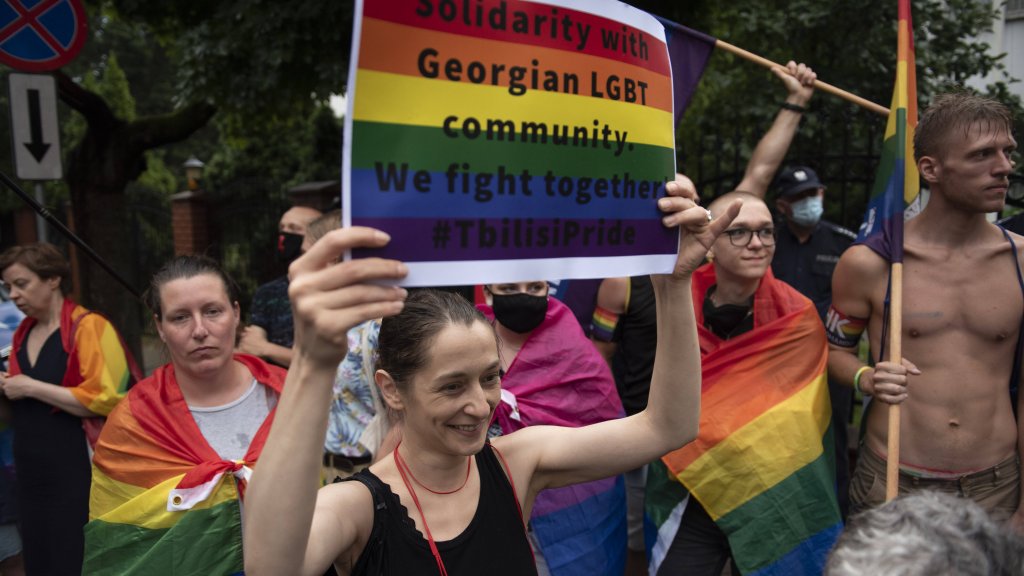
The growing oppression of LGBTQ+ people in Georgia is forcing one of the country's best-known human rights organisations to continue its work from abroad. Tbilisi Pride is gaining a new base in Brussels. The Belgian organisation Forbidden Colours is providing office space for the Georgian human rights defenders and plans to work even more closely with them.
Key points at a glance
- A fresh start in Belgium: Georgian LGBTQ+ organisation Tbilisi Pride is moving into the Brussels offices of human rights organisation Forbidden Colours and continuing its work from exile.
- Growing persecution: Following years of attacks by far-right groups and intensified state repression, Tbilisi Pride had to close its office in Georgia in May 2025.
- Laws targeting LGBTQ+ people: In 2024, the Georgian government passed sweeping restrictions that effectively ban Pride demonstrations, among other measures.
- Joint action: Both organisations want to increase pressure on European institutions and governments and draw attention to the human rights situation in Georgia through the “Pride in Exile” initiative.
Years of violence against Pride
As both organisations announced today, the collaboration is intended to go beyond providing a workspace. Together, they want to lobby European institutions and governments for the rights of LGBTQ+ people and Georgia's democratic development. The move to Belgium is a consequence of intensified state repression, which is making independent human rights work in Georgia increasingly difficult. The relationship between Tbilisi Pride and Forbidden Colours goes back several years. In 2019, 2021 and 2023, Pride events in Georgia faced widespread intimidation and violent attacks (German) by far-right groups. The attackers tried to prevent public events held by the LGBTQ+ community.
The Georgian authorities have repeatedly been accused of failing to adequately protect organisers and participants. There were also serious concerns about the possible involvement of state bodies in the incidents. Critics also said that those responsible for the violence had largely gone unpunished. Forbidden Colours supported Tbilisi Pride during these confrontations. The collaboration focused particularly on the right to peaceful assembly, as well as the fight against discrimination and for equality in society.
Government tightens laws
The situation for human rights organisations in Georgia deteriorated, particularly as a result of new legal restrictions (German). In 2024, the government led by the Georgian Dream party passed sweeping measures targeting LGBTQ+ people. Among other consequences, these effectively banned Pride demonstrations. They also severely restrict the public visibility and expression of LGBTQ+ identities (German). Further measures targeted civil society and organisations receiving financial support from abroad. With the threat of criminal penalties, including lengthy prison sentences, independent work by human rights organisations became increasingly dangerous. In May 2025, Tbilisi Pride finally felt compelled to close its office in Georgia. The organisation cited growing state pressure as the reason for this step.
The mission has not changed
For Tbilisi Pride director Tamar Jakeli, continuing the organisation's work in Belgium is a necessary consequence of political developments in her home country. The decision to leave Georgia was by no means voluntary, she said. “We never wanted to leave Georgia, but the authorities have made it increasingly dangerous to defend our community's rights. Forbidden Colours has stood by us during some of the most difficult moments in our movement's history. Today, they are opening their doors to us in Brussels so that we can continue our fight for equality and democracy in Georgia. Our address has changed, but our mission remains the same. We carry our Pride with us,” Jakeli said. Tbilisi Pride says that, by relocating to Brussels, it wants to prevent the growing restrictions in its home country from bringing its political and social work to an end. The organisation wants to continue drawing attention to the situation of LGBTQ+ people in Georgia and advocating for fundamental democratic rights.
Increasing international pressure
A key focus of the closer collaboration will be political advocacy at European level. Forbidden Colours and Tbilisi Pride want to use their contacts with European institutions and national governments to raise greater public awareness of the deteriorating human rights situation in Georgia. To this end, the two organisations are preparing the “Pride in Exile” initiative. Under this banner, they aim to mobilise international attention and political support for LGBTQ+ people affected by state restrictions and repression in Georgia. The new collaboration is also intended to ensure that the situation in Georgia remains on the European Union's political agenda. In the organisations' view, these developments concern not only the rights of sexual and gender minorities, but also fundamental questions of democracy, the rule of law and civil society freedoms.
Human rights defenders forced out
Rémy Bonny, executive director of Forbidden Colours, described welcoming the Georgian partner organisation as a continuation of a longstanding collaboration. He said he had personally witnessed the threats faced by Tbilisi Pride over the years. “We are proud to welcome our longstanding partners and friends from Tbilisi Pride to our Brussels office. For years, I have personally witnessed the violence, intimidation and oppression they have faced. The fact that human rights defenders in a country seeking to join the European Union are now being forced into exile should alarm every political decision-maker in Europe. The Georgian authorities may have made them close their office in Tbilisi, but they could not silence their voices. Together, we will ensure that those voices are heard at the heart of the European Union,” Bonny said.
Forbidden Colours is particularly critical of the fact that human rights defenders in a country seeking European Union membership can no longer carry out their work without considerable personal risk. Despite the physical distance from Georgia, both organisations want to continue supporting the LGBTQ+ community there. In the long term, Forbidden Colours and Tbilisi Pride aim to ensure that human rights organisations in Georgia can once again operate without intimidation, state repression or fear of criminal prosecution.








