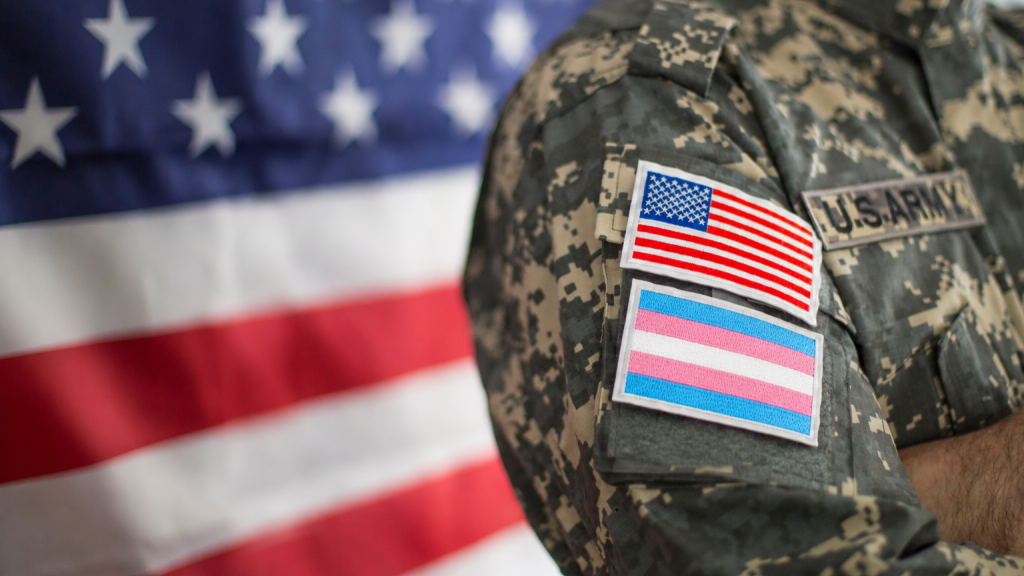
A US federal appeals court has now temporarily barred the Pentagon from discharging 27 trans service members from the armed forces (German). The decision applies while President Donald Trump's administration seeks a review of the case by the US Supreme Court (German). The soldiers concerned can therefore continue serving for the time being.
Key points at a glance
- Discharges halted: A US appeals court has temporarily barred the Pentagon from discharging 27 trans service members.
- Judges challenge administration: The court finds insufficient evidence that the plaintiffs' continued military service would endanger national security.
- Ban on new recruits remains: Trans people are still barred from joining the US armed forces.
- Legal battle continues: The Trump administration is seeking a review by the US Supreme Court.
A step forward for the community
The newly issued order by the federal appeals court for the District of Columbia (German) is limited to the 27 plaintiffs in the case. It does not amount to a general lifting of the restrictions on trans people in the US military. The three judges ruled by two votes to one. Federal Judge Robert Wilkins said the administration had not demonstrated that allowing the plaintiffs to remain in the military would cause the government irreparable harm or endanger national security.
Shannon Minter, legal director of the National Center for LGBTQ Rights, welcomed the decision. “The Trump administration had asked the court to allow it to continue forcing these service members out while it seeks a different ruling from the Supreme Court. Today, the appeals court in Washington, D.C. said no,” Minter said. The order also bars the Pentagon from outing the trans service members named in the lawsuit as trans against their will. The legal dispute stems from an executive order that Trump signed in January 2025. This was followed by Pentagon policies restricting military service by people with gender dysphoria. The US Department of Defense, headed by the Secretary of Defense, sets policies for the Army, Navy, Air Force, Marine Corps and Space Force. Rules governing military service by trans people have changed several times under different US administrations. They have been the subject of political and legal disputes for years.
New recruits excluded
While the 27 plaintiffs are protected from discharge, access to the military remains restricted for new trans recruits. This is based on an earlier decision by the same appeals court in June 2026. At that time, the judges upheld the preliminary injunction against the so-called Hegseth policy insofar as it concerns serving military personnel. At the same time, they lifted the interim legal protection for people seeking to join the armed forces. The ruling stated: “We uphold the preliminary injunction concerning the so-called Hegseth policy insofar as it affects serving military personnel. However, we lift the preliminary injunction insofar as it relates to the provisions of the Hegseth policy that apply to people seeking to join the armed forces.” The appeals court also cited the lower court's assessment. It had described the military ban, encompassing both the executive order and the Hegseth policy, as “steeped in animosity and full of pretextual justifications”.
Dispute over military ban
The latest decision is part of a series of court cases concerning the treatment of trans people in the US armed forces. A federal judge had already temporarily suspended the ban in March 2025. Trans service members expressed relief at the decision at the time. However, in May 2025, the US Supreme Court allowed the Trump administration to discharge trans service members from the armed forces (German) while legal challenges to the policy continued. Under the new decision, at least the 27 plaintiffs will remain in service for now. A final ruling on the legality of the restrictions is still pending.








