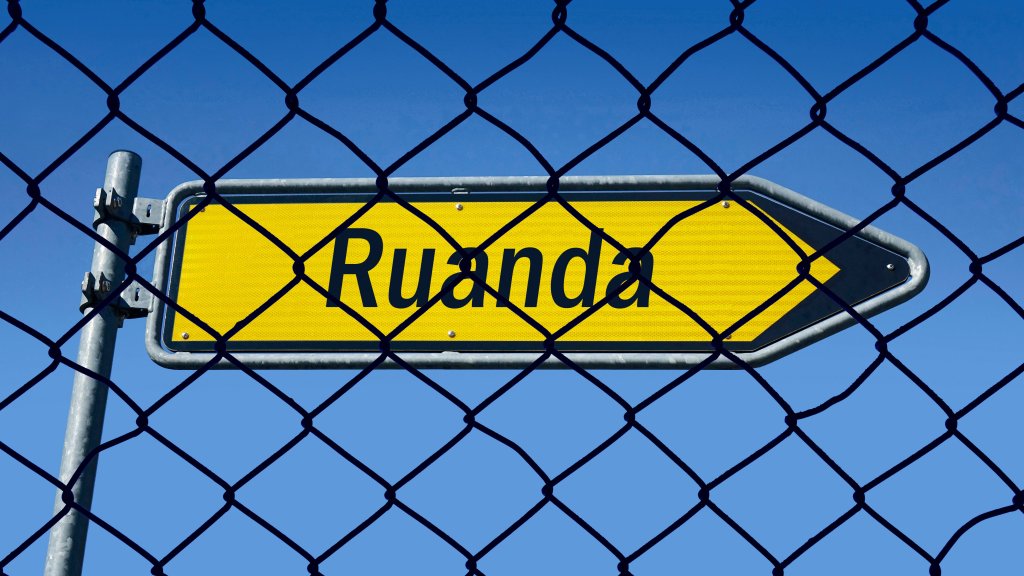
Germany and four other European Union member states are pushing ahead with plans for a joint return centre in the East African country of Rwanda. Austria, Denmark, Germany, Greece and the Netherlands officially presented the proposal this week. Human rights organisations are now criticising the plans, warning in particular of potential consequences for LGBTQ+ migrants and asylum seekers.
Key points at a glance
- Five countries involved: Germany, Austria, Denmark, Greece and the Netherlands have presented plans for a joint return centre in Rwanda.
- Deportations to third countries: people without the right to remain in the EU could in future also be sent to countries with which they have no personal connection.
- Criticism from 46 organisations: human rights groups from 16 countries are now warning of significant dangers.
- Particular risks for LGBTQ+ people: those affected could be transferred to countries where they face discrimination, violence and inadequate healthcare.
- New EU regulation: the Return Regulation provides the legal basis for such schemes. The participating countries intend this to make it easier to return people required to leave.
Returns to Rwanda
The basis is the new EU Return Regulation, which is intended to allow people without the right to remain in the European Union to be sent to third countries with which they previously had no personal connection. The scheme is part of a European policy increasingly geared towards outsourcing migration measures. Now 46 organisations from 16 countries are opposing the plans. They fear that establishing such centres will shift responsibility for protecting those affected to countries outside the EU. At the same time, government oversight and public scrutiny could become more difficult. Critics also include queer organisations such as ILGA-Europe or Amnesty International.
Background to the debate
Through so-called return hubs, European governments want to make it easier to deport people who no longer have the right to remain. One reason is that returns to people's respective countries of origin frequently fail or take a long time. Reasons can include missing travel documents, a lack of cooperation from countries of origin or difficulties establishing nationality. Setting up return centres outside the EU is intended to create additional ways to remove people required to leave, even when an immediate return to their country of origin cannot be arranged.
Supporters of such schemes expect them to make return procedures more effective, ease pressure on national asylum and reception systems and strengthen the credibility of government return decisions. Alongside Germany, Austria, Denmark, Greece and the Netherlands are taking part in the initiative now presented. The participating countries share the aim of creating new ways to implement return decisions. Critics counter that this could mean people ending up in countries where they have neither family ties nor social contacts or realistic prospects for the future.
The organisations are particularly critical of some EU member states presenting planned return centres as “welcome centres” or “opportunities” for migrants. In the critics' view, such terms obscure the fact that transfers can take place against the wishes of those affected. They argue that the scheme is based on a policy that fundamentally disregards migrants' right to self-determination and allows the countries carrying out returns to make far-reaching decisions about their living conditions and future.
Dangers for LGBTQ+ people
ILGA-Europe warns of significant additional risks for LGBTQ+ refugees, migrants and asylum seekers. It says they already frequently face multiple forms of discrimination. In addition to discrimination based on their sexual orientation or gender identity, they may also face racism, xenophobia and social exclusion. Outsourcing returns to third countries could mean those affected ending up in countries where LGBTQ+ people are criminalised, discriminated against or subjected to violence. Adequate healthcare is not guaranteed everywhere either, it says.
The organisations are particularly concerned about a possible lack of access to essential medication. This includes hormone replacement therapy (HRT), antiretroviral medication (ART) for HIV treatment and antidepressants. The organisations also believe that LGBTQ+ people are less likely to report assaults or discrimination in a hostile social environment. As a result, abuse and other human rights violations within such facilities could go undetected.
Lack of protection in Rwanda
The human rights organisations explicitly highlight the situation in Rwanda. According to the international LGBTQ+ organisation ILGA, the country has no comprehensive equality or anti-discrimination provisions that explicitly protect against discrimination based on sexual orientation or gender identity. Legal recognition of gender identity is also not possible in the East African country. For trans people, this can mean additional difficulties in everyday life and when dealing with the authorities. Critics therefore believe there is a risk that LGBTQ+ people transferred to Rwanda will once again face discrimination and social exclusion. The organisations see this as fundamentally at odds with EU member states' international protection obligations.
In a joint statement, the 46 organisations express their criticism particularly clearly: “Outsourcing migration control through return centres could expose LGBTQ+ people to precisely the dangers from which international protection systems are supposed to safeguard them. The risks associated with such ‘return centres’ are not flaws in implementation, but are inherent in the very purpose of this model. Neither the choice of a partner country nor legal guarantees or institutional oversight can eliminate the fundamental risks associated with such ‘return centres’.”
Calls to abandon the plans
In their joint letter, the organisations call on Austria, Denmark, Germany, Greece and the Netherlands not to establish the planned return centre in Rwanda. Instead, they say, EU member states should honour their international obligations and develop long-term solutions for those affected. Sufficient financial and staffing resources must be provided to give people a genuine chance to integrate into society and participate in it on an equal footing. At the end of their letter, the organisations appeal to the European Union's fundamental principles: “These are the values on which the EU was founded, and we encourage the EU to live up to these values.”








