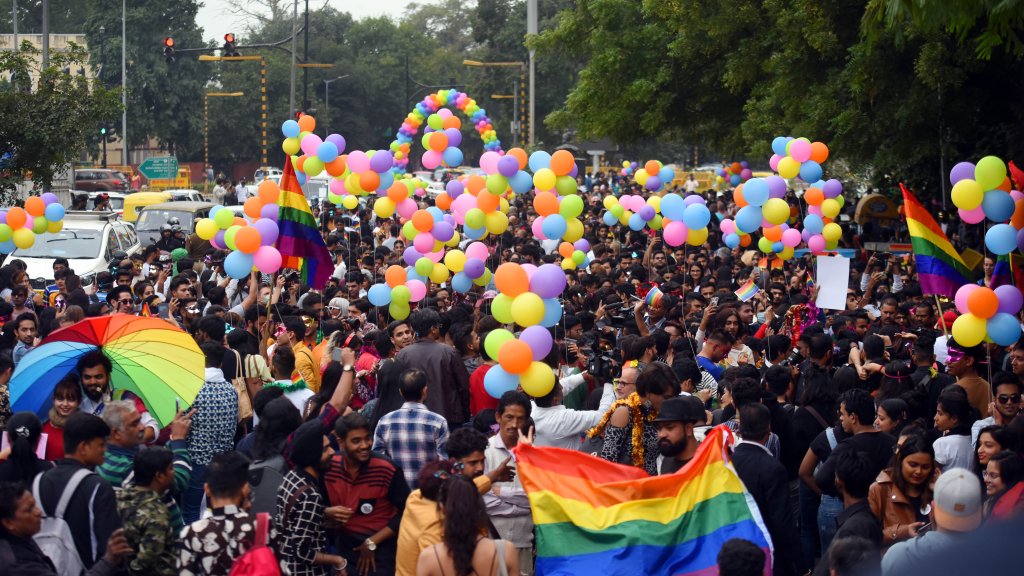
The LGBTQ+ community in India’s capital will have to go without its traditional Pride march this November. The organisers have postponed the event indefinitely. They cite tighter legal restrictions, constraints on public demonstrations and growing concerns about participants’ safety. The decision has sparked heated debate within the community.
Key points at a glance
- Pride postponed indefinitely: The LGBTQ+ march planned for November in New Delhi will not go ahead for now. No new date has been set.
- Safety concerns the main reason: The organisers of Delhi Queer Pride point to an increasingly difficult political situation and potential dangers for participants.
- New restrictions: A law passed in March 2026 curtails the rights of trans people. The police have also removed a central Delhi location from the list of designated protest sites.
- Criticism from the community: Some activists see the postponement as a retreat and are calling for greater public visibility, particularly in light of political developments.
- Different assessments: Others support the decision or warn against blaming the organisers for their safety concerns.
- Event to be rescheduled: Delhi Queer Pride stresses that the march has not been cancelled outright.
Cancellation without details
The organising coalition Delhi Queer Pride (DQP) has now announced that the annual march will not take place as planned. The organisers cited the increasingly difficult political situation and potential risks for people wishing to take part in the demonstration. The collective stressed that this did not amount to an outright cancellation. The Pride event would be rescheduled once conditions allowed it to be held safely. The organisers did not initially announce a new date. For years, the Pride march has been one of the visible events of the LGBTQ+ movement in the Indian capital. Usually, large numbers of people take to the streets with rainbow flags in November to campaign for social acceptance and equal rights.
New law poses problems
Among the reasons for the postponement are two political decisions that have changed the situation for LGBTQ+ people and the scope for public protests this year. In March 2026, India passed the so-called Transgender Amendment Act. The legislative amendment restricted existing rights for trans people. The abolition of the right to gender self-identification is particularly controversial. The legal definition of a trans person was also narrowed. The law also provides for penalties in cases where people are forced to adopt a trans identity. Queer activists regard the changes as a significant setback for the legal status of trans people in India.
Fewer opportunities to demonstrate
Another factor is a decision taken by Delhi police in October 2026. The authorities removed the centrally located Jantar Mantar square from the list of officially designated protest sites. Jantar Mantar has a long history as a site of political protest and is close to important government institutions. It was replaced by three alternative assembly sites located considerably further from the capital’s political centre. This changes the conditions for public rallies. Demonstrations can still take place, but the relocation limits their visibility and their direct impact on political affairs.
For Delhi Queer Pride, these conditions also play an important part in the practical organisation of the event. The coalition pointed out that larger demonstrations require close coordination with the police. This includes traffic management, securing the march route and ensuring that participants can be brought to safety along suitable routes in an emergency. It said political developments had made this cooperation more difficult. Protecting participants was therefore the priority, particularly those at greater risk of violence.
Activists criticise postponement
Within the LGBTQ+ community, however, not everyone is sympathetic to the decision. Some activists believe it is wrong to suspend the Pride march precisely at a time of increasing political restrictions. In their view, public demonstrations are particularly important when minority rights are under pressure. They argue that the Pride march is not just a celebration of social diversity, but also a means of political protest. One community member who works as a project manager at a non-governmental organisation voiced this criticism to Indian media. “Pride did not come about because we were allowed the space for it. We took it,” the man said.
With this statement, he referred to the history of the Pride movement, whose public demonstrations have often been won in the face of social resistance and state restrictions. The LGBTQ+ human rights organisation “Yes, We Exist” also criticised the decision. It described the postponement as an act of self-censorship. Critics believe there is a danger that forgoing the march will play into the hands of precisely those political developments that the LGBTQ+ movement wants to resist publicly.
Do not blame the organisers
Not all community representatives share this assessment. Other voices point out that those responsible for a large demonstration must also consider the potential dangers for its participants. Sharif Rangnekar, founder of Rainbow Lit Fest, described the postponement as disappointing. At the same time, however, he warned against blaming the organisers for it. He pointed to the real safety risks people could face at a public LGBTQ+ demonstration. The organising coalition’s decision thus highlights a conflict between two concerns: on the one hand, the LGBTQ+ movement should remain visible, particularly under difficult political conditions. On the other, organisers are responsible for the safety of the people taking part in their actions.
Problems began in 2025
Safety considerations affecting the organisation of Delhi’s Pride march are not a new development. The event originally planned for November 2025 also had to be postponed. Following talks with the police about safety conditions, the march was moved to February 2026. The latest postponement shows that the dispute over holding public LGBTQ+ events in the Indian capital remains unresolved. For the organisers, the question is not simply whether a demonstration is possible in principle. What also matters is under what conditions it can take place and whether adequate protection can be guaranteed for participants who are particularly at risk. Delhi Queer Pride is standing by its decision for now. The march is to be rescheduled when those responsible believe it can be held safely. Until then, it remains unclear when the LGBTQ+ community in India’s capital will be able to take to the streets together again.








